
Call us
301-363-4651 (Available 9 a.m. to 5 p.m. CST from Monday to Friday)

| Code | CSB-RA060362A0HU |
| Size | US$210 |
| Order now | |
| Image |
|
| Have Questions? | Leave a Message or Start an on-line Chat |
| Application | Recommended Dilution |
|---|---|
| WB | 1:500-1:2000 |
| IHC | 1:50-1:200 |
| FC | 1:50-1:200 |
NME1, also known as nucleoside diphosphate kinase A or NM23-H1, plays a fascinating dual role in cellular biology. Beyond its enzymatic function in nucleotide metabolism, NME1 has garnered significant attention as a metastasis suppressor gene, with its expression levels inversely correlating with tumor aggressiveness across multiple cancer types. This makes NME1 an important target for researchers investigating cancer progression, metastatic potential, and the molecular mechanisms underlying tumor spread.
This recombinant monoclonal antibody, generated against a synthetic peptide from human NME1, offers the consistency and reproducibility that demanding research applications require. As a sequence-defined recombinant clone, it eliminates the lot-to-lot variability inherent in traditional hybridoma-derived antibodies, ensuring your experimental results remain comparable across extended studies and collaborative projects.
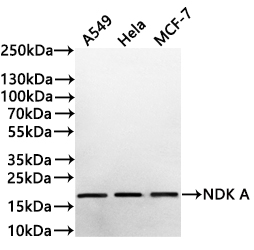
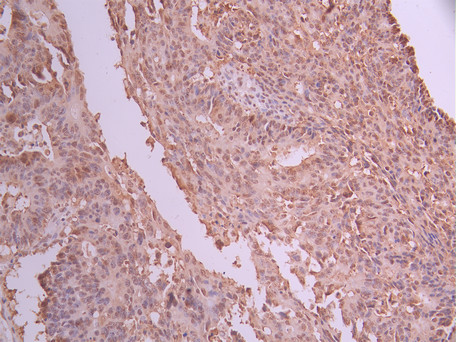
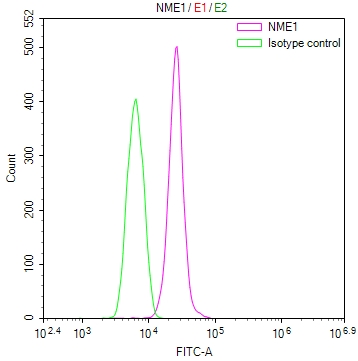
Validation data demonstrates reliable performance across multiple platforms. Western blot analysis detects a clean 17 kDa band matching the predicted molecular weight in A549 lung carcinoma, HeLa cervical cancer, and MCF-7 breast cancer cell lysates, confirming specificity across diverse human cancer cell models. Immunohistochemistry staining in paraffin-embedded human colorectal cancer tissue shows effective antigen detection using standard citrate buffer retrieval methods. Flow cytometry analysis in SH-SY5Y neuroblastoma cells further extends its utility for single-cell studies, with clear separation from isotype control demonstrating specific intracellular detection.
This antibody serves researchers exploring cancer metastasis mechanisms, nucleotide metabolism, and tumor biology. Its validated performance in Western blot, immunohistochemistry, and flow cytometry provides workflow flexibility for characterizing NME1 expression across experimental contexts, from cell line screening to clinical tissue analysis.
There are currently no reviews for this product.





