
Call us
301-363-4651 (Available 9 a.m. to 5 p.m. CST from Monday to Friday)

| Code | CSB-RA027798A0HU |
| Size | US$210 |
| Order now | |
| Image |
|
| Have Questions? | Leave a Message or Start an on-line Chat |
| Application | Recommended Dilution |
|---|---|
| WB | 1:500-1:5000 |
| IHC | 1:50-1:200 |
| IF | 1:50-1:200 |
| FC | 1:50-1:200 |
NOLC1, also known as Nopp140, serves as a critical nucleolar phosphoprotein that shuttles between the nucleolus and cytoplasm, playing essential roles in ribosome biogenesis and the structural organization of Cajal bodies. This protein functions as a chaperone for small nucleolar ribonucleoproteins and has been implicated in various cellular processes including cell cycle regulation and responses to cellular stress. Its involvement in nucleolar dynamics makes NOLC1 a valuable target for researchers investigating ribosome assembly, nuclear architecture, and the emerging connections between nucleolar function and disease states.
This recombinant monoclonal antibody, generated in rabbit using clone 1D9, offers the reproducibility and consistency that demanding experimental workflows require. Because the antibody sequence is defined and production occurs through recombinant technology, researchers can expect reliable performance across experiments and over time, eliminating the lot-to-lot variability that can complicate long-term studies.
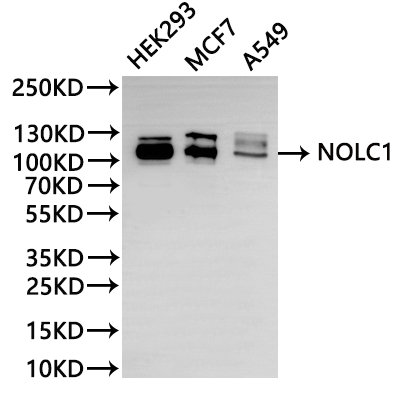
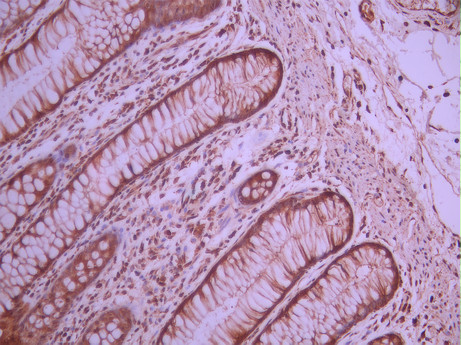
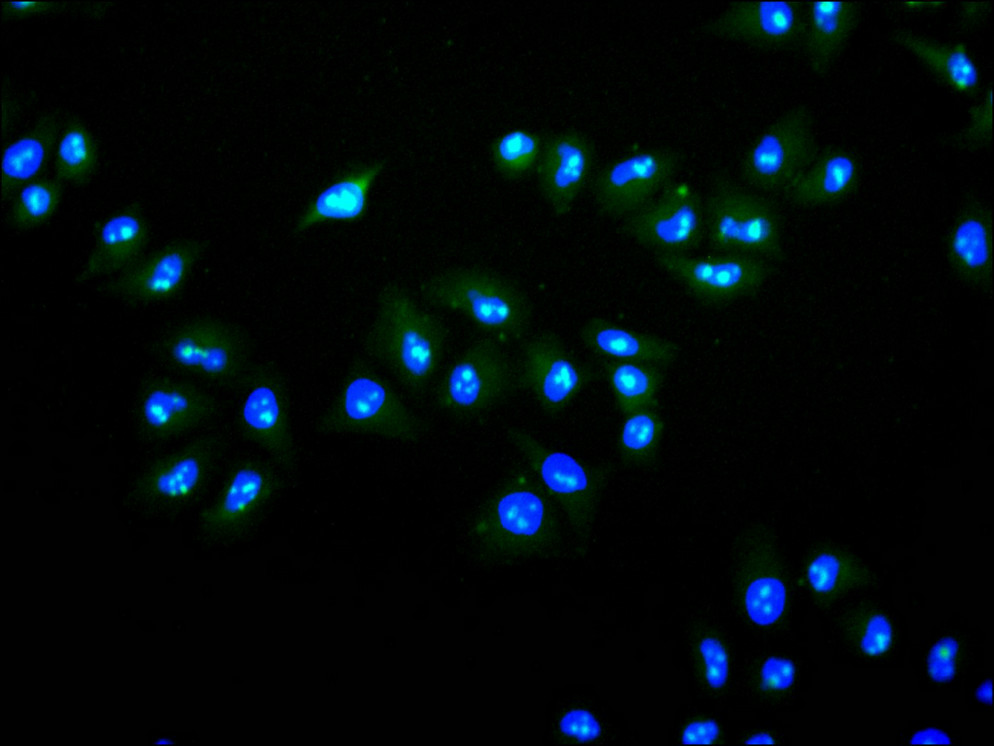
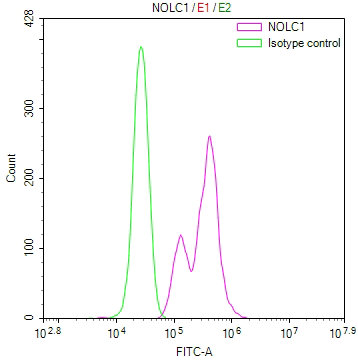
Validation across multiple platforms demonstrates this antibody's versatility in your research toolkit. Western blot analysis in HEK293, MCF-7, and A549 cell lysates reveals detection at approximately 110 kDa, notably higher than the predicted 74 kDa molecular weight. This size difference likely reflects the extensive post-translational modifications characteristic of NOLC1, particularly its heavy phosphorylation and potential glycosylation. Immunohistochemistry validation in human colorectal cancer tissue sections confirms utility for tissue-based studies, while immunofluorescence staining in HeLa cells and flow cytometry analysis in HepG2 cells demonstrate robust performance for cellular localization and quantitative single-cell applications.
This antibody supports investigations in epigenetics and nuclear signaling, providing researchers studying nucleolar biology and related pathways with a dependable detection tool.
There are currently no reviews for this product.





