
Call us
301-363-4651 (Available 9 a.m. to 5 p.m. CST from Monday to Friday)

| Code | CSB-RA947279A0HU |
| Size | US$210 |
| Order now | |
| Image |
|
| Have Questions? | Leave a Message or Start an on-line Chat |
| Application | Recommended Dilution |
|---|---|
| WB | 1:500-1:2000 |
| IHC | 1:50-1:200 |
| IF | 1:50-1:200 |
| FC | 1:50-1:200 |
NPC1 (Niemann-Pick C1 protein) serves as a critical intracellular cholesterol transporter essential for lipid homeostasis within the endosomal-lysosomal system. Mutations in NPC1 are responsible for the majority of Niemann-Pick type C disease cases, a devastating lysosomal storage disorder characterized by cholesterol accumulation in late endosomes and lysosomes. Beyond its role in inherited disease, NPC1 has emerged as a key player in understanding cellular cholesterol trafficking, autophagy regulation, and even viral entry mechanisms, making it a compelling target for researchers across metabolic disease, neuroscience, and infectious disease fields.
This recombinant monoclonal antibody (clone 22G3) offers the reproducibility and batch-to-batch consistency that demanding experimental workflows require. Generated against a synthetic peptide derived from human NPC1, the antibody's sequence-defined nature ensures reliable performance across extended studies and collaborative projects where reagent variability can compromise data integrity.
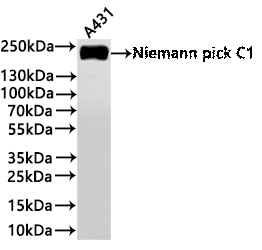
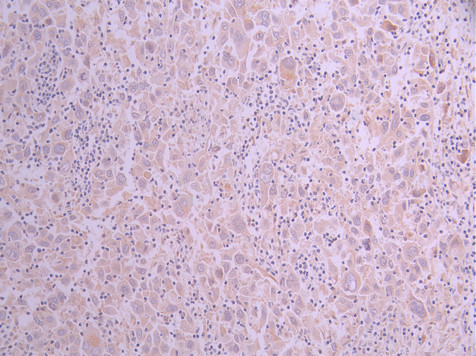
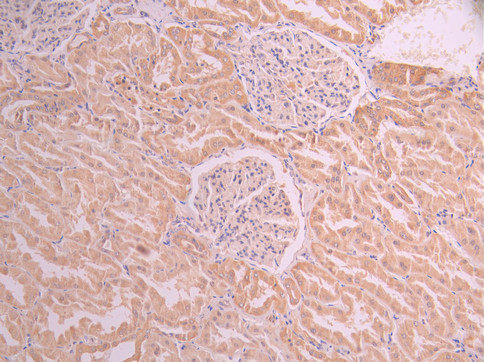
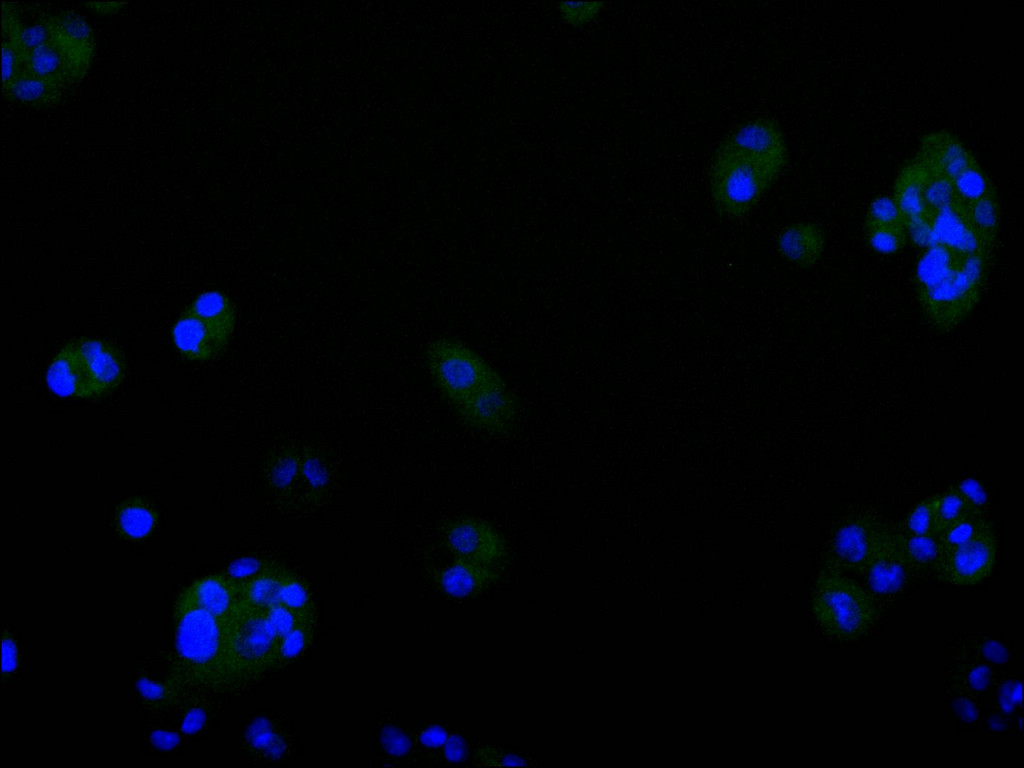
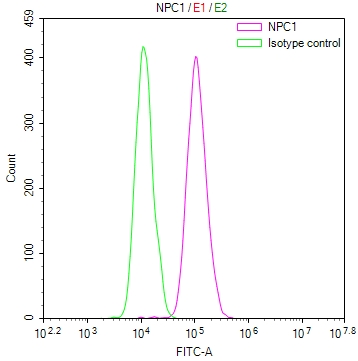
Validation across multiple platforms demonstrates genuine experimental flexibility. Western blot analysis in A431 whole cell lysate reveals detection at approximately 240 kDa, notably higher than the predicted 142 kDa molecular weight. This size difference reflects the extensive glycosylation characteristic of NPC1, which contains multiple N-linked glycosylation sites essential for its proper localization and function. Immunohistochemistry staining has been validated in human liver cancer and kidney tissue sections, while immunofluorescence and flow cytometry applications have been confirmed using HepG2 cells, providing researchers with established starting points for their own investigations.
Whether investigating cholesterol trafficking mechanisms, characterizing lysosomal storage disorders, or exploring NPC1's broader biological functions, this antibody delivers the technical reliability needed for meaningful experimental outcomes.
There are currently no reviews for this product.





