
Call us
301-363-4651 (Available 9 a.m. to 5 p.m. CST from Monday to Friday)

| Code | CSB-RA209742A0HU |
| Size | US$210 |
| Order now | |
| Image |
|
| Have Questions? | Leave a Message or Start an on-line Chat |
| Application | Recommended Dilution |
|---|---|
| IHC | 1:50-1:200 |
| IF | 1:50-1:200 |
OTX1 and OTX2 are paired-class homeodomain transcription factors that play essential roles in anterior brain development, retinal photoreceptor specification, and pituitary gland formation. These closely related proteins share significant sequence homology and coordinate the expression of genes critical for neurogenesis and sensory organ development. Mutations in OTX2 have been linked to severe developmental disorders including microphthalmia and combined pituitary hormone deficiency, making these transcription factors important subjects in developmental biology, neuroscience, and ophthalmology research.
This recombinant monoclonal antibody, clone 13D6, offers researchers the reproducibility and consistency that only sequence-defined recombinant technology can provide. Unlike traditional hybridoma-derived antibodies, this rabbit IgG delivers lot-to-lot uniformity, ensuring your experimental results remain comparable across extended studies. The antibody was raised against a synthesized peptide derived from human OTX1/OTX2 and purified by affinity chromatography for optimal specificity.
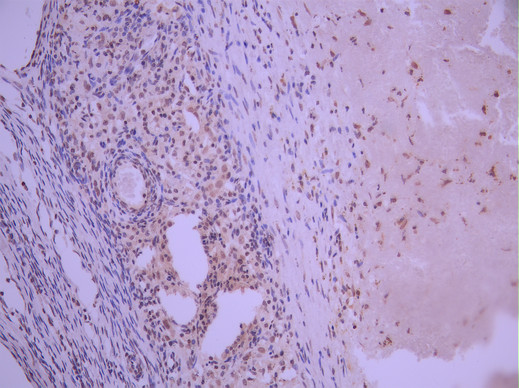
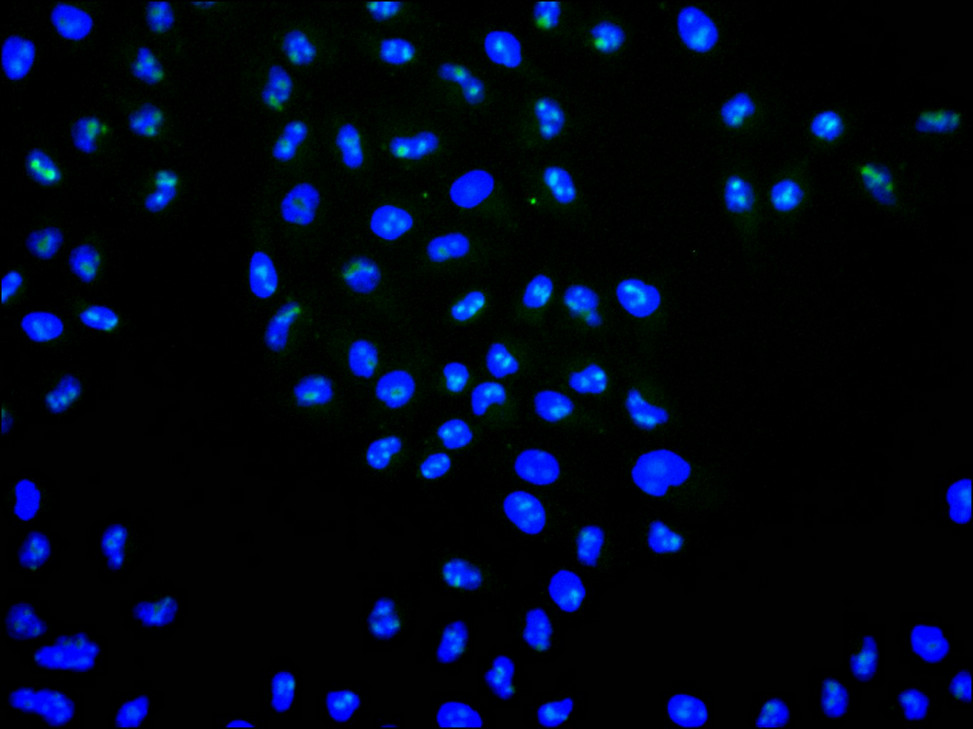
Validation studies demonstrate reliable performance across multiple immunodetection platforms. Immunohistochemistry testing on paraffin-embedded human ovarian cancer tissue using a Leica Bond system with citrate buffer antigen retrieval produced clear nuclear staining at 1:100 dilution. Immunofluorescence analysis of HeLa cells at 1:50 dilution revealed distinct nuclear localization patterns consistent with the transcription factor's expected subcellular distribution, with formaldehyde fixation and Triton X-100 permeabilization providing optimal results.
With validated applications in ELISA, immunohistochemistry, and immunofluorescence, this antibody supports diverse experimental workflows investigating OTX1/OTX2 expression in developmental processes, cancer biology, and stem cell differentiation studies where precise detection of these homeodomain proteins is essential.
There are currently no reviews for this product.





