
Call us
301-363-4651 (Available 9 a.m. to 5 p.m. CST from Monday to Friday)

| Code | CSB-RA240498A0HU |
| Size | US$210 |
| Order now | |
| Image |
|
| Have Questions? | Leave a Message or Start an on-line Chat |
| Application | Recommended Dilution |
|---|---|
| IHC | 1:50-1:200 |
| FC | 1:50-1:200 |
PREB, also known as mammalian Sec12, functions as a guanine nucleotide exchange factor essential for COPII vesicle formation and ER-to-Golgi transport. Beyond its role in the secretory pathway, PREB serves as a transcriptional regulator that binds prolactin regulatory elements, positioning it at a unique intersection of membrane trafficking and gene expression control. This dual functionality makes PREB a compelling target for researchers investigating cellular secretion mechanisms, endocrine signaling, and nuclear regulatory networks.
This recombinant monoclonal antibody, clone 9D12, offers the reproducibility and consistency that demanding experimental workflows require. Generated against a synthetic peptide derived from human PREB, the antibody undergoes affinity chromatography purification to ensure high specificity. Because recombinant production yields a sequence-defined reagent, researchers can expect reliable performance across experiments and between lots, eliminating the variability often encountered with traditional hybridoma-derived antibodies.
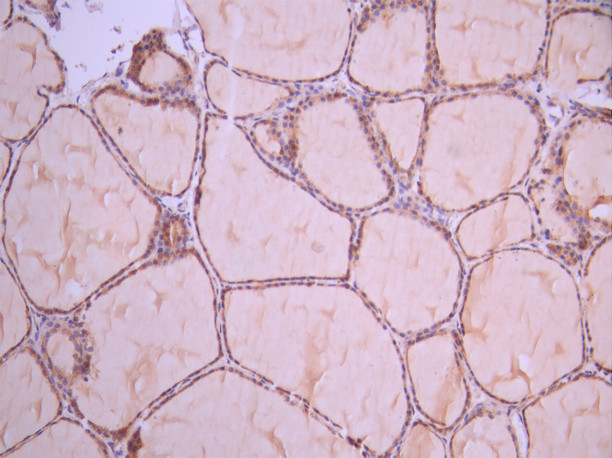
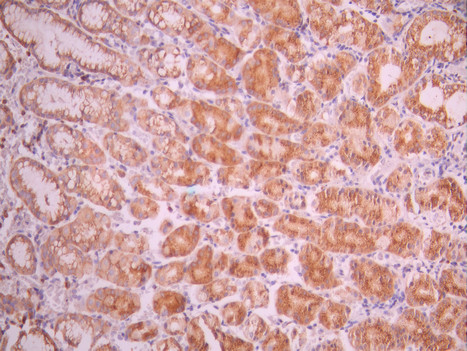
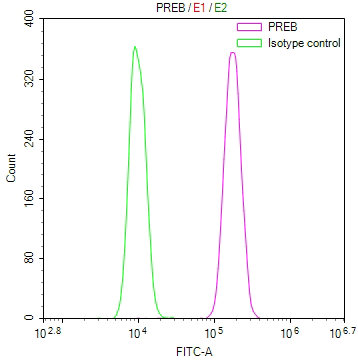
Validation studies demonstrate robust performance across multiple platforms. Immunohistochemistry testing in paraffin-embedded human tissues, including thyroid and gastric cancer specimens, confirms effective antigen detection following citrate buffer retrieval at pH 6.0, with optimal results at 1:100 dilution. Flow cytometry analysis using HeLa cells shows clear signal separation from isotype controls, validating the antibody's utility for intracellular protein detection in fixed and permeabilized samples. These validated applications provide flexibility for researchers working across tissue-based and cell-based experimental systems.
This antibody supports investigations in epigenetics and nuclear signaling research, particularly studies examining how PREB coordinates secretory pathway function with transcriptional regulation in both normal physiology and disease contexts such as cancer.
There are currently no reviews for this product.





