
Call us
301-363-4651 (Available 9 a.m. to 5 p.m. CST from Monday to Friday)

| Code | CSB-RA140307A0HU |
| Size | US$210 |
| Order now | |
| Image |
|
| Have Questions? | Leave a Message or Start an on-line Chat |
| Application | Recommended Dilution |
|---|---|
| WB | 1:500-1:2000 |
| IHC | 1:50-1:200 |
| FC | 1:50-1:200 |
PSMA3, also known as proteasome subunit alpha type-3 or HC8, serves as a core component of the 20S proteasome complex responsible for protein degradation through the ubiquitin-proteasome pathway. This essential cellular machinery regulates numerous critical processes including cell cycle progression, signal transduction, and the removal of misfolded or damaged proteins. Dysregulation of proteasome function has been implicated in various pathological conditions, making PSMA3 a valuable target for researchers investigating protein homeostasis, cancer biology, and cellular stress responses.
This recombinant monoclonal antibody, generated against a synthetic peptide derived from human PSMA3, offers the reproducibility and consistency that demanding experimental workflows require. As a sequence-defined recombinant clone, it eliminates the lot-to-lot variability often encountered with traditional hybridoma-derived antibodies, ensuring your results remain comparable across extended studies.
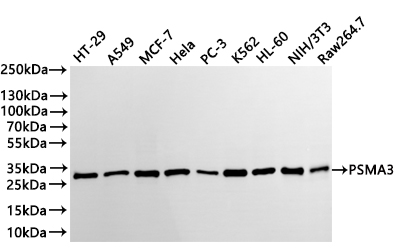
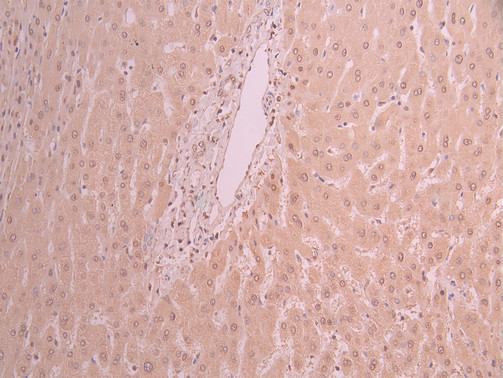
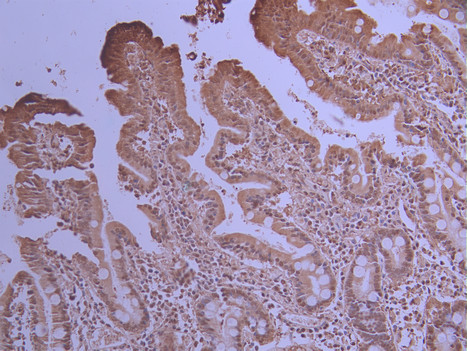
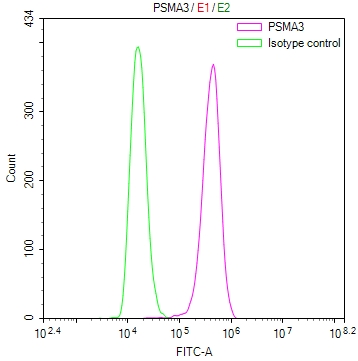
Validation data demonstrates robust performance across multiple applications. In western blot analysis, the antibody detects a clean band at the predicted 28 kDa molecular weight across an extensive panel of human cell lines including HT-29, A549, MCF-7, HeLa, PC-3, K562, and HL-60, as well as mouse cell lines NIH/3T3 and Raw264.7, confirming cross-species reactivity with both human and mouse samples. Immunohistochemistry validation in human liver cancer and small intestine tissues shows reliable tissue staining, while flow cytometry analysis in BxPC-3 cells demonstrates clear positive signal separation from isotype controls.
This versatile antibody supports researchers studying proteasome biology, protein quality control mechanisms, and therapeutic strategies targeting the ubiquitin-proteasome system in oncology and beyond.
There are currently no reviews for this product.





