
Call us
301-363-4651 (Available 9 a.m. to 5 p.m. CST from Monday to Friday)

| Code | CSB-RA620892MA1HU |
| Size | US$210 |
| Order now | |
| Image |
|
| Have Questions? | Leave a Message or Start an on-line Chat |
| Application | Recommended Dilution |
|---|---|
| IF | 1:50-1:200 |
| FC | 1:50-1:200 |
SLC1A5, also known as ASCT2, serves as a critical sodium-dependent neutral amino acid transporter that plays a central role in cellular glutamine uptake. This transporter has garnered significant research attention due to its marked upregulation in numerous cancer types, where it supports the elevated metabolic demands of rapidly proliferating tumor cells. Beyond oncology, SLC1A5 functions as a receptor for several retroviruses, including the baboon M7 virus and RD114, making it relevant to virology and gene therapy research.
This recombinant monoclonal antibody, clone 4G12, offers researchers the reproducibility advantages inherent to recombinant technology. Because the antibody sequence is defined and production occurs through controlled recombinant expression, you can expect consistent performance across different lots, eliminating the variability concerns that can complicate long-term studies or multi-site collaborations. The human IgG1 isotype format and affinity-chromatography purification further ensure high specificity for your target.
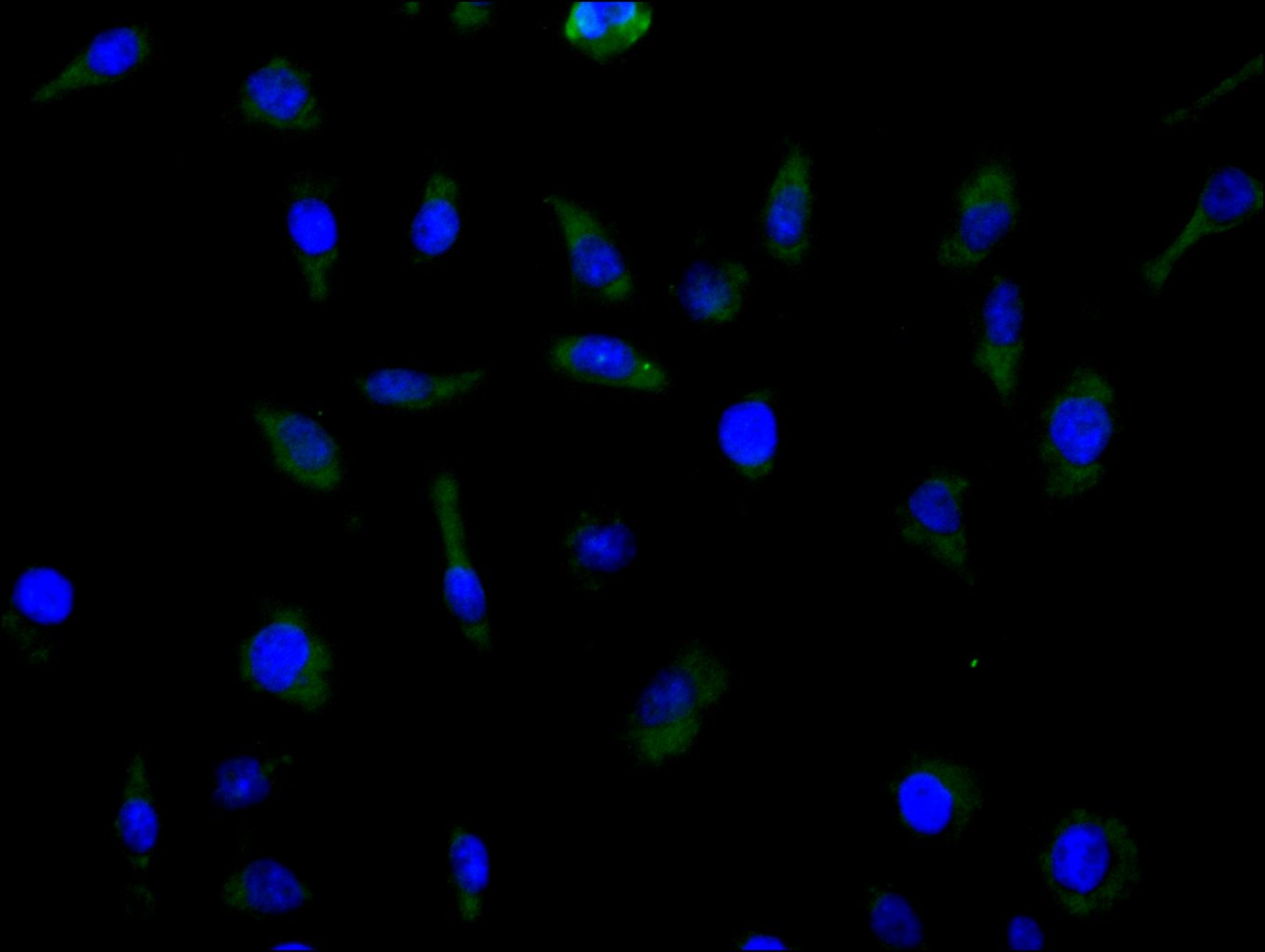
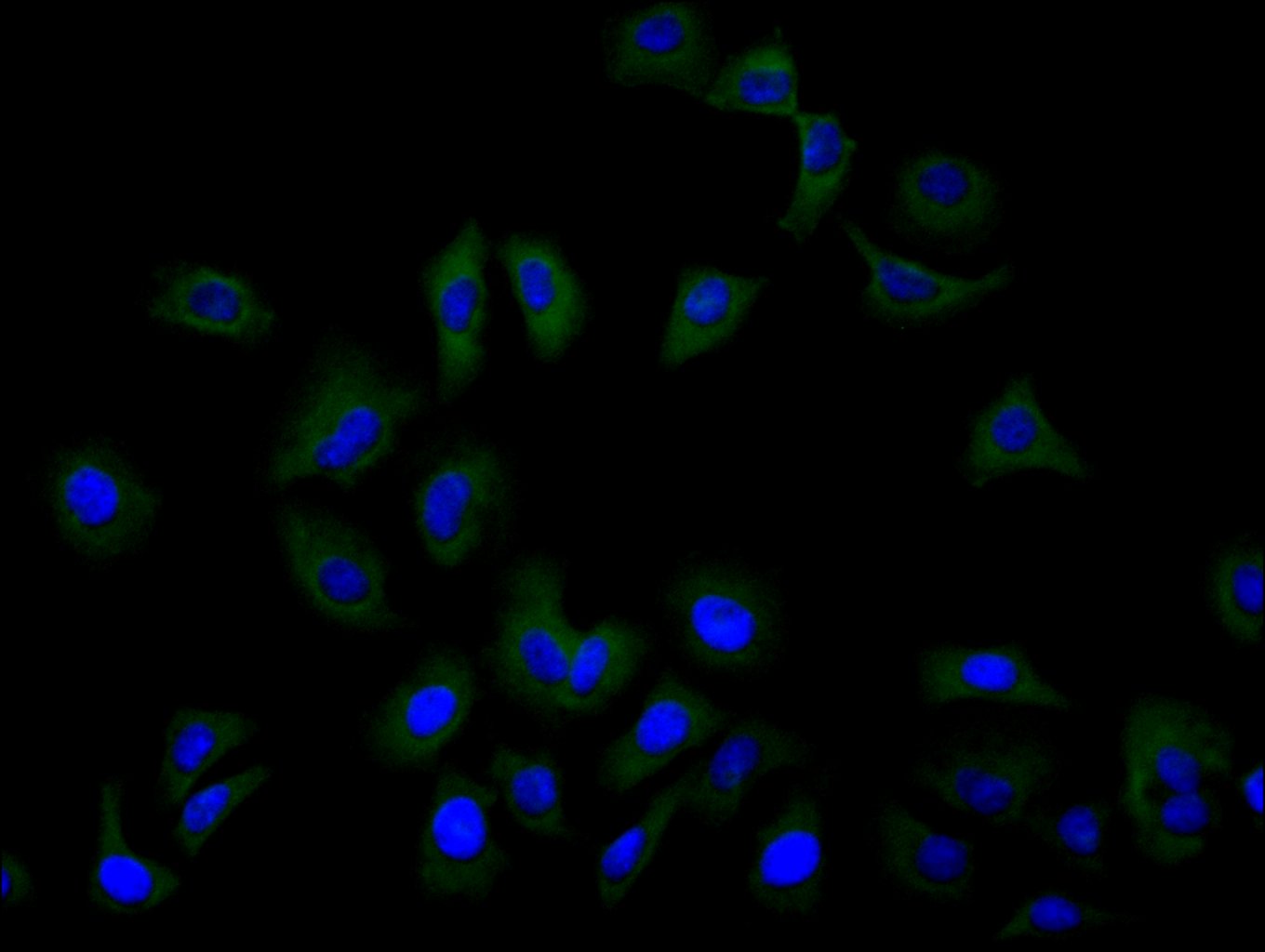
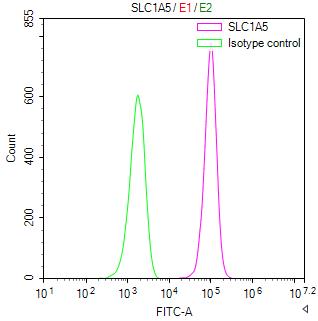
Validation studies demonstrate reliable performance in immunofluorescence and flow cytometry applications. Immunofluorescence staining has been successfully performed in both MCF and HeLa cells at 1:100 dilution, revealing clear membrane and cytoplasmic localization patterns consistent with the transporter's known cellular distribution. Flow cytometry analysis in A549 lung adenocarcinoma cells shows distinct positive population shifts compared to isotype controls, confirming the antibody's utility for quantitative single-cell analysis of SLC1A5 expression levels.
The antibody is validated for human samples and supplied in a glycerol-based buffer optimized for long-term storage stability. Whether investigating amino acid transport mechanisms, characterizing metabolic reprogramming in cancer models, or studying retroviral entry pathways, this antibody provides a dependable tool for your research workflow.
There are currently no reviews for this product.





