
Call us
301-363-4651 (Available 9 a.m. to 5 p.m. CST from Monday to Friday)

| Code | CSB-RA966408A0HU |
| Size | US$210 |
| Order now | |
| Image |
|
| Have Questions? | Leave a Message or Start an on-line Chat |
| Application | Recommended Dilution |
|---|---|
| WB | 1:500-1:2000 |
| IHC | 1:50-1:200 |
| IF | 1:50-1:200 |
| FC | 1:50-1:200 |
SMC3 serves as a core component of the cohesin complex, playing an essential role in sister chromatid cohesion during cell division, DNA repair, and chromatin organization. This structural maintenance of chromosomes protein is fundamental to understanding chromosome dynamics and has significant implications for research into cell cycle regulation, genome stability, and cancer biology where cohesin dysfunction has been implicated.
This recombinant monoclonal antibody, developed using rabbit host immunization against a synthetic peptide derived from human SMC3, offers the consistency and reliability that demanding experimental workflows require. As a sequence-defined reagent produced through recombinant technology, it eliminates the lot-to-lot variability that can compromise longitudinal studies and ensures reproducible results across your research timeline. The monoclonal nature of clone 12B7 guarantees specificity to a single epitope, providing clean, interpretable data.
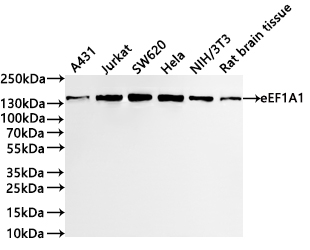
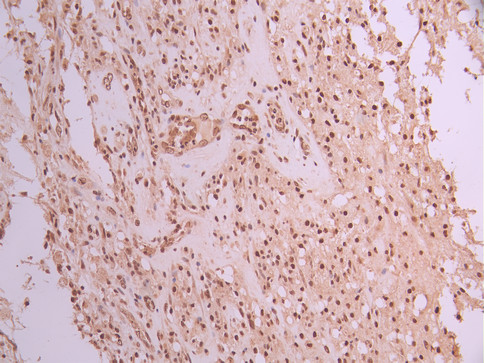
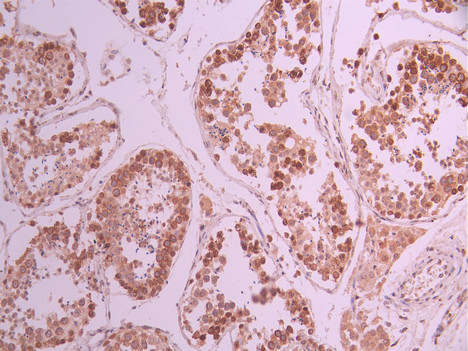
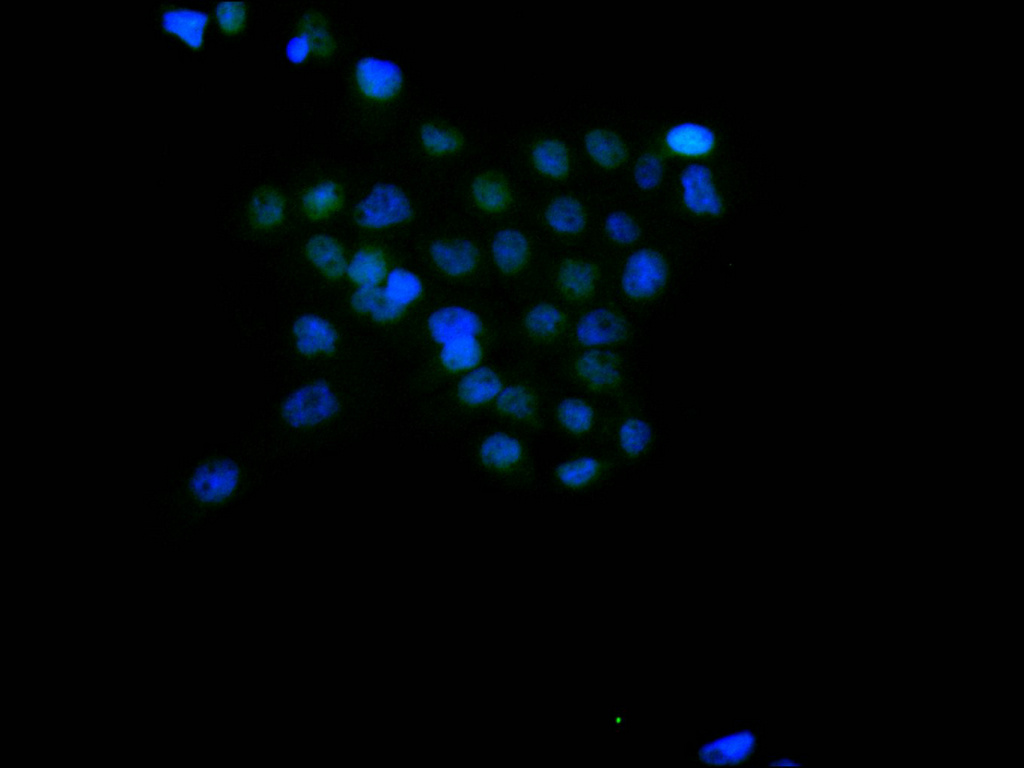
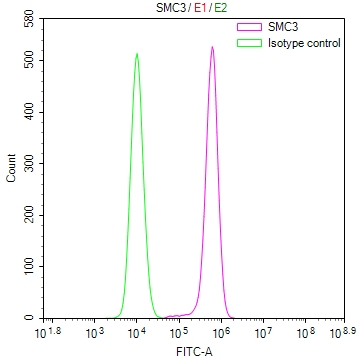
Extensive validation demonstrates this antibody's versatility across multiple experimental platforms. Western blot analysis confirms detection of SMC3 at the expected 142 kDa molecular weight across diverse sample types including human cell lines such as A431, Jurkat, SW620, and HeLa, as well as mouse NIH/3T3 cells and rat brain tissue, confirming robust cross-species reactivity. Immunohistochemistry applications have been validated in human glioma and testis tissue sections, while immunofluorescence studies in A431 cells reveal clear nuclear localization patterns consistent with SMC3's chromatin-associated function. Flow cytometry validation in Raji cells further expands your analytical options.
Whether investigating chromosome segregation mechanisms, exploring cohesin complex dynamics in cancer models, or studying DNA damage response pathways, this antibody provides a reliable tool for advancing your research objectives.
There are currently no reviews for this product.





