
Call us
301-363-4651 (Available 9 a.m. to 5 p.m. CST from Monday to Friday)

| Code | CSB-RA199787A0HU |
| Size | US$210 |
| Order now | |
| Image |
|
| Have Questions? | Leave a Message or Start an on-line Chat |
| Application | Recommended Dilution |
|---|---|
| IF | 1:50-1:200 |
| FC | 1:50-1:200 |
SMYD3 (SET and MYND domain-containing protein 3) is a histone lysine methyltransferase that plays a pivotal role in epigenetic regulation, catalyzing the methylation of histone H3 at lysine 4 and histone H4 at lysine 5. This enzymatic activity positions SMYD3 as a key transcriptional regulator with significant implications in cell proliferation, development, and oncogenesis. Elevated SMYD3 expression has been documented across multiple cancer types, making it an attractive target for researchers investigating epigenetic mechanisms in tumorigenesis and those exploring potential therapeutic interventions.
This recombinant monoclonal antibody, developed in rabbit using clone 4D12, offers the reproducibility and consistency that demanding epigenetic research requires. Because recombinant antibodies are produced from defined genetic sequences rather than traditional hybridoma methods, researchers benefit from lot-to-lot uniformity that supports longitudinal studies and ensures experimental comparability across collaborating laboratories.
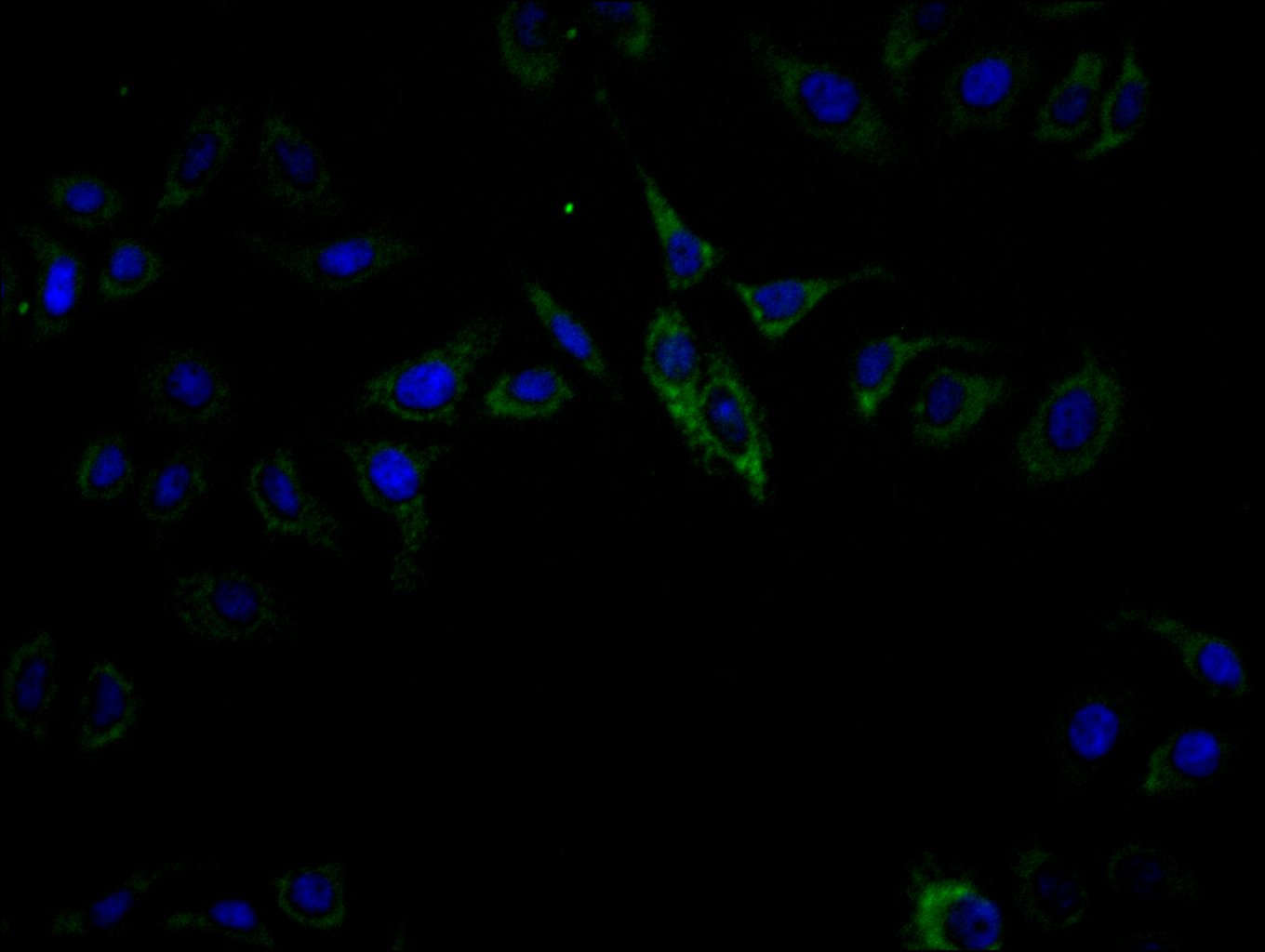
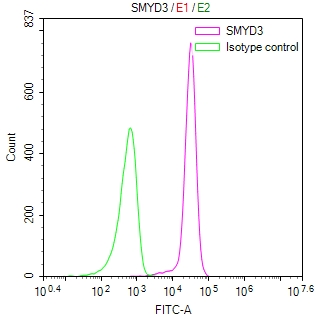
Validation studies demonstrate reliable performance in immunofluorescence and flow cytometry applications. Immunofluorescence staining of HeLa cells reveals clear detection of SMYD3 with recommended dilutions between 1:50 and 1:200, while flow cytometry analysis of Jurkat cells confirms specific signal separation from isotype controls at 1:100 dilution. These validated human cell lines provide researchers with established protocols for immediate implementation in their workflows.
The unconjugated format allows flexibility in secondary antibody selection, accommodating various detection systems and multiplexing strategies. Supplied in a glycerol-containing buffer optimized for long-term stability, this antibody serves researchers investigating chromatin biology, transcriptional regulation, and the mechanistic connections between histone methylation and disease pathology.
There are currently no reviews for this product.





