
Call us
301-363-4651 (Available 9 a.m. to 5 p.m. CST from Monday to Friday)

| Code | CSB-RA236224A0HU |
| Size | US$210 |
| Order now | |
| Image |
|
| Have Questions? | Leave a Message or Start an on-line Chat |
| Application | Recommended Dilution |
|---|---|
| WB | 1:500-1:5000 |
| IHC | 1:50-1:200 |
| IF | 1:50-1:200 |
| FC | 1:50-1:200 |
SP1 is a zinc finger transcription factor that plays a central role in regulating the expression of genes involved in cell growth, differentiation, apoptosis, and immune responses. As a ubiquitous transcription factor that binds GC-rich motifs in promoter regions, SP1 influences the transcription of numerous housekeeping and tissue-specific genes, making it a critical target for researchers investigating gene regulation, cancer biology, and cellular signaling pathways.
This recombinant rabbit monoclonal antibody, clone 6H12, offers the reproducibility and consistency that demanding experimental workflows require. Because recombinant antibodies are produced from defined sequences rather than hybridoma-derived sources, researchers benefit from lot-to-lot uniformity that supports reliable longitudinal studies and reproducible results across experiments.
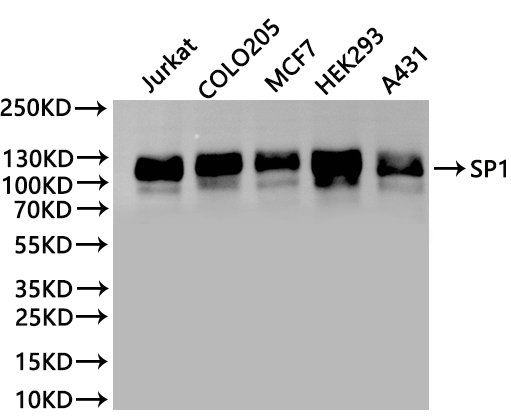
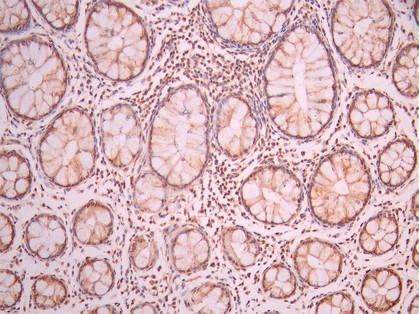
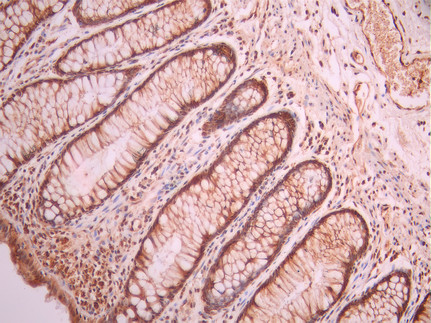
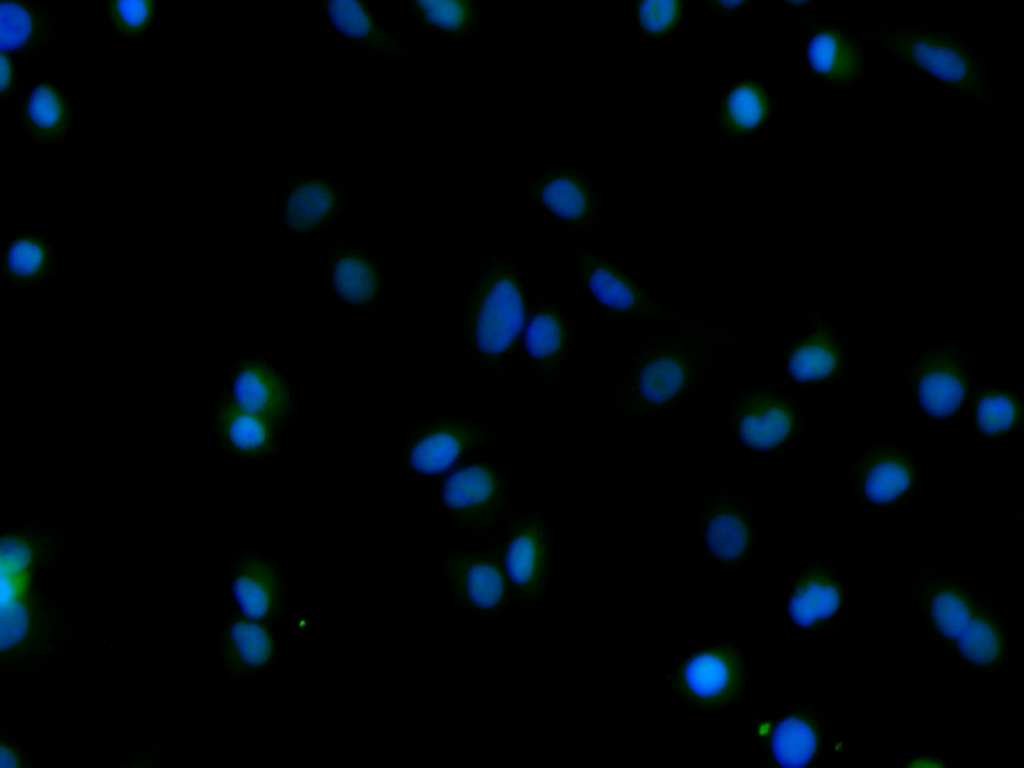
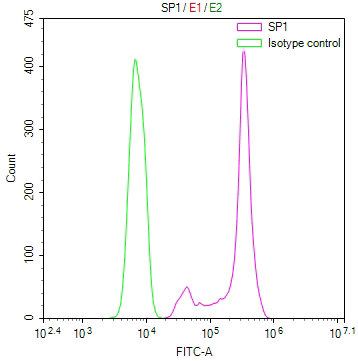
Validation data demonstrates robust performance across multiple applications in human samples. Western blot analysis detects SP1 across diverse cell lines including Jurkat, COLO205, MCF7, HEK293, and A431 lysates, with an observed band at approximately 110 kDa. This migration above the predicted 81 kDa molecular weight is consistent with the extensive post-translational modifications characteristic of SP1, including glycosylation and phosphorylation events that regulate its transcriptional activity. Immunohistochemistry staining has been validated in paraffin-embedded human small intestine and colorectal cancer tissues, while immunofluorescence studies in A549 cells reveal clear nuclear localization consistent with SP1's function as a transcription factor. Flow cytometry analysis in HeLa cells further demonstrates the antibody's versatility for quantitative single-cell applications.
This antibody serves researchers exploring epigenetics, nuclear signaling, and transcriptional regulation, providing a dependable tool for investigating SP1's diverse roles in normal physiology and disease states.
There are currently no reviews for this product.





