
Call us
301-363-4651 (Available 9 a.m. to 5 p.m. CST from Monday to Friday)

| Code | CSB-RA778009A0HU |
| Size | US$210 |
| Order now | |
| Image |
|
| Have Questions? | Leave a Message or Start an on-line Chat |
| Application | Recommended Dilution |
|---|---|
| IHC | 1:50-1:200 |
| FC | 1:50-1:200 |
TARBP2 (TAR RNA-binding protein 2) serves as an essential component of the RNA-induced silencing complex (RISC), where it partners with Dicer to facilitate microRNA processing and loading onto Argonaute proteins. This central role in the miRNA pathway makes TARBP2 a compelling target for researchers investigating post-transcriptional gene regulation, viral RNA interactions, and the dysregulation of small RNA networks in disease contexts. Originally identified through its ability to bind HIV-1 TAR RNA elements, TARBP2 continues to attract attention in both virology and cancer biology research.
This recombinant monoclonal antibody, clone 8G12, offers the reproducibility and consistency that demanding experimental workflows require. Generated against a synthetic peptide derived from human TARBP2 and produced using recombinant technology in rabbit host, this antibody provides sequence-defined specificity that eliminates the lot-to-lot variability often encountered with traditional hybridoma-derived reagents. Affinity chromatography purification ensures high purity for reliable performance across applications.
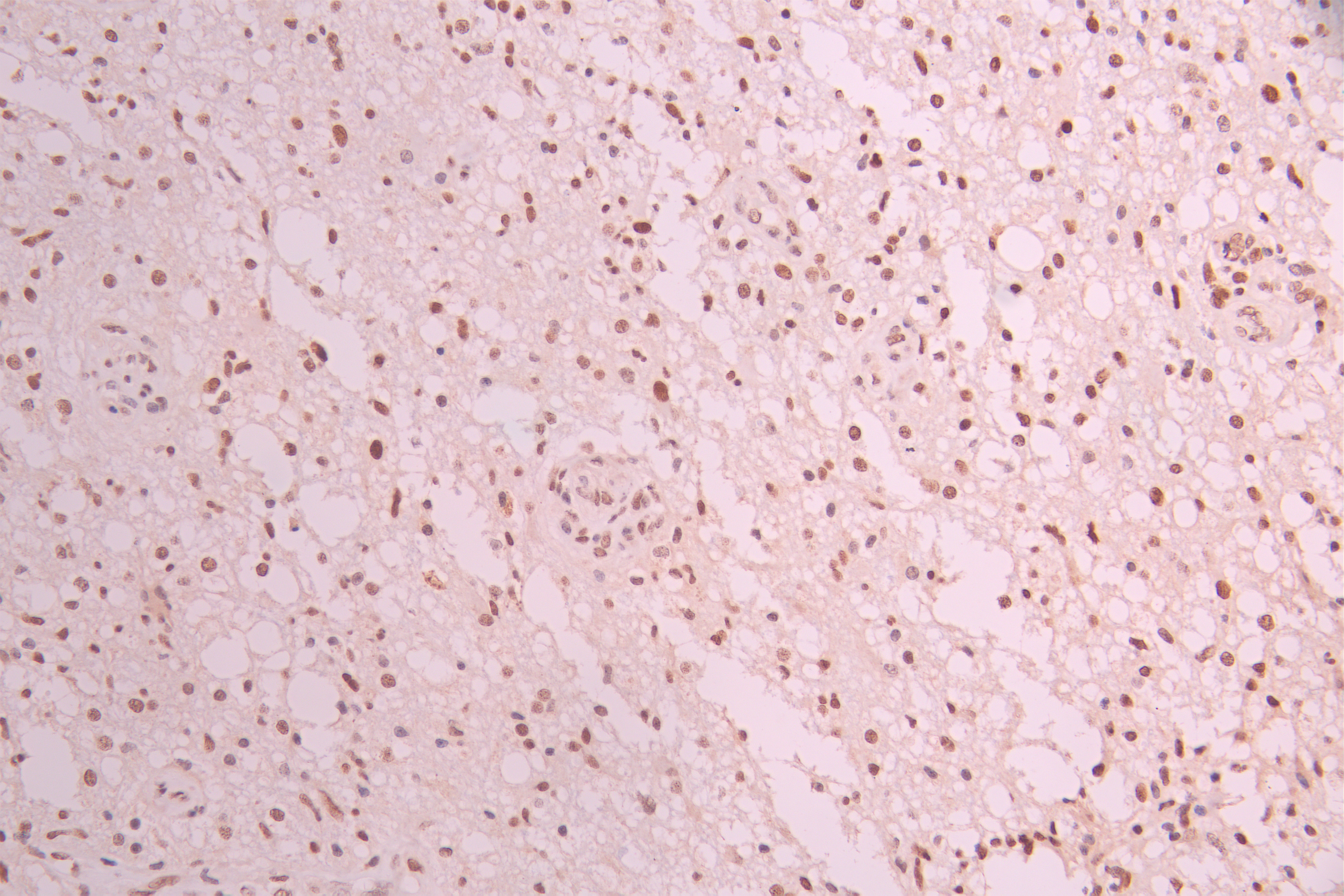
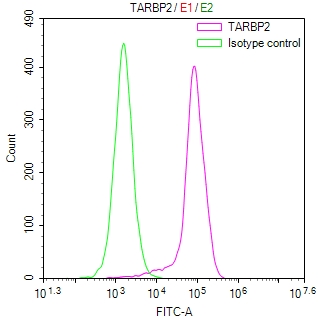
Validation studies demonstrate robust performance in immunohistochemistry and flow cytometry applications. IHC analysis of paraffin-embedded human glioma tissue using citrate buffer antigen retrieval shows clear target detection at 1:100 dilution, making this antibody suitable for investigating TARBP2 expression in tumor specimens. Flow cytometry validation in HepG2 hepatocellular carcinoma cells confirms effective intracellular staining of fixed and permeabilized cells, with clear separation from isotype control, enabling quantitative analysis of TARBP2 expression at the single-cell level.
This antibody supports investigations into miRNA biogenesis mechanisms, RISC assembly dynamics, and the emerging connections between TARBP2 dysregulation and oncogenic processes across multiple cancer types.
There are currently no reviews for this product.





