
Call us
301-363-4651 (Available 9 a.m. to 5 p.m. CST from Monday to Friday)

| Code | CSB-RA978249A0HU |
| Size | US$210 |
| Order now | |
| Image |
|
| Have Questions? | Leave a Message or Start an on-line Chat |
| Application | Recommended Dilution |
|---|---|
| WB | 1:500-1:2000 |
| IHC | 1:50-1:200 |
| FC | 1:50-1:200 |
TCEA1, also known as TFIIS, serves as a critical transcription elongation factor that enables RNA polymerase II to navigate through transcriptional arrest sites and DNA damage lesions. By stimulating the intrinsic nuclease activity of stalled polymerase complexes, TCEA1 facilitates transcript cleavage and allows transcription to resume, making it essential for maintaining gene expression fidelity and cellular responses to genotoxic stress. This regulatory role positions TCEA1 as a significant target in cancer biology, transcription research, and studies of DNA damage response pathways.
This recombinant monoclonal antibody, generated in rabbit using clone 19D4, offers the reproducibility and sequence-defined consistency that demanding experimental workflows require. Unlike traditional hybridoma-derived antibodies, recombinant production ensures that each lot performs identically to the last, eliminating the variability that can compromise longitudinal studies or multi-site collaborations.
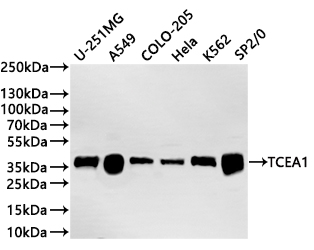
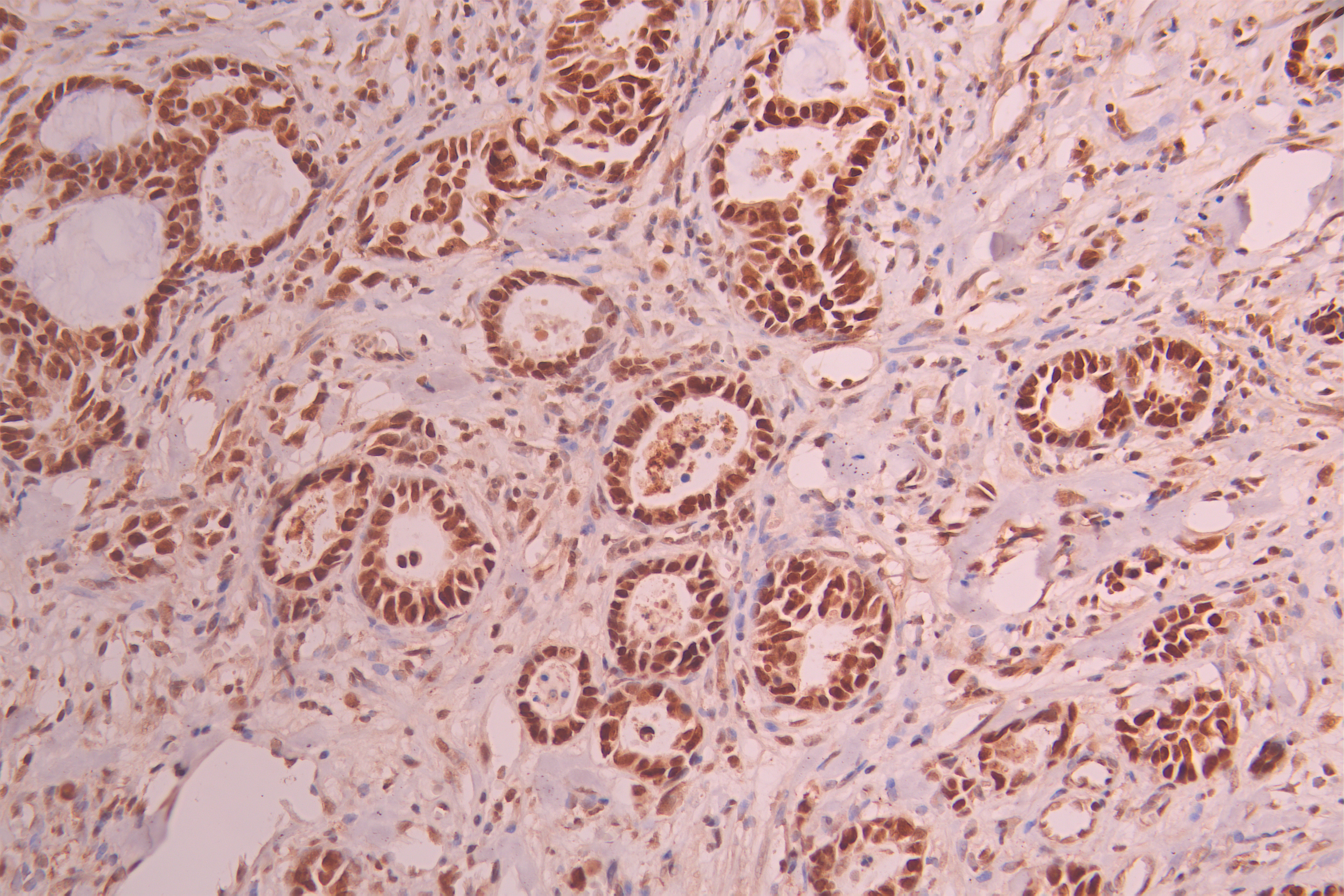
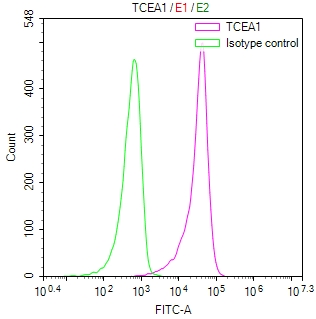
Validation across multiple platforms demonstrates this antibody's versatility in your research toolkit. Western blot analysis confirms robust detection in diverse human cell lines including U-251MG glioblastoma, A549 lung carcinoma, COLO-205 colorectal adenocarcinoma, HeLa cervical carcinoma, and K562 chronic myelogenous leukemia cells, with an observed band at approximately 37 kDa. The slight shift from the predicted 34 kDa molecular weight likely reflects post-translational modifications such as phosphorylation or glycosylation events known to occur on transcription factors. Immunohistochemistry validation in paraffin-embedded human gastric cancer tissue demonstrates suitability for pathological investigations, while flow cytometry analysis in Jurkat cells confirms utility for single-cell protein expression studies.
Whether investigating transcriptional regulation mechanisms, characterizing tumor biology, or exploring stress response pathways, this antibody provides the consistent performance needed for meaningful experimental outcomes.
There are currently no reviews for this product.





