
Call us
301-363-4651 (Available 9 a.m. to 5 p.m. CST from Monday to Friday)

| Code | CSB-RA199069A0HU |
| Size | US$210 |
| Order now | |
| Image |
|
| Have Questions? | Leave a Message or Start an on-line Chat |
| Application | Recommended Dilution |
|---|---|
| IHC | 1:50-1:200 |
TDGF1, also known as Cripto-1, is a membrane-bound signaling protein that plays a pivotal role in embryonic development and stem cell maintenance. As a member of the EGF-CFC family, TDGF1 functions as a coreceptor in the Nodal signaling pathway, regulating cell proliferation, differentiation, and epithelial-mesenchymal transition. Beyond its developmental functions, TDGF1 has garnered significant attention in cancer research due to its frequent reactivation in various malignancies, where it contributes to tumor progression and metastasis.
This recombinant monoclonal antibody, developed using rabbit host immunization against a synthetic peptide derived from human TDGF1, offers the reproducibility and consistency that demanding research applications require. The recombinant production method ensures sequence-defined specificity and eliminates the lot-to-lot variability often encountered with traditional hybridoma-derived antibodies, providing confidence across longitudinal studies and multi-site collaborations.
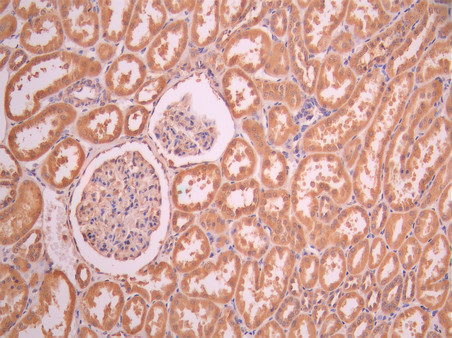
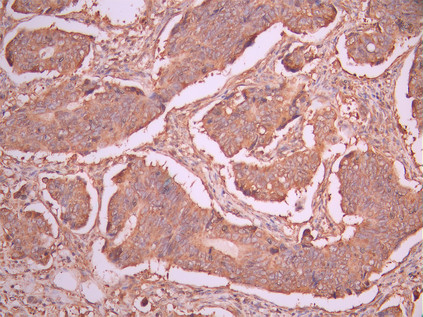
Validation through immunohistochemistry demonstrates reliable performance in paraffin-embedded human tissues, with testing conducted in both kidney tissue and colorectal cancer specimens at 1:100 dilution using citrate buffer antigen retrieval. These validation studies, performed on an automated Leica Bond system with HRP-polymer detection, confirm the antibody's utility for examining TDGF1 expression patterns in both normal and pathological contexts. The recommended working dilution range of 1:50 to 1:200 for IHC applications provides flexibility for optimization across different tissue types and detection systems. Additional validation for ELISA expands experimental options for quantitative analyses.
This antibody serves as a valuable tool for researchers investigating stem cell biology, developmental signaling pathways, and the molecular mechanisms underlying TDGF1-associated tumorigenesis.
There are currently no reviews for this product.





