
Call us
301-363-4651 (Available 9 a.m. to 5 p.m. CST from Monday to Friday)

| Code | CSB-RA266118A0HU |
| Size | US$210 |
| Order now | |
| Image |
|
| Have Questions? | Leave a Message or Start an on-line Chat |
| Application | Recommended Dilution |
|---|---|
| WB | 1:500-1:2000 |
| IHC | 1:50-1:200 |
| IF | 1:50-1:200 |
| FC | 1:50-1:200 |
UBA2, also known as SUMO-activating enzyme subunit 2, plays an essential role in the SUMOylation pathway as the catalytic component of the E1 activating enzyme complex. This post-translational modification system regulates numerous cellular processes including transcription, DNA repair, nuclear transport, and cell cycle progression, making UBA2 a compelling target for researchers investigating protein modification networks, cancer biology, and cellular stress responses.
This recombinant monoclonal antibody, clone 6E11, offers the reproducibility and consistency that demanding experimental workflows require. Generated against a synthetic peptide derived from human UBA2, the antibody is produced using recombinant technology, ensuring sequence-defined specificity and eliminating the lot-to-lot variability that can complicate long-term studies or multi-site collaborations.
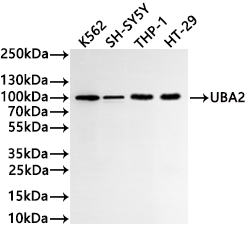
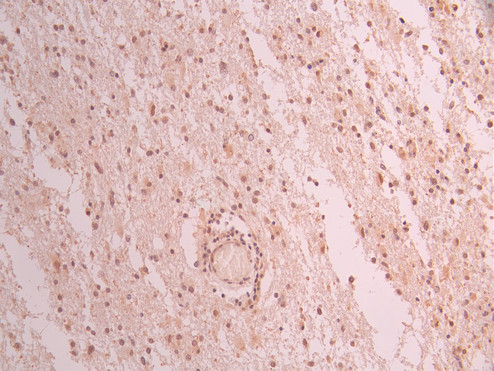
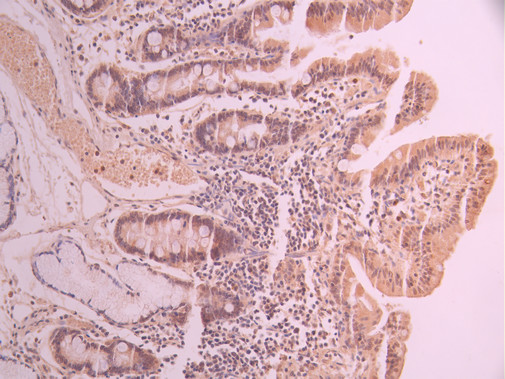
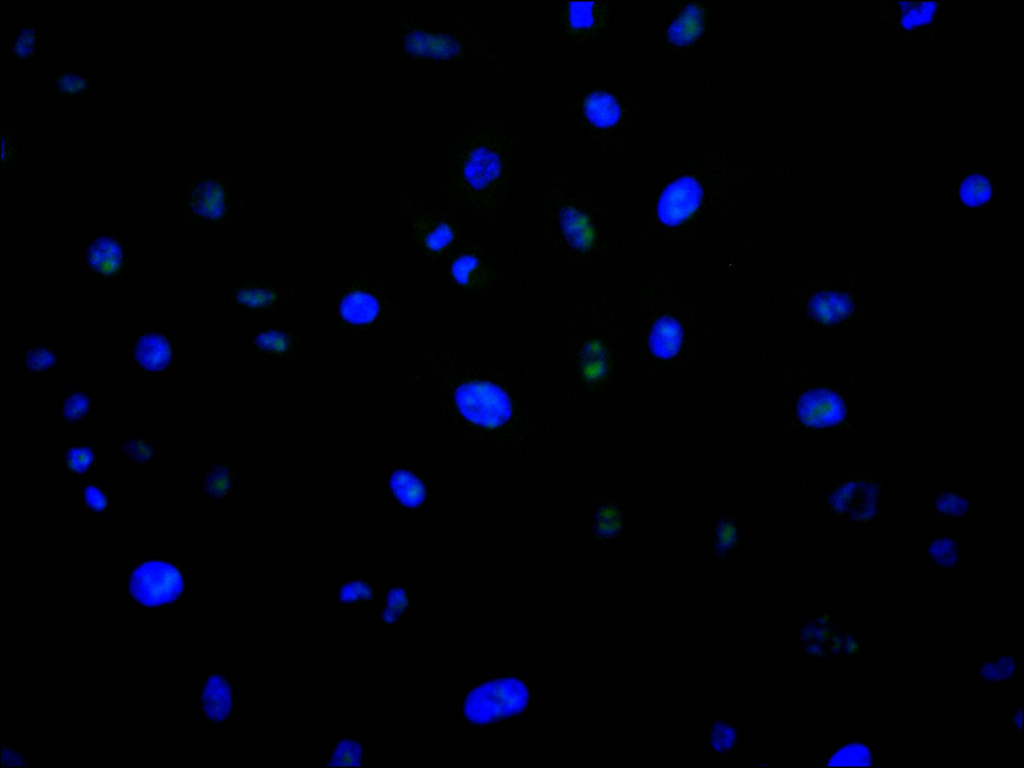
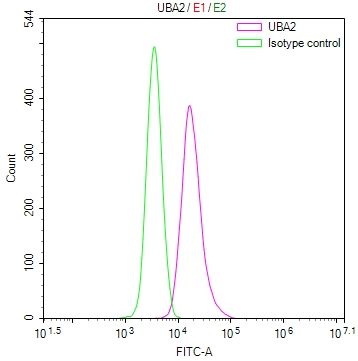
Validation across multiple platforms demonstrates genuine experimental flexibility. Western blot analysis detects UBA2 in diverse human cell lines including K562, SH-SY5Y, THP-1, and HT-29, with the observed band appearing at approximately 100 kDa rather than the predicted 71 kDa molecular weight. This size difference likely reflects post-translational modifications such as glycosylation or the protein's participation in stable complexes. Immunohistochemistry applications have been validated in human glioma and small intestine tissues using citrate buffer antigen retrieval, while immunofluorescence staining in A549 cells reveals clear subcellular localization patterns. Flow cytometry validation in Jurkat cells confirms utility for single-cell analysis applications.
Whether investigating SUMOylation dynamics in cancer models, characterizing protein modification pathways, or exploring cellular stress mechanisms, this antibody provides a reliable tool for researchers working across multiple experimental platforms with human samples.
There are currently no reviews for this product.





