
Call us
301-363-4651 (Available 9 a.m. to 5 p.m. CST from Monday to Friday)

| Code | CSB-RA991252A0HU |
| Size | US$210 |
| Order now | |
| Image |
|
| Have Questions? | Leave a Message or Start an on-line Chat |
| Application | Recommended Dilution |
|---|---|
| WB | 1:500-1:2000 |
| IHC | 1:50-1:200 |
| FC | 1:50-1:200 |
UFC1 serves as the E2 conjugating enzyme in the UFMylation pathway, a ubiquitin-like modification system that plays critical roles in endoplasmic reticulum homeostasis, ribosome quality control, and cellular stress responses. Dysregulation of UFMylation has been implicated in various pathological conditions, including cancer progression and neurodegenerative diseases, making UFC1 an increasingly important target for researchers investigating protein modification networks and their contributions to disease mechanisms.
This recombinant monoclonal antibody, generated against a synthetic peptide derived from human UFC1, offers the consistency and reliability that demanding experimental workflows require. As a sequence-defined reagent produced from a single clone (12C11), it eliminates the lot-to-lot variability that can compromise longitudinal studies and ensures reproducible results across your research program.
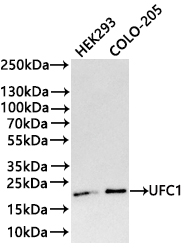
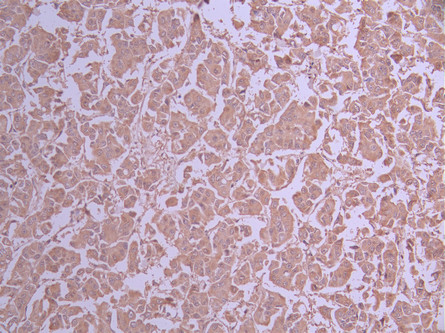
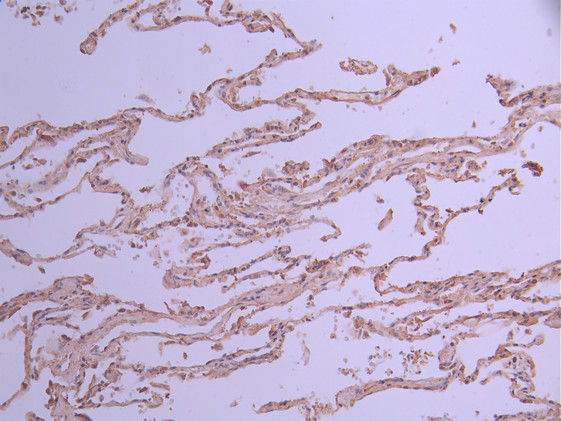
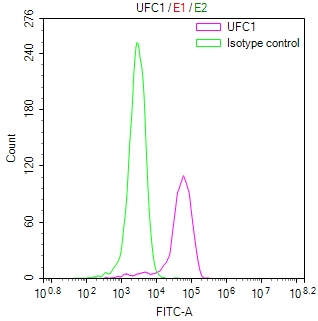
Validation studies demonstrate robust performance across multiple applications. In western blot analysis, the antibody detects a band at the predicted 19 kDa molecular weight in both HEK293 and COLO-205 cell lysates, confirming specificity for the target protein. Immunohistochemistry testing reveals clear staining in paraffin-embedded human breast cancer and lung tissue sections using citrate buffer antigen retrieval, providing researchers with optimized protocols for tissue-based investigations. Flow cytometry validation in MCF-7 cells shows distinct signal separation from isotype controls, supporting intracellular detection studies in fixed and permeabilized samples.
The antibody's versatility across western blotting, immunohistochemistry, and flow cytometry makes it well-suited for comprehensive UFC1 studies, from initial expression screening to detailed localization analysis. Researchers investigating UFMylation biology, ER stress pathways, or the emerging connections between this modification system and oncogenesis will find this antibody a dependable tool for advancing their work.
There are currently no reviews for this product.





