
Call us
301-363-4651 (Available 9 a.m. to 5 p.m. CST from Monday to Friday)

| Code | CSB-RA969203A0HU |
| Size | US$210 |
| Order now | |
| Image |
|
| Have Questions? | Leave a Message or Start an on-line Chat |
| Application | Recommended Dilution |
|---|---|
| IHC | 1:50-1:200 |
| IF | 1:50-1:200 |
| FC | 1:50-1:200 |
ULK3 is a serine/threonine-protein kinase belonging to the Unc-51-like kinase family, playing important roles in autophagy regulation, Hedgehog signaling, and cell cycle control. This kinase has garnered significant research interest for its involvement in cellular stress responses and its potential implications in cancer biology, where dysregulated autophagy and Hedgehog pathway activity contribute to tumor development and progression.
This recombinant monoclonal antibody, clone 4D2, offers researchers the reproducibility and consistency that recombinant technology provides. Generated against a synthetic peptide derived from human ULK3, the antibody is produced with a defined sequence, ensuring lot-to-lot uniformity that supports longitudinal studies and reliable experimental replication. The rabbit IgG format, purified by affinity chromatography, delivers high specificity for detecting ULK3 in human samples.
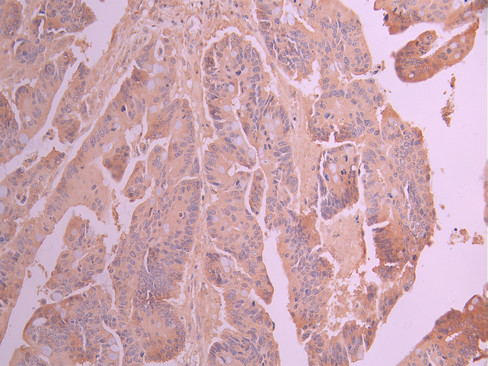
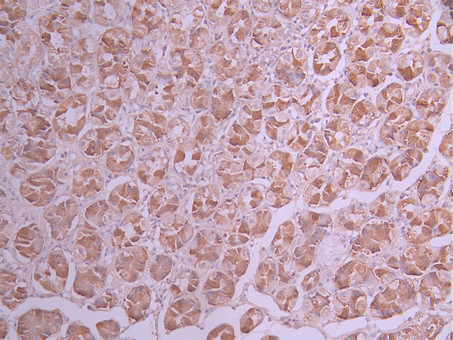
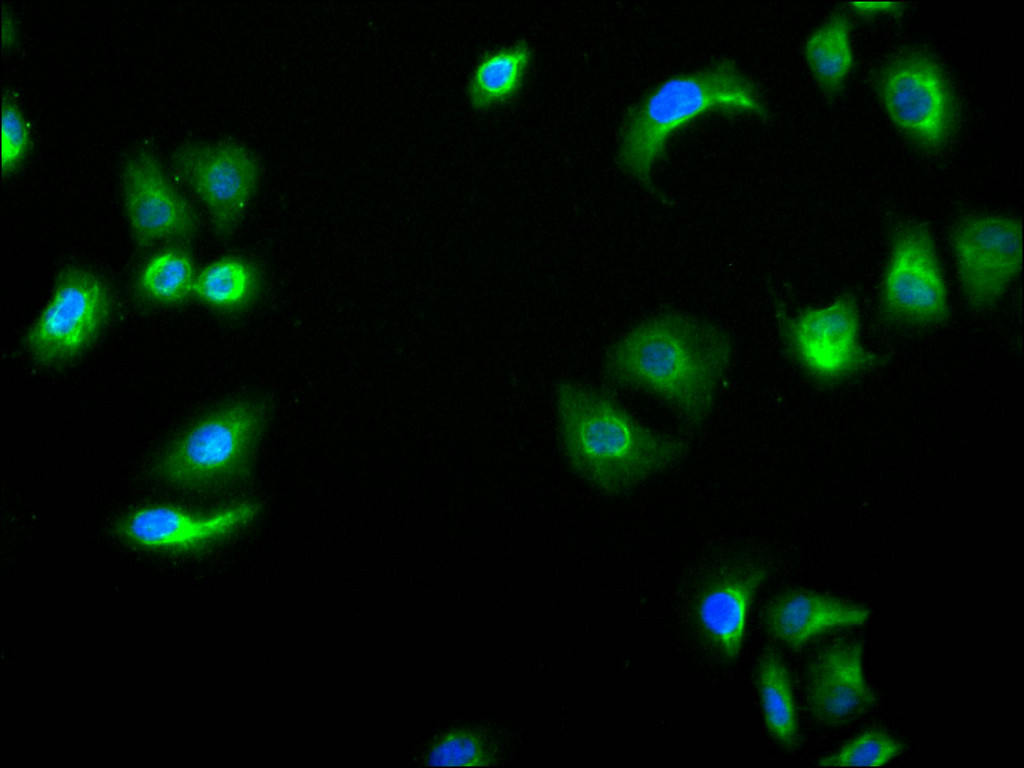
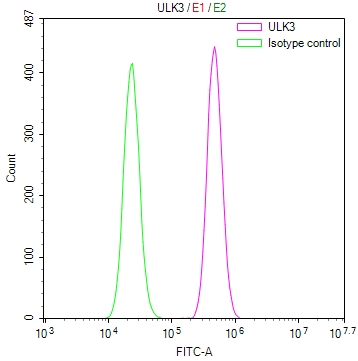
Validation across multiple applications demonstrates this antibody's versatility in diverse experimental workflows. Immunohistochemistry studies confirm robust performance in paraffin-embedded human tissues, with clear staining observed in colorectal cancer and stomach tissue sections using citrate buffer antigen retrieval at dilutions of 1:100. For cellular localization studies, immunofluorescence analysis in HeLa cells reveals distinct ULK3 detection when counterstained with DAPI. Flow cytometry validation using PC-3 prostate cancer cells shows a clear positive shift compared to isotype controls, confirming utility for quantitative single-cell analysis of intracellular ULK3 expression.
This antibody serves researchers investigating autophagy mechanisms, Hedgehog signaling pathways, and kinase biology in cancer contexts. Its validated performance across immunohistochemistry, immunofluorescence, and flow cytometry applications makes it a practical choice for studies examining ULK3 expression patterns in both tissue and cell-based systems.
There are currently no reviews for this product.





