
Call us
301-363-4651 (Available 9 a.m. to 5 p.m. CST from Monday to Friday)

| Code | CSB-RA178691A0HU |
| Size | US$210 |
| Order now | |
| Image |
|
| Have Questions? | Leave a Message or Start an on-line Chat |
| Application | Recommended Dilution |
|---|---|
| WB | 1:500-1:2000 |
| IHC | 1:50-1:200 |
| IF | 1:50-1:200 |
| FC | 1:50-1:200 |
Uracil-DNA glycosylase (UNG) serves as a critical guardian of genomic integrity, initiating base excision repair by removing uracil residues that arise from cytosine deamination or misincorporation of dUMP during DNA replication. This enzyme plays essential roles in maintaining DNA fidelity across dividing cells and has garnered significant attention in cancer research, immunology studies examining class switch recombination, and investigations into DNA damage response pathways.
This recombinant monoclonal antibody, generated from clone 8H1 in rabbit host, offers the reproducibility and consistency that demanding research applications require. Because recombinant antibodies are produced from defined sequences rather than traditional hybridoma methods, researchers benefit from lot-to-lot uniformity that supports longitudinal studies and ensures experimental comparability across collaborative projects.
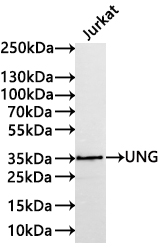
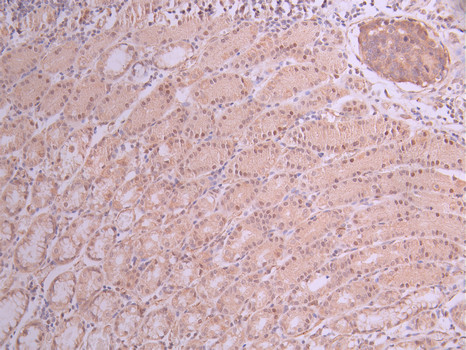
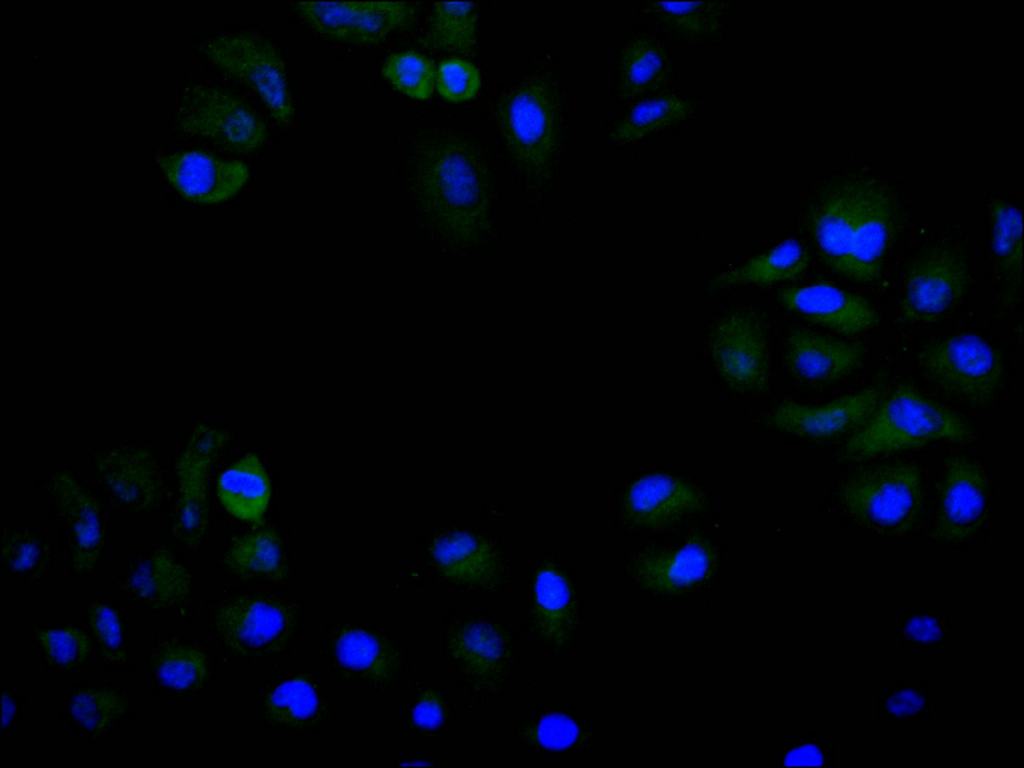
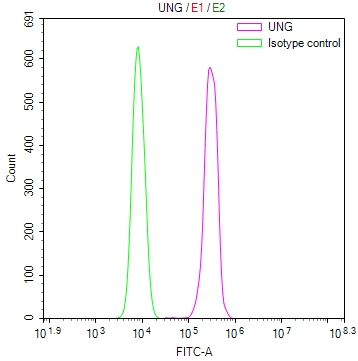
Validation testing demonstrates reliable performance across multiple detection platforms. Western blot analysis of Jurkat whole cell lysate reveals a clean band at the predicted 35 kDa molecular weight, confirming specific detection of UNG protein at dilutions ranging from 1:500 to 1:2000. Immunohistochemical staining in paraffin-embedded human gastric cancer tissue shows effective antigen detection following citrate buffer retrieval, while immunofluorescence studies in HeLa cells demonstrate clear nuclear localization patterns consistent with UNG's role in DNA repair. Flow cytometry analysis further confirms utility for single-cell applications, with distinct population shifts observed in fixed and permeabilized HeLa cells.
This antibody provides researchers studying DNA repair mechanisms, mutagenesis, or cancer biology with a versatile tool validated across complementary techniques, enabling comprehensive characterization of UNG expression and localization in human samples.
There are currently no reviews for this product.





