
Call us
301-363-4651 (Available 9 a.m. to 5 p.m. CST from Monday to Friday)

| Code | CSB-RA192026A0HU |
| Size | US$210 |
| Order now | |
| Image |
|
| Have Questions? | Leave a Message or Start an on-line Chat |
| Application | Recommended Dilution |
|---|---|
| WB | 1:500-1:5000 |
| IHC | 1:50-1:200 |
USP7, also known as HAUSP (herpesvirus-associated ubiquitin-specific protease), is a deubiquitinating enzyme that plays a pivotal role in regulating protein stability through the removal of ubiquitin chains from target substrates. This enzyme has emerged as a critical node in cellular homeostasis, influencing the stability of key tumor suppressors including p53 and MDM2, making it an intensively studied target in cancer biology and epigenetic regulation research.
This recombinant monoclonal antibody, generated from clone 7F10, offers the reproducibility and consistency that demanding experimental workflows require. Because the antibody sequence is defined and produced recombinantly in rabbit host cells, researchers benefit from lot-to-lot uniformity that eliminates the variability often encountered with traditional hybridoma-derived antibodies. The affinity-chromatography purification ensures high specificity for your target.
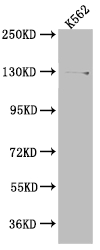
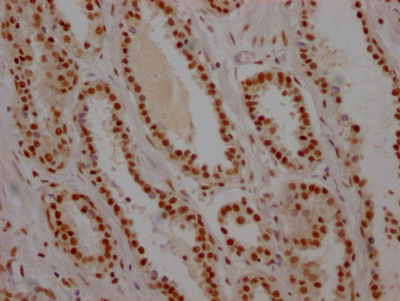
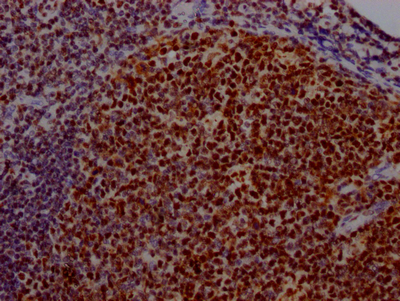
Validation data demonstrates reliable performance across multiple applications, providing flexibility for diverse experimental approaches. In western blot analysis of K562 whole cell lysate, the antibody detects a band at approximately 140 kDa, slightly higher than the predicted molecular weight of 127-129 kDa—a shift commonly attributed to post-translational modifications such as phosphorylation or ubiquitination that USP7 is known to undergo. Immunohistochemistry validation in paraffin-embedded human prostate cancer and tonsil tissue sections confirms robust detection in clinically relevant sample types, while immunofluorescence staining in HeLa cells demonstrates clear signal suitable for subcellular localization studies.
Whether investigating USP7's role in oncogenic pathways, exploring its function in viral infection mechanisms, or examining its broader contributions to protein quality control, this antibody provides a dependable tool for advancing your research in cancer biology, epigenetics, and cell signaling.
There are currently no reviews for this product.





