
Call us
301-363-4651 (Available 9 a.m. to 5 p.m. CST from Monday to Friday)

| Code | CSB-RA109932A0HU |
| Size | US$210 |
| Order now | |
| Image |
|
| Have Questions? | Leave a Message or Start an on-line Chat |
| Application | Recommended Dilution |
|---|---|
| IHC | 1:50-1:200 |
| IF | 1:50-1:200 |
| FC | 1:50-1:200 |
AKAP8, also known as A-kinase anchor protein 95 kDa, serves as a critical scaffolding protein that localizes protein kinase A to specific subcellular compartments, playing essential roles in chromatin condensation during mitosis and DNA replication regulation. This nuclear matrix protein has garnered significant research interest for its involvement in cell cycle progression and its emerging connections to cancer biology, making it a valuable target for investigators studying fundamental cellular processes.
This recombinant monoclonal antibody, generated from clone 16E6 in rabbit host, offers the reproducibility and consistency that demanding research applications require. Because recombinant antibodies are produced from defined genetic sequences rather than traditional hybridoma methods, researchers benefit from lot-to-lot uniformity that supports long-term studies and ensures comparable results across experiments. The affinity-purified rabbit IgG format provides excellent signal-to-noise characteristics while maintaining specificity against the human AKAP8 peptide immunogen, with validated cross-species reactivity extending to mouse samples.
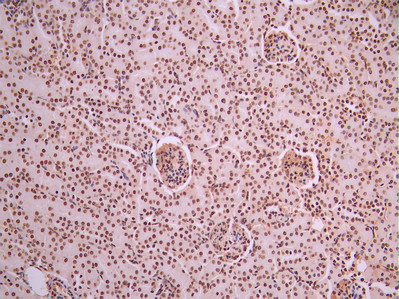
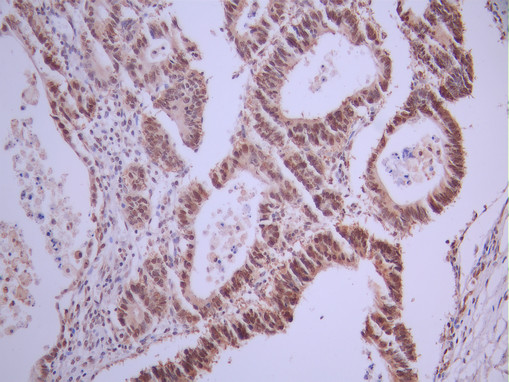
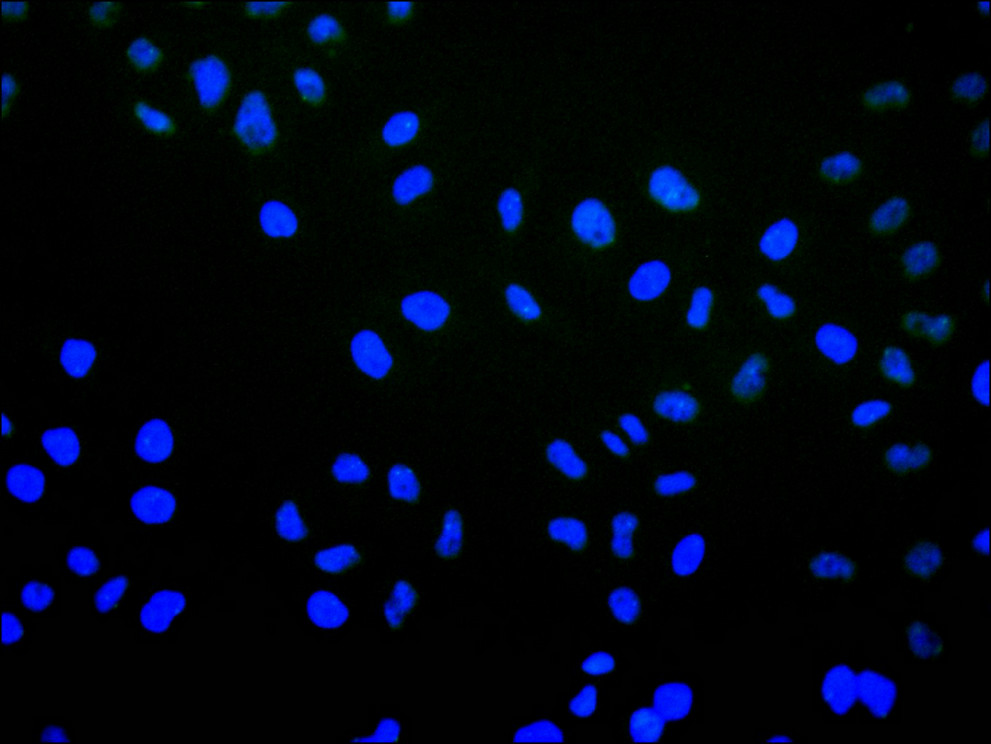
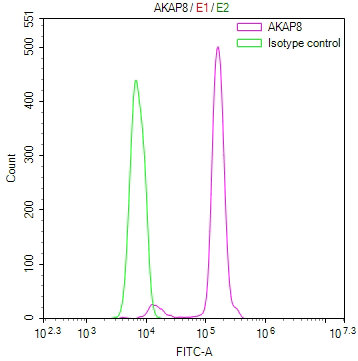
Validation studies demonstrate robust performance across multiple experimental platforms. Immunohistochemistry applications have been confirmed in both paraffin-embedded mouse kidney tissue and human colorectal cancer sections using citrate buffer antigen retrieval, with recommended dilutions ranging from 1:50 to 1:200. Immunofluorescence staining in HeLa cells reveals clear nuclear localization patterns consistent with AKAP8's known biology, while flow cytometry analysis of the same cell line shows distinct positive population shifts compared to isotype controls.
For cell biology researchers investigating nuclear architecture, cell cycle regulation, or PKA signaling compartmentalization, this antibody provides a reliable tool with demonstrated versatility across tissue and cellular analysis workflows.
There are currently no reviews for this product.





