
Call us
301-363-4651 (Available 9 a.m. to 5 p.m. CST from Monday to Friday)

| Code | CSB-RA175460A0HU |
| Size | US$210 |
| Order now | |
| Image |
|
| Have Questions? | Leave a Message or Start an on-line Chat |
| Application | Recommended Dilution |
|---|---|
| IHC | 1:50-1:200 |
| IF | 1:50-1:200 |
| FC | 1:50-1:200 |
ATP7B, also known as Wilson disease-associated protein, is a copper-transporting ATPase essential for maintaining cellular copper homeostasis. This P-type ATPase facilitates copper incorporation into ceruloplasmin and mediates biliary copper excretion, making it a critical focus for researchers investigating metabolic disorders, particularly Wilson disease, as well as broader studies of metal ion transport and signal transduction pathways.
This recombinant monoclonal antibody, clone 36D12, offers the consistency and reliability that demanding research protocols require. Generated through recombinant technology with a defined sequence, it eliminates the lot-to-lot variability inherent in traditional hybridoma-derived antibodies, ensuring reproducible results across extended studies and multi-site collaborations. The rabbit IgG format, raised against a synthetic peptide derived from human ATP7B, provides excellent specificity for your target detection needs.
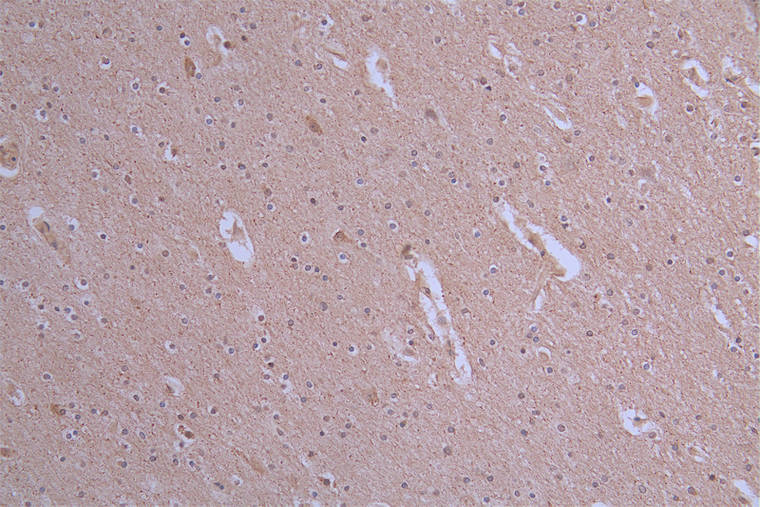
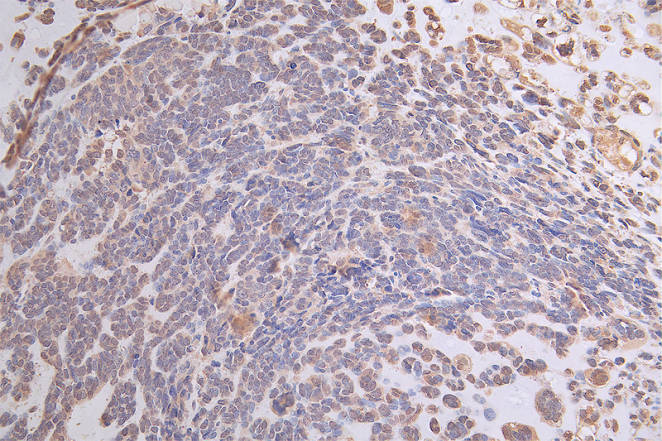
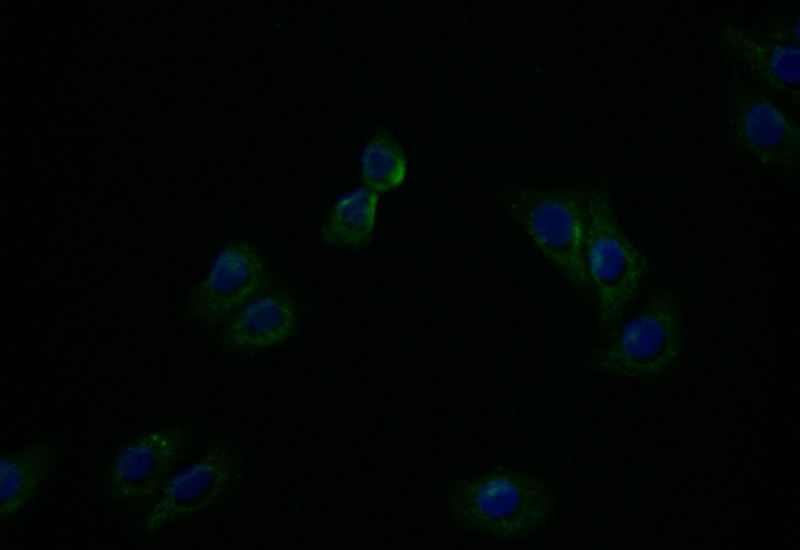
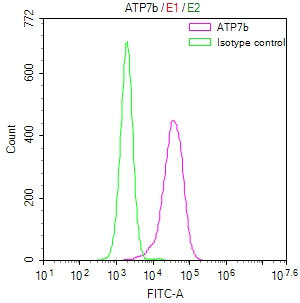
Validation across multiple applications demonstrates this antibody's versatility in your experimental workflows. Immunohistochemistry studies confirm robust performance in paraffin-embedded human tissues, with successful staining demonstrated in both brain tissue and ovarian cancer samples at dilutions of 1:50. For cellular localization studies, immunofluorescence analysis in HepG2 cells reveals clear subcellular distribution patterns when counter-stained with DAPI. Flow cytometry validation, also performed in HepG2 cells, shows distinct positive population shifts compared to isotype controls, supporting quantitative expression analysis applications.
The antibody is supplied in a stabilized liquid format with glycerol for convenient long-term storage at -20°C or -80°C. Whether you're investigating copper metabolism dysfunction in disease models, examining ATP7B expression patterns in cancer research, or exploring signal transduction mechanisms, this recombinant antibody provides the dependable performance your experiments demand.
There are currently no reviews for this product.





