
Call us
301-363-4651 (Available 9 a.m. to 5 p.m. CST from Monday to Friday)

| Code | CSB-RA940706A0HU |
| Size | US$210 |
| Order now | |
| Image |
|
| Have Questions? | Leave a Message or Start an on-line Chat |
| Application | Recommended Dilution |
|---|---|
| WB | 1:500-1:2000 |
| IHC | 1:50-1:200 |
| IF | 1:50-1:200 |
| FC | 1:50-1:200 |
BCL11A is a zinc finger transcription factor that plays a pivotal role in hematopoietic development and has emerged as a critical regulator of fetal-to-adult hemoglobin switching. Its significance in suppressing fetal hemoglobin expression has made it a compelling therapeutic target for sickle cell disease and beta-thalassemia research, while its involvement in B-cell malignancies and neural development continues to attract investigators across multiple disciplines.
This recombinant monoclonal antibody, clone 2C11, offers the reproducibility and consistency that demanding research applications require. Generated against a synthetic peptide derived from human BCL11A, the antibody is produced using recombinant technology, ensuring sequence-defined specificity and eliminating the lot-to-lot variability that can compromise longitudinal studies or multi-site collaborations.
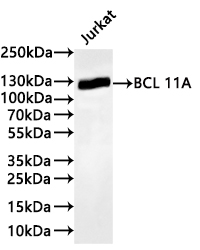
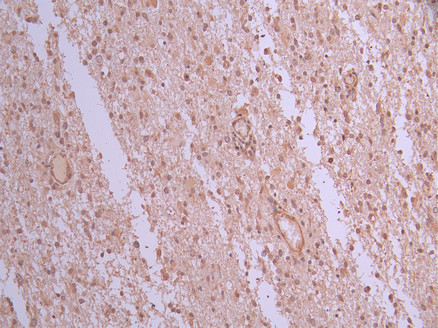
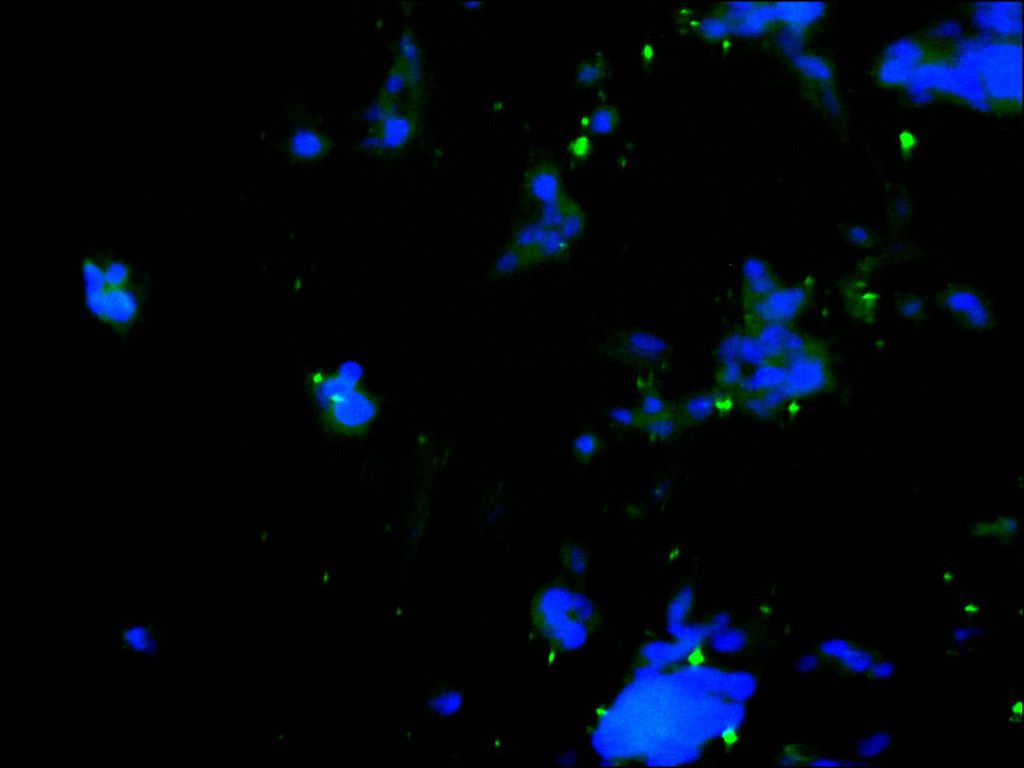
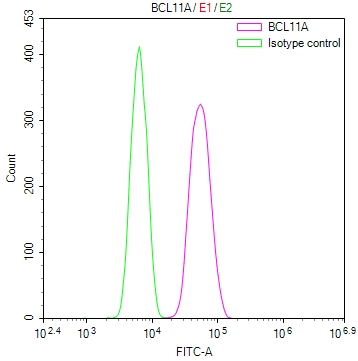
Validation across multiple platforms demonstrates genuine experimental flexibility. Western blot analysis in Jurkat whole cell lysate reveals detection at approximately 125 kDa, which exceeds the predicted molecular weight of 91 kDa—a difference likely attributable to post-translational modifications such as glycosylation or phosphorylation events known to affect BCL11A. Immunohistochemistry has been successfully performed on paraffin-embedded human glioma tissue using citrate buffer antigen retrieval, while immunofluorescence and flow cytometry applications have been validated in SH-SY5Y neuroblastoma cells, confirming nuclear localization patterns consistent with BCL11A's function as a transcription factor.
The antibody is supplied in a glycerol-containing buffer optimized for long-term storage stability. Whether investigating hemoglobin switching mechanisms, exploring BCL11A's role in lymphoid malignancies, or examining its contributions to neurodevelopmental processes, this antibody provides a reliable tool for advancing your research objectives.
There are currently no reviews for this product.





