
Call us
301-363-4651 (Available 9 a.m. to 5 p.m. CST from Monday to Friday)

| Code | CSB-RA310122A0HU |
| Size | US$210 |
| Order now | |
| Image |
|
| Have Questions? | Leave a Message or Start an on-line Chat |
| Application | Recommended Dilution |
|---|---|
| IHC | 1:50-1:200 |
| FC | 1:50-1:200 |
BNIP3L, also known as NIX, is a BH3-only protein that plays a central role in programmed mitochondrial clearance through mitophagy. This protein is essential for the selective elimination of mitochondria during erythrocyte maturation and serves as a critical regulator of cell death pathways. BNIP3L has garnered significant research attention for its involvement in hypoxia-induced autophagy, cardiac homeostasis, and tumor suppression, making it a valuable target for studies spanning cancer biology, metabolic regulation, and developmental processes.
This recombinant monoclonal antibody, clone 12C4, offers the consistency and reliability that demanding experimental workflows require. Produced using recombinant technology in rabbit host, this antibody provides sequence-defined specificity against human BNIP3L, ensuring reproducible results across experiments and eliminating the lot-to-lot variability often encountered with traditional hybridoma-derived antibodies. The affinity-chromatography purification yields a highly pure reagent suitable for sensitive detection applications.
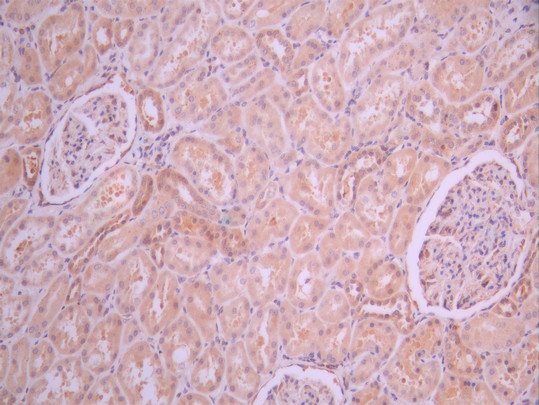
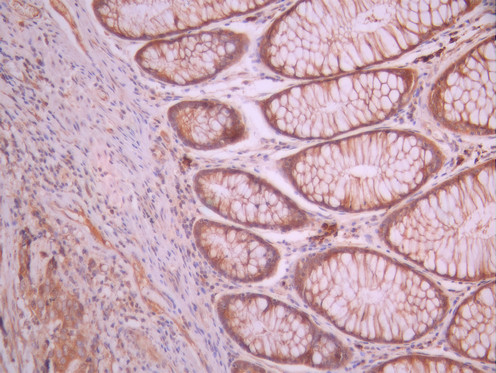
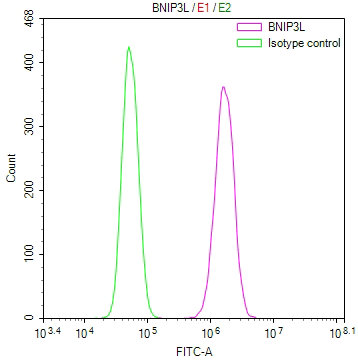
Validation studies demonstrate robust performance across multiple platforms. Immunohistochemistry staining in paraffin-embedded human kidney tissue and colorectal cancer specimens at 1:100 dilution reveals clear target detection using standard citrate buffer antigen retrieval protocols on automated Leica Bond systems. Flow cytometry analysis using the 786-O renal cell carcinoma line confirms intracellular detection capability, with distinct signal separation from isotype controls when cells are fixed and permeabilized.
Whether investigating mitophagy mechanisms, exploring BNIP3L's role in tumor microenvironment adaptation, or examining its function in tissue-specific contexts, this antibody provides the experimental flexibility researchers need. The validated performance in both tissue sections and cell-based assays supports diverse cell biology research applications.
There are currently no reviews for this product.





