
Call us
301-363-4651 (Available 9 a.m. to 5 p.m. CST from Monday to Friday)

| Code | CSB-RA577137A0HU |
| Size | US$210 |
| Order now | |
| Image |
|
| Have Questions? | Leave a Message or Start an on-line Chat |
| Application | Recommended Dilution |
|---|---|
| IHC | 1:50-1:200 |
Complement C1q subcomponent subunit B plays a central role in the classical complement pathway, serving as the recognition component that initiates immune responses against pathogens and apoptotic cells. C1QB assembles with C1QA and C1QC chains to form the C1q complex, which binds antibody-antigen complexes and triggers the complement cascade. Beyond its canonical immune functions, C1q has emerged as a key player in synaptic pruning during neurodevelopment, tissue remodeling, and clearance of cellular debris, making it a target of considerable interest across immunology, neuroscience, and autoimmune disease research.
This recombinant monoclonal antibody, clone 16D7, offers the reproducibility and consistency that demanding research protocols require. Generated against a synthetic peptide derived from human C1QB, the antibody is produced using recombinant technology, ensuring sequence-defined specificity and eliminating the lot-to-lot variability that can compromise longitudinal studies. The rabbit IgG format provides excellent signal amplification in immunodetection workflows.
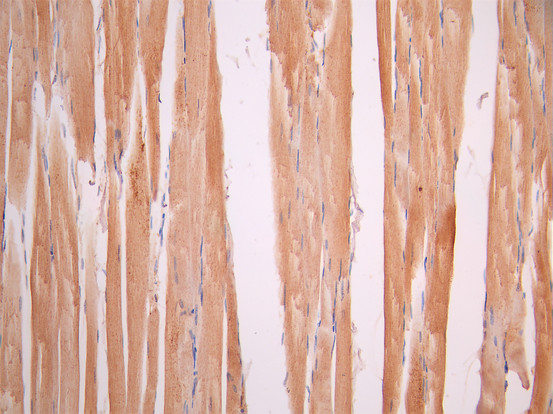
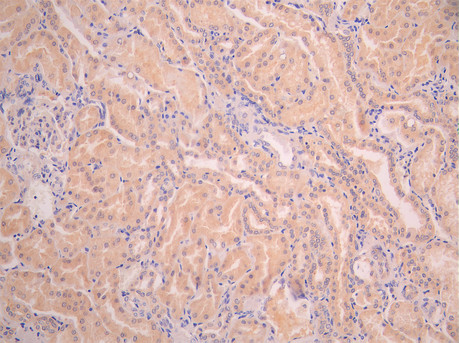
Validation studies demonstrate reliable performance in immunohistochemistry applications on human tissues. Testing at 1:100 dilution on paraffin-embedded human kidney and skeletal muscle sections using a Leica Bond system with citrate buffer antigen retrieval and HRP-polymer detection yielded clear, specific staining patterns. These validated tissue types reflect the broad distribution of complement components and provide researchers with established protocols for studying C1QB expression in both renal and musculoskeletal contexts.
For investigators exploring complement biology, autoimmune pathology, or tissue-specific immune responses, this antibody delivers the specificity and consistency needed for meaningful immunohistochemical analysis of C1QB in human specimens.
There are currently no reviews for this product.





