
Call us
301-363-4651 (Available 9 a.m. to 5 p.m. CST from Monday to Friday)

| Code | CSB-RA935966A0HU |
| Size | US$210 |
| Order now | |
| Image |
|
| Have Questions? | Leave a Message or Start an on-line Chat |
| Application | Recommended Dilution |
|---|---|
| WB | 1:500-1:5000 |
| IHC | 1:50-1:200 |
| IF | 1:50-1:200 |
| FC | 1:50-1:200 |
CBX3, also known as HP1 gamma, serves as a critical component of heterochromatin organization and gene silencing machinery. As a member of the heterochromatin protein 1 family, CBX3 recognizes and binds methylated histone H3 lysine 9, playing essential roles in chromatin remodeling, transcriptional regulation, and maintenance of genome stability. Its involvement in epigenetic mechanisms makes it a valuable target for researchers investigating nuclear signaling pathways, cell differentiation, and chromatin dynamics.
This recombinant monoclonal antibody, generated from a synthesized peptide derived from human CBX3, offers the reproducibility and consistency that demanding epigenetics research requires. As a sequence-defined reagent produced through recombinant technology, it eliminates the lot-to-lot variability that can compromise longitudinal studies, ensuring your experimental conditions remain constant across projects.
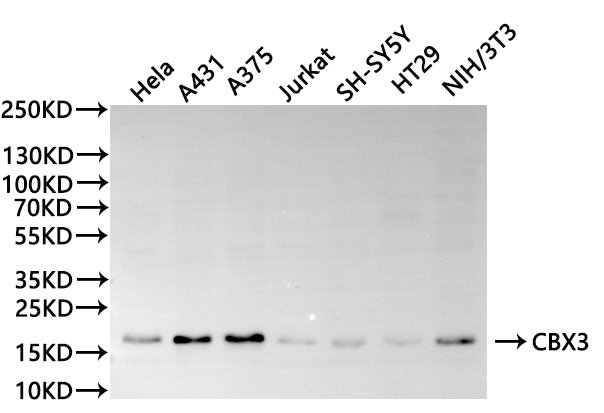
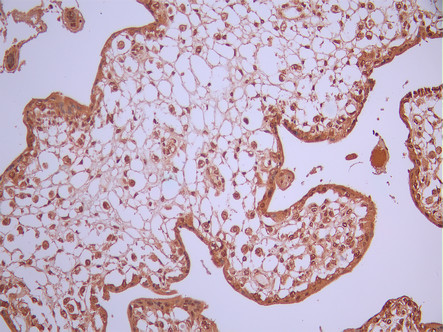
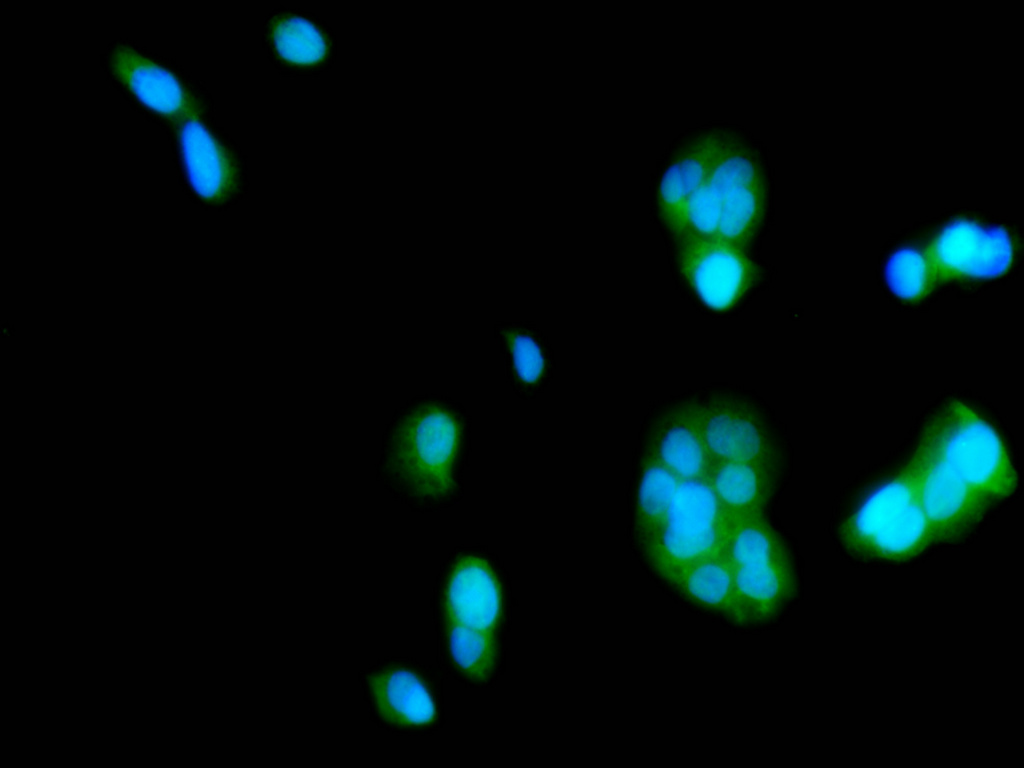
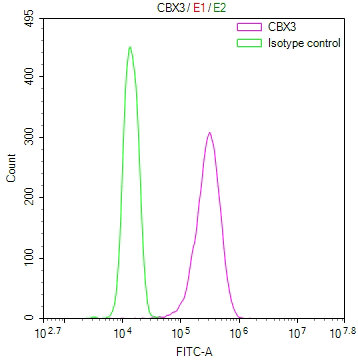
Extensive validation demonstrates this antibody's versatility across multiple experimental platforms. Western blot analysis confirms reliable detection in diverse human cell lines including HeLa, A431, A375, Jurkat, SH-SY5Y, and HT-29, as well as mouse NIH/3T3 cells, supporting cross-species reactivity for comparative studies. The observed band at 21 kDa, slightly smaller than the predicted 24 kDa molecular weight, likely reflects post-translational processing or protein conformation effects common with chromatin-associated proteins. Immunohistochemistry validation in human placenta tissue demonstrates suitability for tissue-based investigations, while immunofluorescence staining in HepG2 cells reveals clear nuclear localization patterns consistent with CBX3's known biological function. Flow cytometry analysis in A431 cells further extends its utility for single-cell applications.
Whether you're exploring heterochromatin dynamics, investigating epigenetic regulation, or characterizing nuclear protein complexes, this antibody provides a dependable tool for advancing your chromatin biology research.
There are currently no reviews for this product.





