
Call us
301-363-4651 (Available 9 a.m. to 5 p.m. CST from Monday to Friday)

| Code | CSB-RA243509A0HU |
| Size | US$210 |
| Order now | |
| Image |
|
| Have Questions? | Leave a Message or Start an on-line Chat |
| Application | Recommended Dilution |
|---|---|
| IHC | 1:50-1:200 |
N-cadherin (CDH2) serves as a critical mediator of cell-cell adhesion in neural tissues, cardiac muscle, and various epithelial contexts. Beyond its structural role, this calcium-dependent adhesion molecule has emerged as a key player in epithelial-to-mesenchymal transition, a process intimately linked to cancer metastasis and stem cell biology. Researchers investigating tumor invasion, neural development, or cellular signaling pathways will find N-cadherin expression patterns particularly informative for understanding tissue remodeling and disease progression.
This recombinant monoclonal antibody, generated against a synthetic peptide derived from human N-cadherin, offers the reproducibility that demanding research protocols require. As a sequence-defined reagent produced through recombinant technology, it eliminates the lot-to-lot variability that can compromise longitudinal studies or multi-site collaborations. The rabbit IgG format, purified by affinity chromatography, ensures consistent performance across experimental replicates.
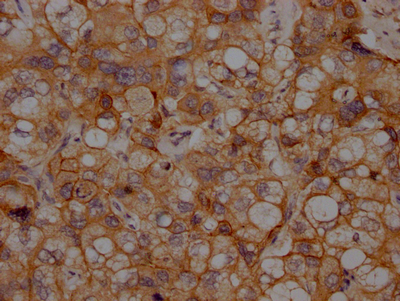
Validation in immunohistochemistry demonstrates reliable detection in formalin-fixed, paraffin-embedded human tissues. Testing on human liver cancer sections using a Leica Bond system with citrate buffer antigen retrieval at pH 6.0 confirmed specific staining at 1:100 dilution, with the recommended working range of 1:50 to 1:200 providing flexibility for optimization across different tissue types and fixation conditions. The antibody is also validated for ELISA applications, supporting researchers who need to quantify N-cadherin levels in addition to visualizing tissue distribution.
For investigators exploring cancer biology, signal transduction mechanisms, or stem cell differentiation, this antibody provides a dependable tool for characterizing N-cadherin expression in human samples, supporting both discovery research and translational studies.
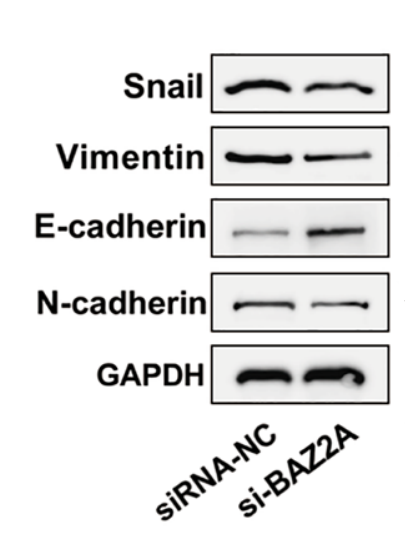
Applications : Western blot
Sample type: cells
Review: Western blot analysis of apoptosis- and EMT-related molecules in LM6 cells with BAZ2A knockdown.
By Anonymous





