
Call us
301-363-4651 (Available 9 a.m. to 5 p.m. CST from Monday to Friday)

| Code | CSB-RA088756A0HU |
| Size | US$210 |
| Order now | |
| Image |
|
| Have Questions? | Leave a Message or Start an on-line Chat |
| Application | Recommended Dilution |
|---|---|
| WB | 1:500-1:5000 |
| IHC | 1:50-1:200 |
CEND1, also known as cell cycle exit and neuronal differentiation protein 1 or BM88 antigen, plays a pivotal role in coordinating the transition from proliferating neural progenitors to post-mitotic neurons. This protein serves as a critical regulator linking cell cycle withdrawal with the initiation of neuronal differentiation programs, making it an essential marker for researchers investigating neurogenesis, neural development, and the molecular mechanisms underlying neuronal fate determination.
This recombinant monoclonal antibody, clone 6A11, offers the consistency and reliability that demanding experimental workflows require. Produced using recombinant technology with a defined sequence, this antibody eliminates the lot-to-lot variability that can compromise longitudinal studies or multi-site collaborations. The rabbit host and monoclonal nature ensure high specificity for human CEND1, while affinity chromatography purification delivers a clean reagent suitable for sensitive detection methods.
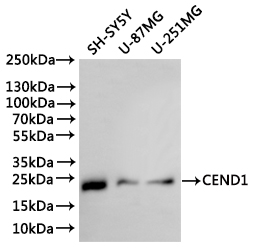
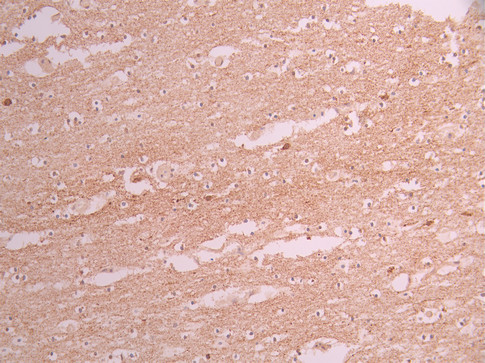
Validation testing demonstrates robust performance across multiple experimental platforms. Western blot analysis successfully detected CEND1 in neuroblastoma and glioblastoma cell lines, including SH-SY5Y, U-87MG, and U-251MG whole cell lysates. The observed band at 22 kDa, rather than the predicted 15 kDa molecular weight, likely reflects post-translational modifications such as glycosylation that are characteristic of many membrane-associated proteins. Immunohistochemistry validation in paraffin-embedded human brain tissue confirms the antibody's utility for examining CEND1 expression patterns in fixed tissue sections, with recommended dilutions ranging from 1:50 to 1:200.
This antibody serves researchers exploring neurodevelopmental biology, neural stem cell differentiation, and neurodegenerative disease mechanisms where understanding the balance between proliferation and differentiation is fundamental to advancing therapeutic strategies.
There are currently no reviews for this product.





