
Call us
301-363-4651 (Available 9 a.m. to 5 p.m. CST from Monday to Friday)

| Code | CSB-RA196900A0HU |
| Size | US$210 |
| Order now | |
| Image |
|
| Have Questions? | Leave a Message or Start an on-line Chat |
| Application | Recommended Dilution |
|---|---|
| WB | 1:500-1:5000 |
| IHC | 1:50-1:200 |
| FC | 1:50-1:200 |
Dyskerin, encoded by the DKC1 gene, serves as a critical component of the H/ACA ribonucleoprotein complex, where it functions as a pseudouridine synthase essential for ribosomal RNA modification and telomerase RNA stabilization. Mutations in DKC1 cause dyskeratosis congenita, a rare inherited disorder characterized by bone marrow failure and increased cancer susceptibility, making this protein a significant target for researchers investigating telomere biology, ribosome biogenesis, and cancer pathogenesis.
This recombinant monoclonal antibody, generated from clone 22B3, offers the reproducibility and consistency that demanding experimental workflows require. Because the antibody sequence is defined and produced recombinantly in rabbit, researchers benefit from lot-to-lot uniformity that traditional hybridoma-derived antibodies cannot guarantee. Affinity purification ensures high specificity for your target while minimizing background interference.
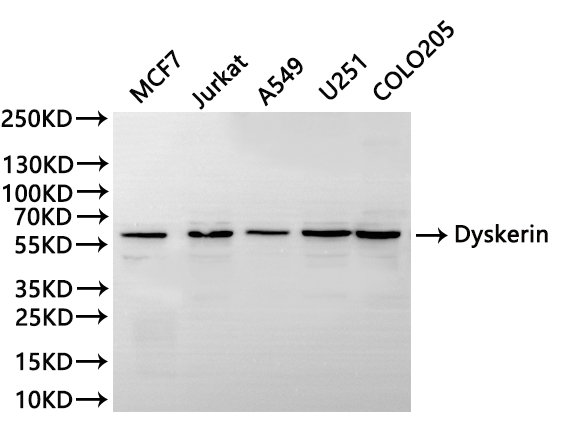
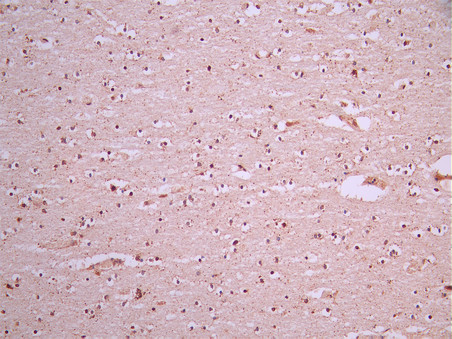
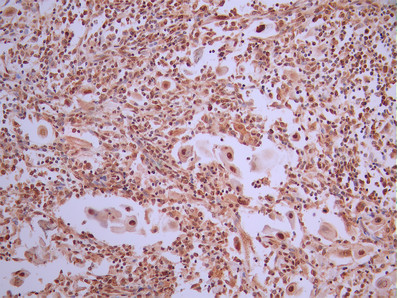
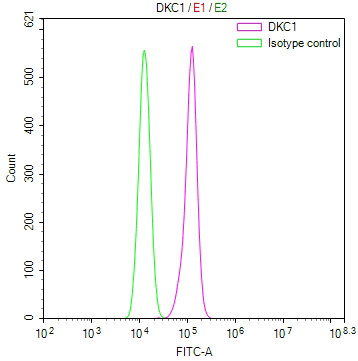
Validation studies demonstrate robust performance across multiple applications. Western blot analysis detects a clean band at the predicted 58 kDa molecular weight across diverse human cell lines including MCF7 breast cancer, Jurkat T lymphocyte, A549 lung carcinoma, U251 glioblastoma, and COLO205 colorectal adenocarcinoma cells, confirming reliable detection in varied cellular contexts. Immunohistochemistry staining has been optimized in paraffin-embedded human brain tissue and cervical cancer specimens, revealing clear nuclear localization consistent with dyskerin's known subcellular distribution. Flow cytometry validation in A549 cells demonstrates effective intracellular detection with appropriate fixation and permeabilization protocols.
Whether you are exploring telomerase regulation, investigating nucleolar function, or characterizing DKC1 expression patterns in disease models, this antibody provides a dependable tool for epigenetics and nuclear signaling research applications.
There are currently no reviews for this product.





