
Call us
301-363-4651 (Available 9 a.m. to 5 p.m. CST from Monday to Friday)

| Code | CSB-RA020728A0HU |
| Size | US$210 |
| Order now | |
| Image |
|
| Have Questions? | Leave a Message or Start an on-line Chat |
| Application | Recommended Dilution |
|---|---|
| IHC | 1:50-1:200 |
| IF | 1:50-1:200 |
| FC | 1:50-1:200 |
Thymidylate kinase, encoded by the DTYMK gene, catalyzes a critical step in the de novo synthesis of dTTP, phosphorylating dTMP to dTDP in the pyrimidine biosynthesis pathway. This enzyme plays an essential role in DNA replication and repair, making it particularly relevant to cancer biology research where nucleotide metabolism is frequently dysregulated. Understanding DTYMK expression and localization provides valuable insights into cellular proliferation mechanisms and potential therapeutic vulnerabilities.
This recombinant monoclonal antibody, clone 12C3, offers the reproducibility and consistency that demanding research applications require. Developed using recombinant technology with a defined sequence, this antibody eliminates the lot-to-lot variability that can compromise longitudinal studies and multi-site collaborations. The rabbit IgG format, raised against a synthetic peptide derived from human DTYMK, ensures specificity for your target while the affinity-chromatography purification delivers a clean reagent ready for sensitive detection methods.
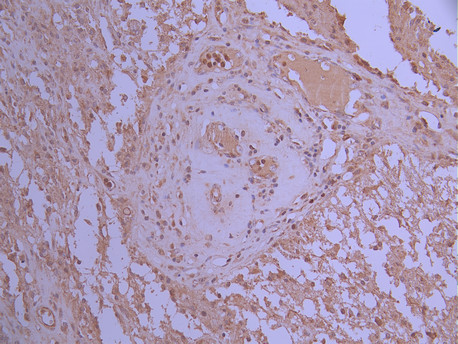
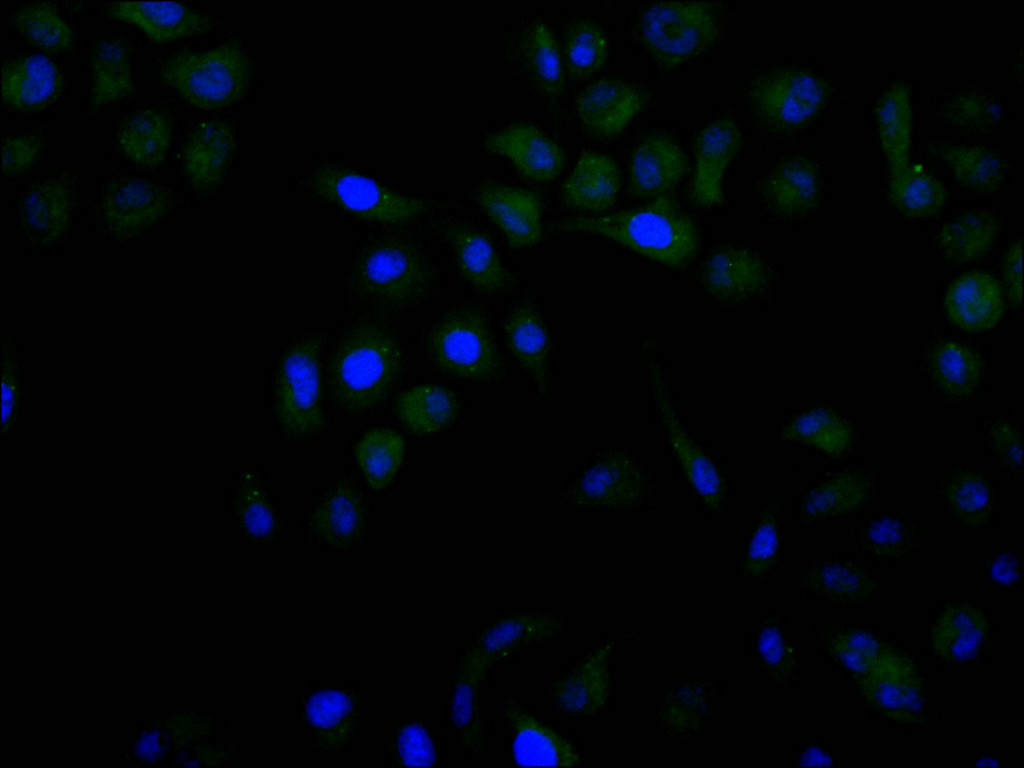
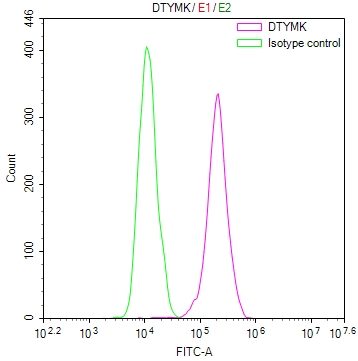
Validation across multiple platforms demonstrates this antibody's versatility in your experimental workflows. Immunohistochemistry studies in paraffin-embedded human glioma tissue at dilutions of 1:50 to 1:200 reveal clear target detection, with antigen retrieval performed using citrate buffer at pH 6.0. Immunofluorescence analysis in HeLa cells shows distinct staining patterns when counter-stained with DAPI, while flow cytometry experiments using HepG2 cells demonstrate clear separation between specific signal and isotype control populations.
Whether investigating nucleotide metabolism in cancer models, studying cell cycle regulation, or exploring DTYMK as a potential biomarker, this antibody provides the reliable detection needed for meaningful results. The validated performance across tissue sections, fixed cells, and flow cytometry applications supports diverse experimental approaches in oncology and cell biology research.
There are currently no reviews for this product.





