
Call us
301-363-4651 (Available 9 a.m. to 5 p.m. CST from Monday to Friday)

| Code | CSB-RA150369A0HU |
| Size | US$210 |
| Order now | |
| Image |
|
| Have Questions? | Leave a Message or Start an on-line Chat |
| Application | Recommended Dilution |
|---|---|
| IHC | 1:50-1:200 |
| FC | 1:50-1:200 |
DYNLL1, also known as dynein light chain 1 or DLC8, serves as a critical hub protein in cellular transport and signaling networks. This compact 8 kDa protein functions as a component of the cytoplasmic dynein motor complex while also regulating diverse cellular processes including apoptosis, cell cycle progression, and neuronal nitric oxide synthase activity. Its involvement in multiple signaling pathways makes DYNLL1 a compelling target for researchers investigating cancer biology, neuroscience, and cellular metabolism.
This recombinant monoclonal antibody, clone 20A1, offers the reproducibility and consistency that demanding experimental workflows require. Developed using recombinant technology with a defined sequence, this rabbit IgG eliminates the lot-to-lot variability that can compromise longitudinal studies or multi-site collaborations. The antibody was raised against a synthetic peptide derived from human DYNLL1 and purified by affinity chromatography to ensure high specificity for your target.
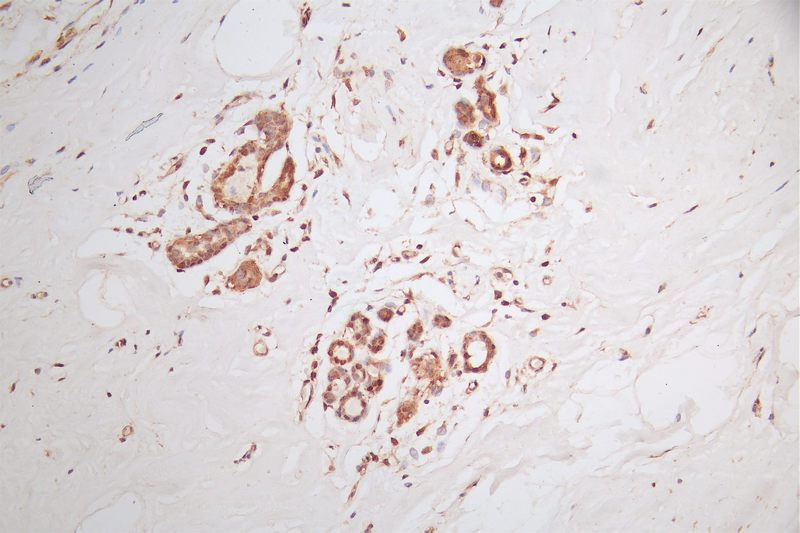
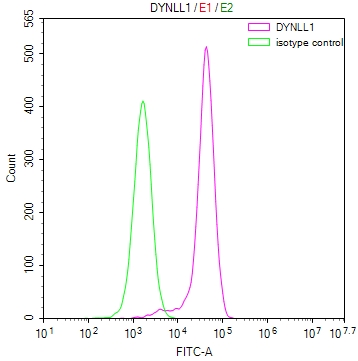
Validation studies demonstrate reliable performance across complementary detection platforms. Immunohistochemistry testing in paraffin-embedded human breast cancer tissue reveals clear staining at dilutions between 1:50 and 1:200, providing flexibility to optimize signal intensity for your specific tissue samples. Flow cytometry analysis using MCF-7 breast cancer cells confirms intracellular detection capability, with distinct positive population shifts compared to isotype controls when cells are fixed and permeabilized.
Whether you are mapping DYNLL1 expression patterns in tumor specimens, investigating its role in dynein-mediated transport, or exploring its function as a protein interaction hub in signal transduction pathways, this antibody provides a dependable tool for advancing your research in epigenetics, nuclear signaling, and cell biology applications.
There are currently no reviews for this product.





