
Call us
301-363-4651 (Available 9 a.m. to 5 p.m. CST from Monday to Friday)

| Code | CSB-RA149810A0HU |
| Size | US$210 |
| Order now | |
| Image |
|
| Have Questions? | Leave a Message or Start an on-line Chat |
| Application | Recommended Dilution |
|---|---|
| WB | 1:500-1:2000 |
| IF | 1:50-1:200 |
| FC | 1:50-1:200 |
Eukaryotic translation elongation factor 1 gamma (EEF1G) serves as an essential component of the elongation factor-1 complex, which facilitates the enzymatic delivery of aminoacyl-tRNAs to the ribosome during protein synthesis. Beyond its canonical role in translation, EEF1G has garnered significant research interest due to its identification as a pancreatic tumor-related protein, suggesting potential involvement in oncogenic processes and making it a compelling target for cancer biology investigations.
This recombinant monoclonal antibody, clone 6F1, offers researchers the reproducibility advantages inherent to recombinant technology. Because the antibody sequence is defined and produced from a stable expression system, you can expect consistent performance across experiments and between lot numbers, eliminating the variability that can complicate long-term studies or multi-site collaborations.
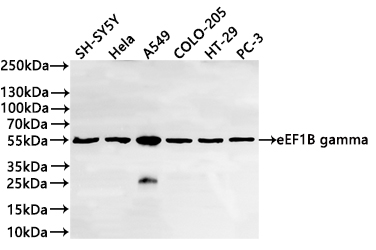
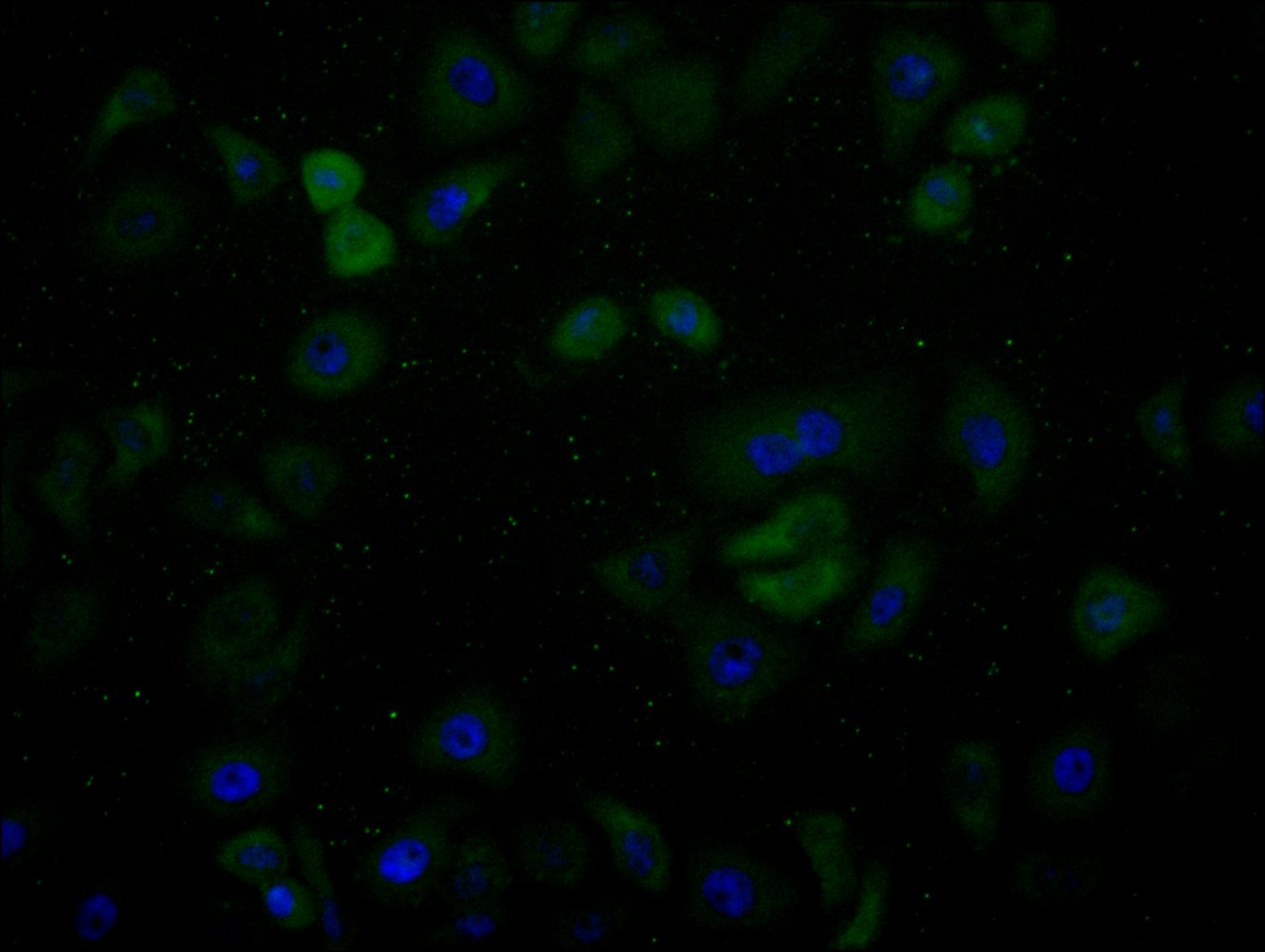
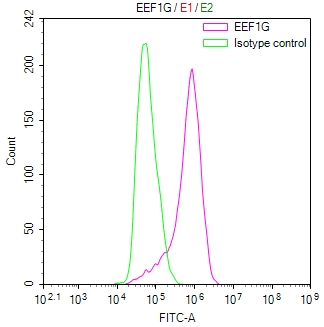
Validation data demonstrates robust performance across multiple experimental platforms. In western blot applications, the antibody detects EEF1G across a diverse panel of human cell lines including SH-SY5Y neuroblastoma, HeLa cervical carcinoma, A549 lung adenocarcinoma, COLO-205 and HT-29 colorectal carcinoma, and PC-3 prostate cancer cells. The observed band at approximately 55 kDa runs slightly higher than the predicted 50 kDa molecular weight, a shift commonly attributed to post-translational modifications such as glycosylation. Immunofluorescence staining in HeLa cells reveals clear cytoplasmic localization patterns, while flow cytometry analysis in BxPC-3 pancreatic cancer cells confirms utility for quantitative single-cell studies.
This antibody supports researchers investigating translational machinery, protein synthesis regulation, and cancer cell biology, providing a reliable tool for exploring EEF1G function across multiple experimental contexts.
There are currently no reviews for this product.





