
Call us
301-363-4651 (Available 9 a.m. to 5 p.m. CST from Monday to Friday)

| Code | CSB-RA952249A0HU |
| Size | US$210 |
| Order now | |
| Image |
|
| Have Questions? | Leave a Message or Start an on-line Chat |
| Application | Recommended Dilution |
|---|---|
| IHC | 1:50-1:200 |
| FC | 1:50-1:200 |
Eukaryotic translation initiation factor 2A plays a distinctive role in protein synthesis, functioning as an alternative pathway for translation initiation that operates independently of the canonical eIF2 complex. This 65 kDa protein has garnered significant research interest for its involvement in cellular stress responses and its potential contributions to translational control mechanisms that influence cell proliferation and survival. Understanding EIF2A function provides valuable insights into how cells maintain protein homeostasis under varying physiological conditions.
This recombinant monoclonal antibody, generated from clone 23F9 in rabbit host, offers the reproducibility and consistency that demanding research applications require. Because the antibody sequence is defined and produced through recombinant technology, you can expect uniform performance across experiments and over time, eliminating the lot-to-lot variability that can complicate long-term studies or multi-site collaborations. Affinity purification ensures high specificity for your target while minimizing background interference.
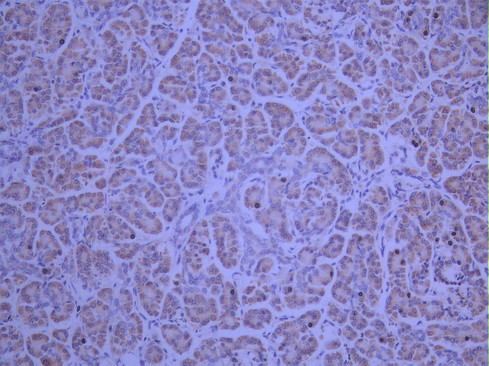
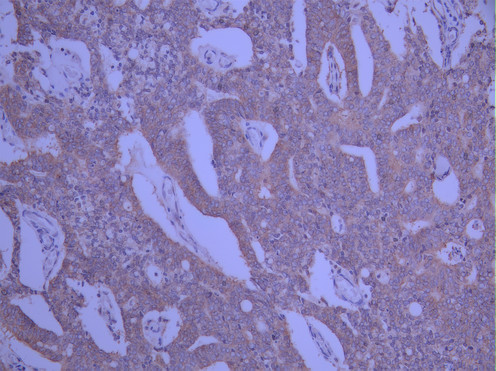
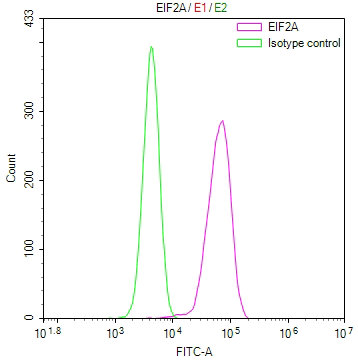
Validation studies demonstrate reliable performance across multiple experimental platforms. Immunohistochemistry staining has been successfully performed in paraffin-embedded human pancreatic tissue and human prostate cancer specimens at 1:100 dilution using citrate buffer antigen retrieval, showing clear target detection with DAB visualization. Flow cytometry analysis in Jurkat cells confirms intracellular detection capability, with distinct signal separation from isotype controls when cells are fixed and permeabilized prior to staining.
This flexibility across tissue-based and cell-based applications makes the antibody well-suited for researchers investigating translational regulation in both normal physiology and disease contexts. Whether you are examining EIF2A expression patterns in clinical specimens or characterizing its role in specific cell populations, this antibody provides a dependable tool for your epigenetics and nuclear signaling research.
There are currently no reviews for this product.





