
Call us
301-363-4651 (Available 9 a.m. to 5 p.m. CST from Monday to Friday)

| Code | CSB-RA250899A0HU |
| Size | US$210 |
| Order now | |
| Image |
|
| Have Questions? | Leave a Message or Start an on-line Chat |
| Application | Recommended Dilution |
|---|---|
| WB | 1:500-1:5000 |
| IHC | 1:50-1:200 |
| IF | 1:50-1:200 |
ERCC2, also known as XPD, serves as an essential helicase subunit of the TFIIH basal transcription factor complex, playing dual roles in both transcription initiation and nucleotide excision repair. This protein is critical for unwinding DNA during damage recognition and repair processes, and mutations in ERCC2 are associated with several human disorders including xeroderma pigmentosum, Cockayne syndrome, and trichothiodystrophy. For researchers investigating DNA repair mechanisms, transcriptional regulation, or the molecular basis of these genetic conditions, reliable detection of ERCC2 is fundamental to advancing their work.
This recombinant monoclonal antibody, clone 17G12, offers the consistency and reproducibility that demanding research applications require. Developed using recombinant technology with a defined sequence, this antibody eliminates the lot-to-lot variability that can compromise longitudinal studies and multi-site collaborations. The rabbit IgG format, raised against a synthesized peptide from human ERCC2, has been affinity-purified to ensure high specificity for your target.
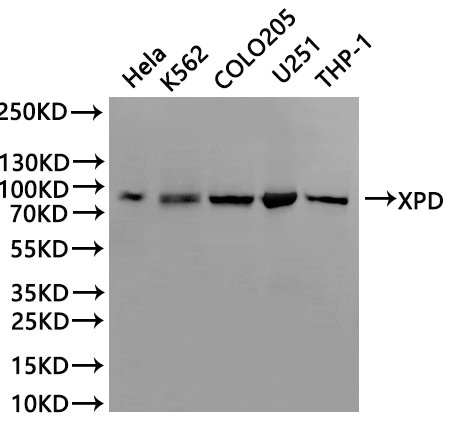
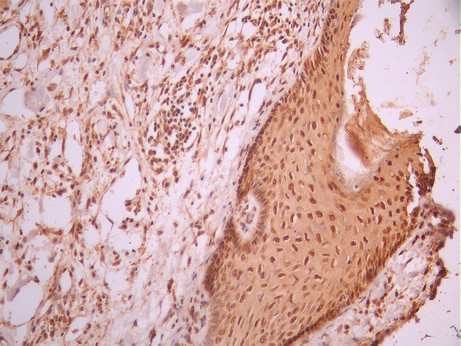
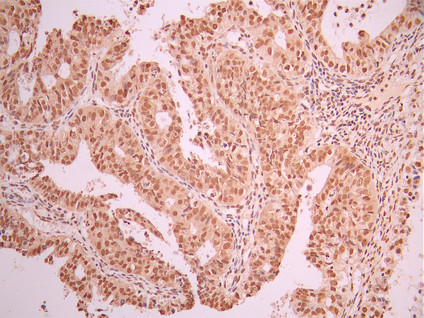
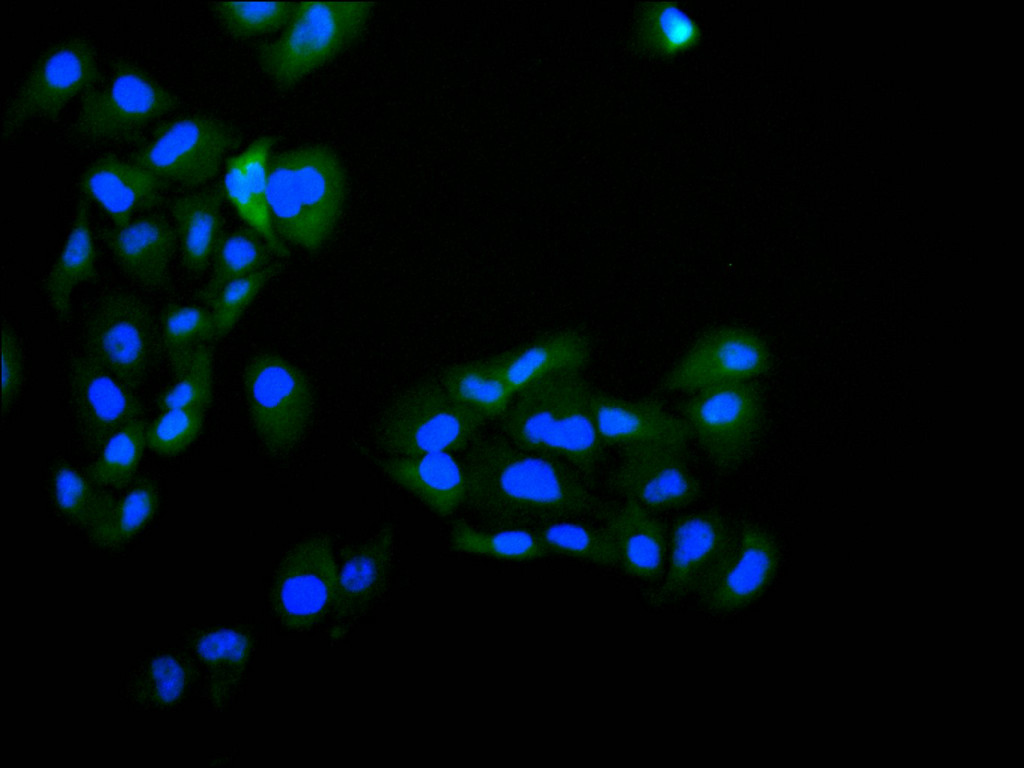
Validation across multiple experimental platforms demonstrates the versatility of this antibody for diverse research workflows. Western blot analysis confirms detection of the expected 87 kDa band across several human cell lines including HeLa, K562, COLO205, U251, and THP-1, providing confidence when working with different cellular models. Immunohistochemistry applications have been validated in paraffin-embedded human skin tissue and ovarian cancer specimens, while immunofluorescence staining in HeLa cells reveals clear nuclear localization consistent with ERCC2's known biological function.
Whether your research focuses on epigenetics, nuclear signaling pathways, or DNA damage response mechanisms, this antibody provides a dependable tool for investigating ERCC2 biology across western blotting, immunohistochemistry, and immunofluorescence applications.
There are currently no reviews for this product.





