
Call us
301-363-4651 (Available 9 a.m. to 5 p.m. CST from Monday to Friday)

| Code | CSB-RA583845A0HU |
| Size | US$210 |
| Order now | |
| Image |
|
| Have Questions? | Leave a Message or Start an on-line Chat |
| Application | Recommended Dilution |
|---|---|
| IF | 1:50-1:200 |
| FC | 1:50-1:200 |
G3BP1 serves as a central nucleating factor in stress granule assembly, making it an essential marker for studying cellular stress responses, RNA metabolism, and translational regulation. This protein rapidly aggregates cytoplasmic mRNA and associated proteins when cells encounter environmental stressors, positioning it at the intersection of multiple signaling pathways including those downstream of Ras-GTPase activating protein. Researchers investigating stress granule dynamics, viral infection responses, or neurodegenerative disease mechanisms will find G3BP1 detection particularly valuable.
This recombinant monoclonal antibody, generated from clone 13E9 in rabbit host, offers the reproducibility that demanding experimental workflows require. Because the antibody sequence is defined and production occurs through recombinant expression, researchers can expect consistent performance across different lots, eliminating a common source of experimental variability that can complicate longitudinal studies or multi-site collaborations.
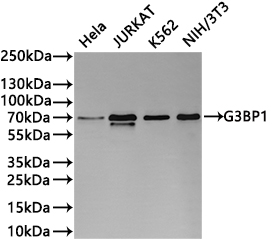
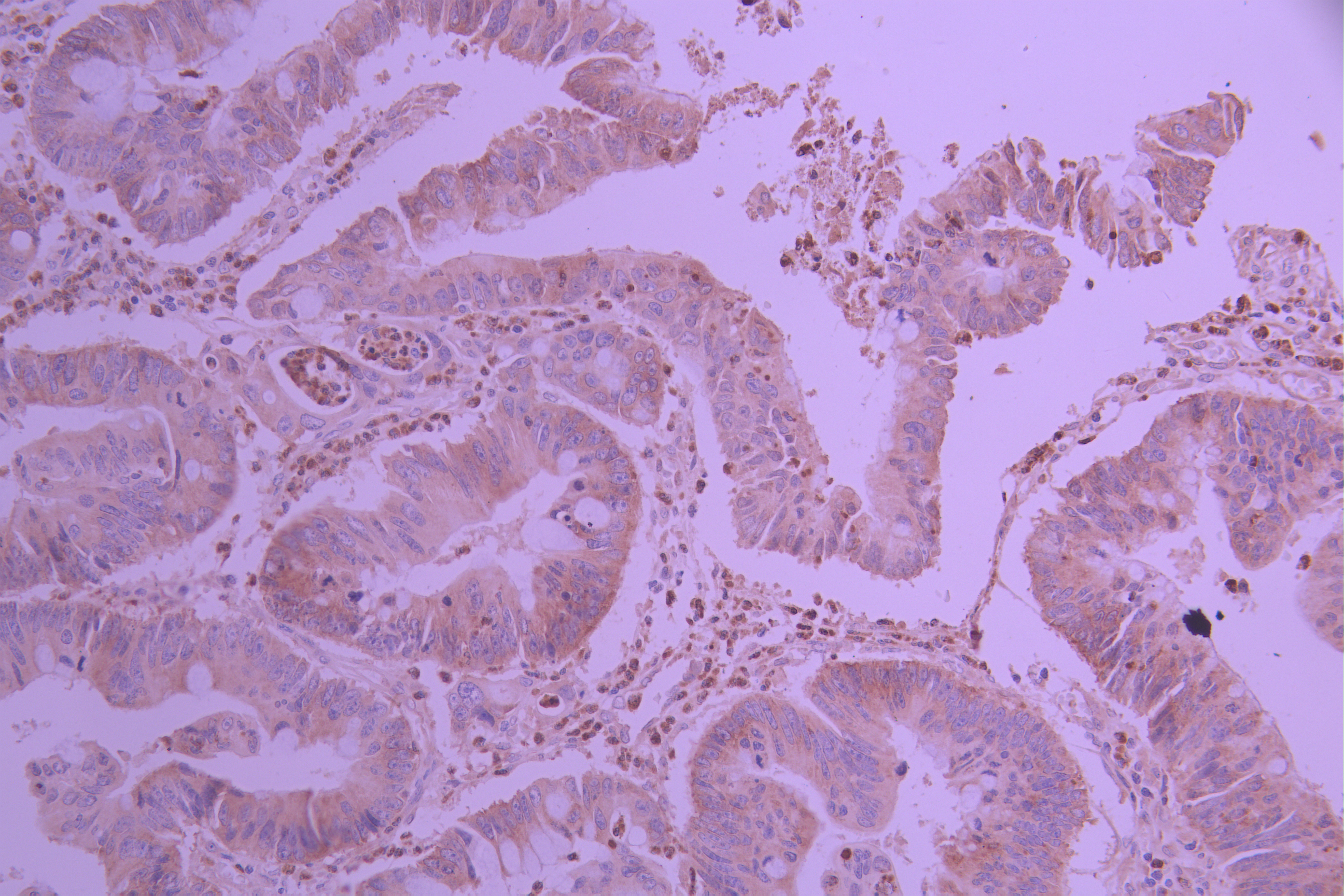
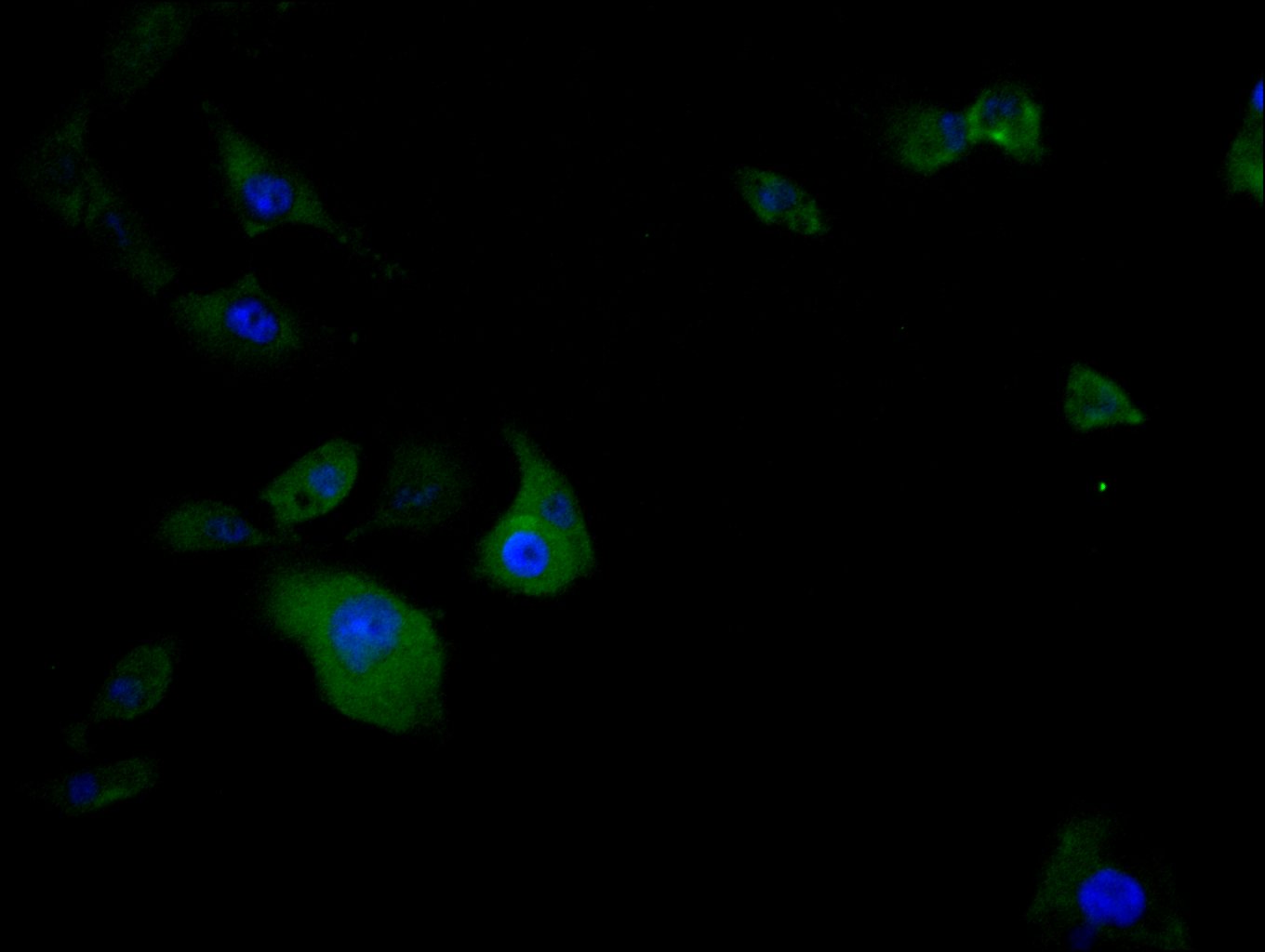
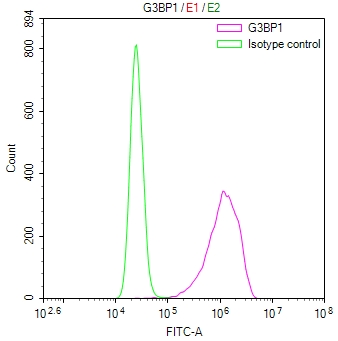
Validation across multiple platforms demonstrates this antibody's experimental flexibility. Western blot analysis detects G3BP1 in HeLa, Jurkat, K562, and NIH/3T3 whole cell lysates at 1:1000 dilution, with the observed band appearing at approximately 70 kDa rather than the predicted 52 kDa, a shift likely attributable to post-translational modifications such as phosphorylation or glycosylation that are characteristic of this protein. Immunohistochemistry performed on paraffin-embedded human colorectal cancer tissue at 1:100 dilution shows clear target localization. Immunofluorescence staining in HepG2 cells and flow cytometry analysis in HeLa cells further confirm reliable detection, with recommended dilutions ranging from 1:50 to 1:200 for these applications. Cross-species reactivity with human and mouse samples broadens its utility across common experimental models.
This antibody supports research into stress response pathways, cancer biology, and RNA granule formation where consistent G3BP1 detection is essential.
There are currently no reviews for this product.





