
Call us
301-363-4651 (Available 9 a.m. to 5 p.m. CST from Monday to Friday)

| Code | CSB-RA977815A0HU |
| Size | US$210 |
| Order now | |
| Image |
|
| Have Questions? | Leave a Message or Start an on-line Chat |
| Application | Recommended Dilution |
|---|---|
| WB | 1:500-1:2000 |
| IHC | 1:50-1:200 |
| FC | 1:50-1:200 |
GCLM encodes the regulatory subunit of glutamate-cysteine ligase, the rate-limiting enzyme in glutathione biosynthesis. As a critical modulator of cellular antioxidant capacity, GCLM plays an essential role in oxidative stress responses, xenobiotic metabolism, and redox homeostasis. Dysregulation of GCLM expression has been implicated in neurodegenerative diseases, cancer progression, and drug resistance mechanisms, making it a valuable target for researchers investigating cellular stress pathways and therapeutic interventions.
This recombinant monoclonal antibody, generated from clone 4F4 in rabbit host, offers the reproducibility and consistency that demanding research applications require. Because the antibody sequence is defined and produced recombinantly, you can expect reliable performance across experiments and between lots, eliminating the variability often encountered with traditional hybridoma-derived antibodies. The affinity-chromatography purification ensures high specificity for your target.
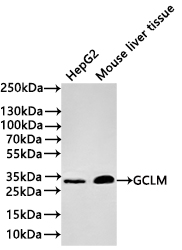
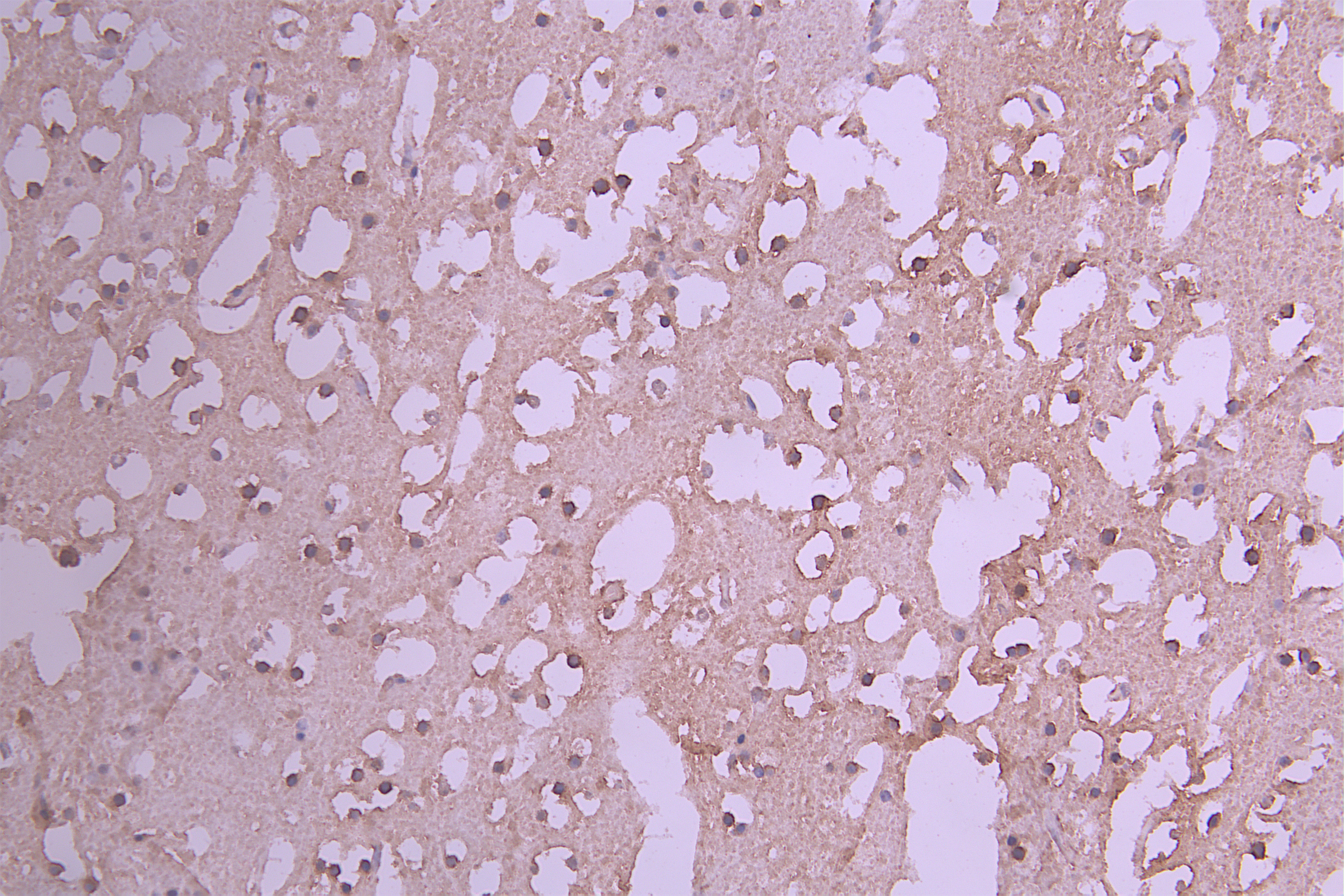
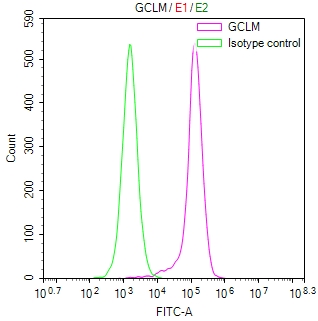
Validation studies demonstrate robust performance across multiple experimental platforms. In western blot applications, this antibody detects GCLM at the expected 31 kDa molecular weight in both HepG2 human hepatocellular carcinoma cells and mouse liver tissue, confirming cross-species reactivity between human and mouse samples. Immunohistochemical staining in paraffin-embedded human brain tissue reveals clear target localization, while flow cytometry analysis in HepG2 cells shows distinct positive population shifts compared to isotype controls, enabling quantitative assessment of GCLM expression at the single-cell level.
The flexibility to work across western blotting, immunohistochemistry, and flow cytometry within a single reagent streamlines experimental workflows for researchers studying glutathione metabolism, oxidative stress biology, or Nrf2-mediated antioxidant responses. This antibody is particularly well-suited for investigations into hepatic detoxification pathways, neurological oxidative damage, and cancer cell survival mechanisms.
There are currently no reviews for this product.





