
Call us
301-363-4651 (Available 9 a.m. to 5 p.m. CST from Monday to Friday)

| Code | CSB-RA261042A0HU |
| Size | US$210 |
| Order now | |
| Image |
|
| Have Questions? | Leave a Message or Start an on-line Chat |
| Application | Recommended Dilution |
|---|---|
| IF | 1:50-1:200 |
| FC | 1:50-1:200 |
Lecithin-cholesterol acyltransferase (LCAT) serves as a critical enzyme in reverse cholesterol transport, catalyzing the esterification of free cholesterol in plasma lipoproteins. This enzymatic activity is essential for HDL maturation and cholesterol homeostasis, making LCAT a significant target in cardiovascular disease research, lipid metabolism studies, and investigations into familial LCAT deficiency syndromes.
This recombinant monoclonal antibody, clone 10F11, offers researchers the reproducibility and consistency that recombinant technology provides. Because the antibody sequence is defined and produced in a controlled expression system, you can expect uniform performance across experiments and over time, eliminating the lot-to-lot variability that can complicate long-term studies or multi-site collaborations. The rabbit host origin combined with monoclonal specificity ensures high-affinity binding to human LCAT.
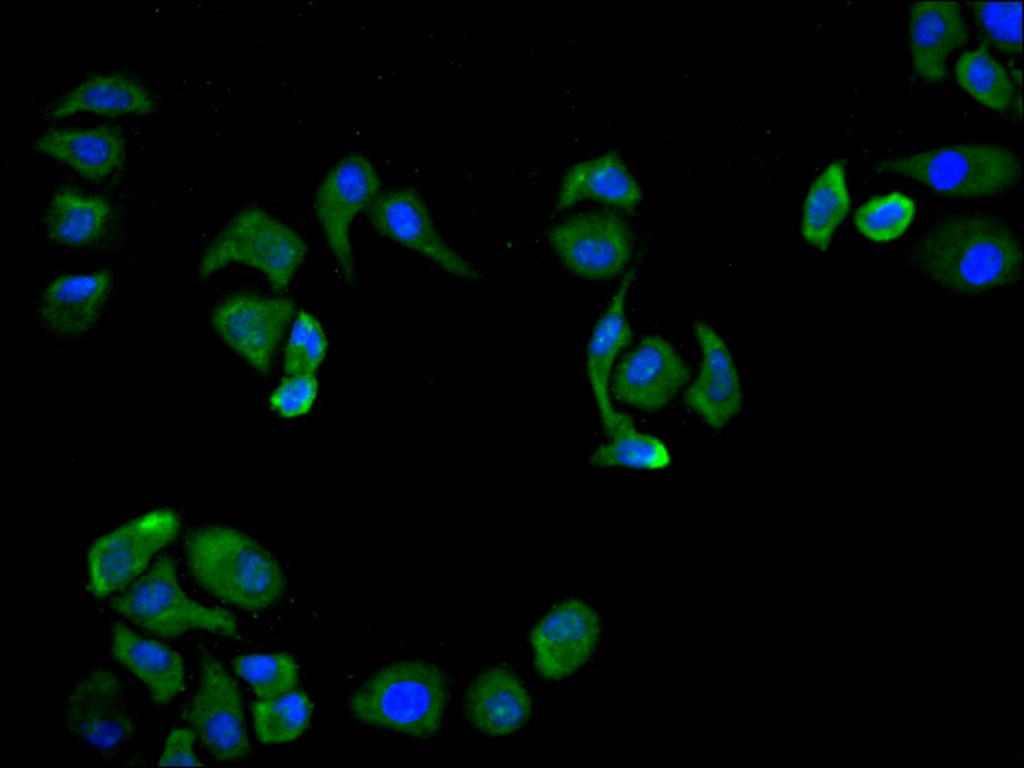
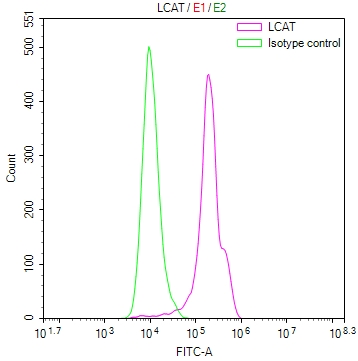
Validation studies demonstrate reliable performance in both immunofluorescence and flow cytometry applications. Immunofluorescence staining of HeLa cells at dilutions between 1:50 and 1:200 reveals clear cytoplasmic localization patterns when combined with appropriate fixation and permeabilization protocols. Flow cytometric analysis using K562 cells shows distinct positive population shifts compared to isotype controls, confirming the antibody's utility for quantitative single-cell analysis of LCAT expression. The antibody has also been validated for ELISA applications, providing additional flexibility for researchers requiring plate-based detection methods.
Whether you are investigating cholesterol metabolism pathways, characterizing LCAT expression in disease models, or screening for modulators of reverse cholesterol transport, this antibody provides a dependable tool for your research. Its validated performance across multiple detection platforms supports diverse experimental approaches in lipid biology and metabolic disease research.
There are currently no reviews for this product.





