
Call us
301-363-4651 (Available 9 a.m. to 5 p.m. CST from Monday to Friday)

| Code | CSB-RA148565A0HU |
| Size | US$210 |
| Order now | |
| Image |
|
| Have Questions? | Leave a Message or Start an on-line Chat |
| Application | Recommended Dilution |
|---|---|
| WB | 1:500-1:5000 |
| IHC | 1:50-1:200 |
| IF | 1:50-1:200 |
MAPK7, also known as ERK5 or BMK1, represents a distinctive member of the mitogen-activated protein kinase family that plays essential roles in neuronal survival, differentiation, and synaptic plasticity. Unlike other ERK family members, MAPK7 possesses a uniquely extended C-terminal domain that enables transcriptional activation, making it a critical node linking extracellular signals to gene expression programs in both developing and mature nervous systems.
This recombinant monoclonal antibody, generated from clone 19F12, offers the reproducibility and sequence-defined consistency that demanding experimental workflows require. Because recombinant production eliminates the batch variability inherent in traditional hybridoma methods, researchers can confidently compare results across extended studies and between laboratories.
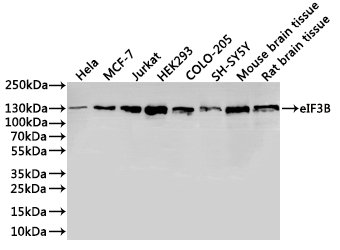
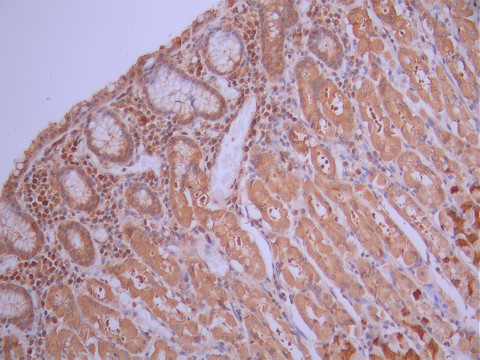
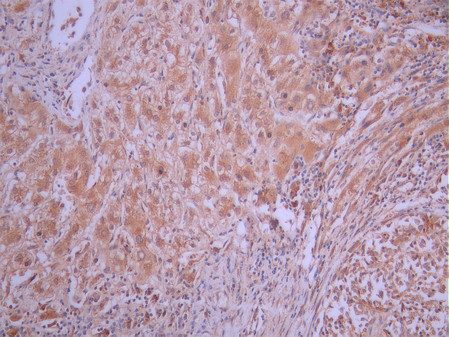
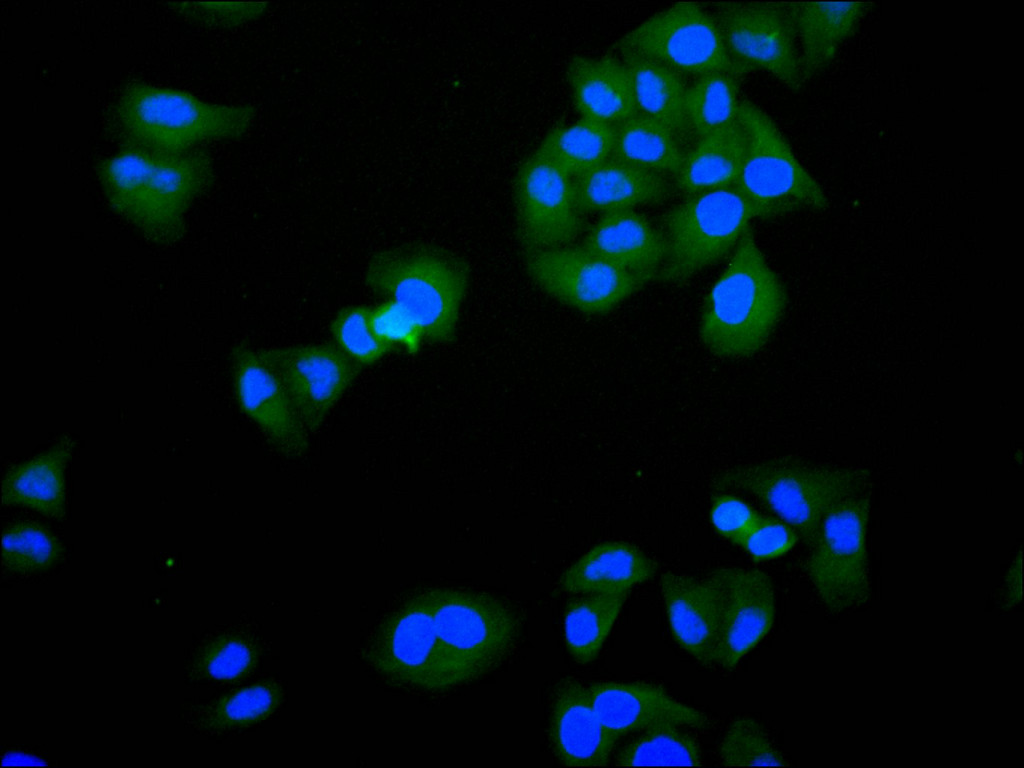
Validation testing demonstrates robust performance across multiple applications and species. In western blot analysis, the antibody detects MAPK7 in human cell lines including HeLa, MCF-7, Jurkat, HEK293, COLO-205, and SH-SY5Y, as well as mouse and rat brain tissue lysates. The observed band at 115 kDa runs higher than the predicted 88 kDa molecular weight, consistent with post-translational modifications including phosphorylation events that regulate MAPK7 activity. Immunohistochemistry validation in human stomach and liver cancer tissues confirms reliable detection in formalin-fixed paraffin-embedded samples, while immunofluorescence staining in HeLa cells reveals subcellular localization patterns suitable for imaging studies.
Cross-species reactivity with human, mouse, and rat samples, combined with flexibility across ELISA, western blot, immunohistochemistry, and immunofluorescence platforms, makes this antibody particularly valuable for neuroscience researchers investigating MAPK7 signaling in disease models, developmental studies, or translational research contexts.
There are currently no reviews for this product.





