
Call us
301-363-4651 (Available 9 a.m. to 5 p.m. CST from Monday to Friday)

| Code | CSB-RA581794A0HU |
| Size | US$210 |
| Order now | |
| Image |
|
| Have Questions? | Leave a Message or Start an on-line Chat |
| Application | Recommended Dilution |
|---|---|
| WB | 1:500-1:5000 |
| IHC | 1:50-1:200 |
| IF | 1:20-1:200 |
| FC | 1:20-1:200 |
PARP1 (Poly [ADP-ribose] polymerase 1) serves as a critical enzyme in DNA damage detection and repair, functioning as an early responder to single-strand breaks and playing essential roles in base excision repair pathways. Beyond its DNA repair functions, PARP1 participates in chromatin remodeling, transcriptional regulation, and cell death pathways, making it a focal point in cancer research where PARP inhibitors have emerged as important therapeutic agents. Understanding PARP1 expression and localization remains fundamental to studies spanning oncology, genomic stability, and cellular stress responses.
This recombinant rabbit monoclonal antibody (clone 8C7) offers the reproducibility advantages inherent to recombinant technology, ensuring consistent performance across experiments and eliminating the lot-to-lot variability that can complicate long-term research projects. The sequence-defined nature of this antibody means your optimization work translates reliably to future experiments.
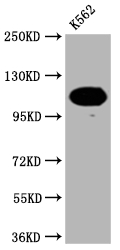
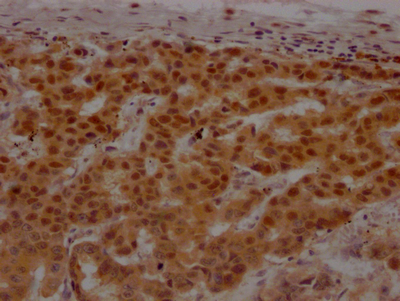
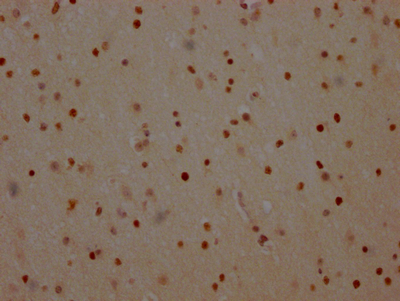
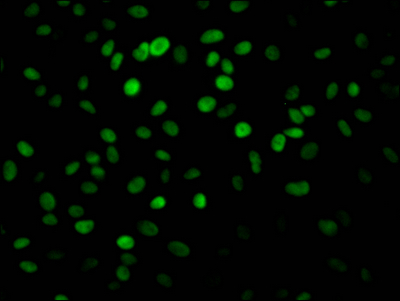
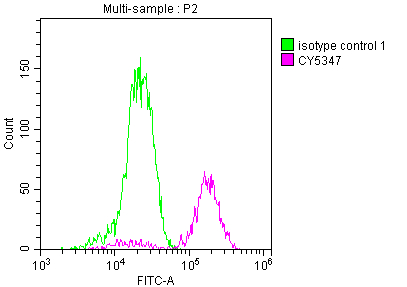
Validation data demonstrates robust performance across multiple applications in human samples. Western blot analysis of K562 whole cell lysate reveals a clean band at the predicted 114 kDa molecular weight, confirming accurate target recognition. Immunohistochemistry staining has been validated in paraffin-embedded human breast cancer and brain tissue sections using citrate buffer antigen retrieval, showing clear nuclear localization consistent with PARP1's biological function. Immunofluorescence studies in HeLa cells display the expected nuclear staining pattern, while flow cytometry analysis of Jurkat cells demonstrates suitability for single-cell quantification approaches.
This antibody supports researchers investigating DNA damage response mechanisms, epigenetic regulation, cancer biology, and metabolic processes where PARP1 activity influences cellular outcomes.
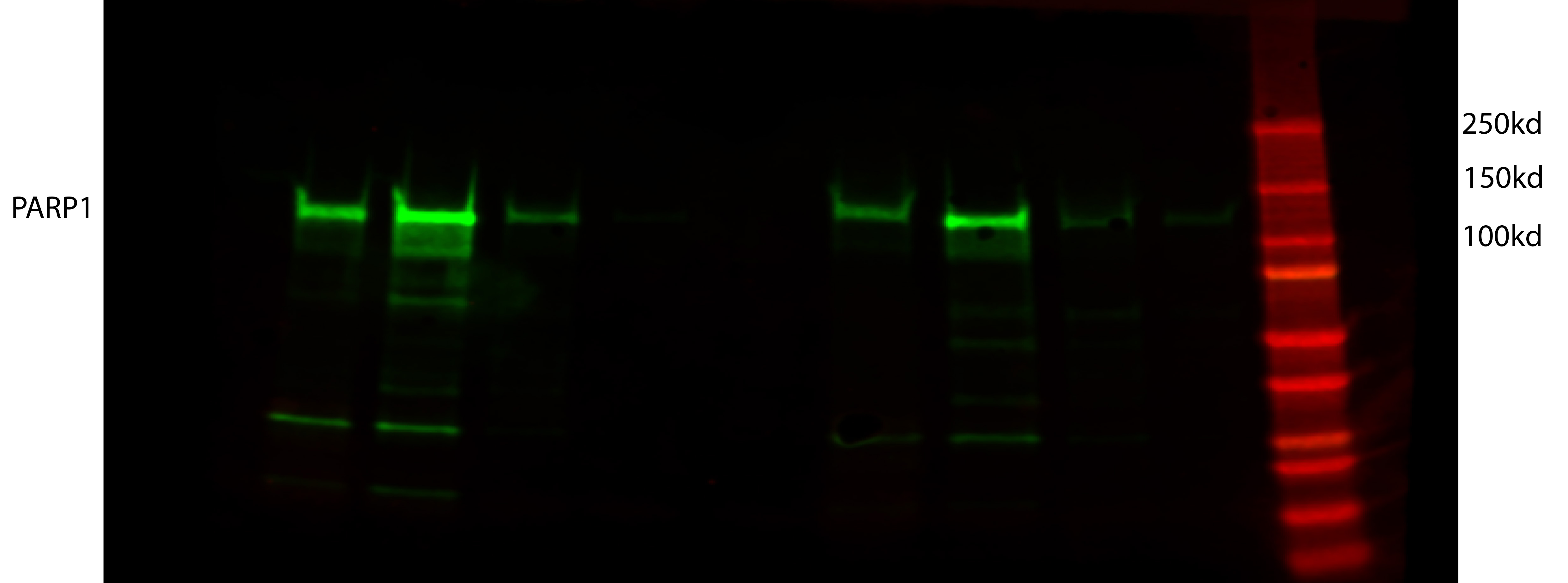
Applications : Western Blot (WB)
Sample type: Human cancer cell line
Sample dilution: 1:1000
Review: clean specific band on western blot, low background and very easy to use
By Anonymous





