

Call us
301-363-4651 (Available 9 a.m. to 5 p.m. CST from Monday to Friday)

| Code | CSB-RA998693A0HU |
| Size | US$210 |
| Order now | |
| Image |
|
| Have Questions? | Leave a Message or Start an on-line Chat |
| Application | Recommended Dilution |
|---|---|
| WB | 1:500-1:2000 |
| IHC | 1:50-1:200 |
| FC | 1:50-1:200 |
PRPF4 serves as an essential component of the U4/U6 small nuclear ribonucleoprotein complex, playing a critical role in pre-mRNA splicing machinery. As a WD-repeat containing splicing factor, PRPF4 participates in spliceosome assembly and catalytic activation, making it a significant target for researchers investigating RNA processing mechanisms, splicing regulation, and related disease pathways where splicing dysfunction contributes to pathology.
This recombinant monoclonal antibody, generated from clone 15E6, offers the reproducibility and consistency that demanding experimental workflows require. Because the antibody sequence is defined and produced recombinantly in rabbit host, you can expect reliable performance across experiments and between lots, eliminating the variability often encountered with traditional hybridoma-derived antibodies. Affinity chromatography purification ensures high specificity for your target.
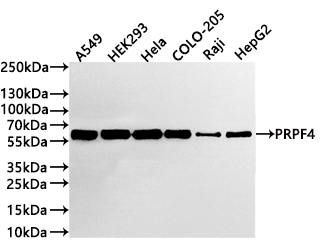
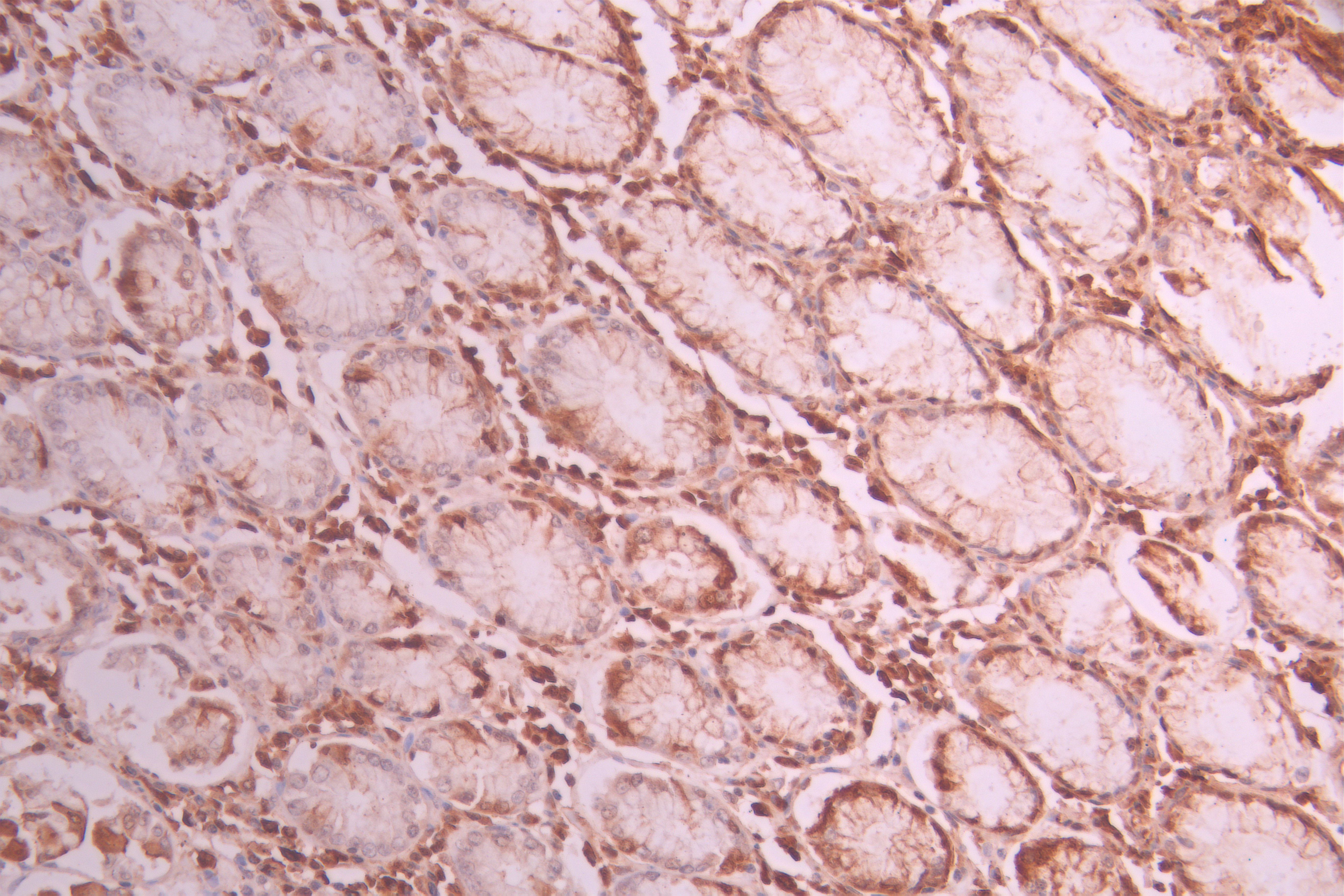
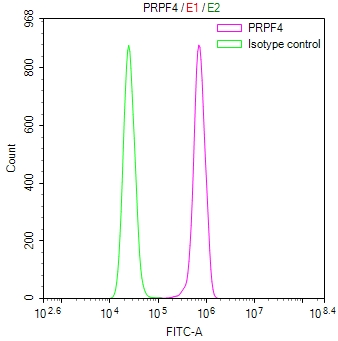
Validation studies demonstrate robust performance across multiple experimental platforms. Western blot analysis confirms detection of PRPF4 at the expected 58 kDa molecular weight across a diverse panel of human cell lines, including A549, HEK293, HeLa, COLO-205, Raji, and HepG2 lysates, indicating consistent recognition regardless of cellular context. For tissue-based studies, immunohistochemistry has been validated in paraffin-embedded human gastric cancer and normal stomach tissue sections using citrate buffer antigen retrieval, providing clear visualization of PRPF4 expression patterns. Flow cytometry applications have been confirmed in HeLa cells, enabling quantitative analysis of PRPF4 at the single-cell level.
This antibody supports investigations into spliceosome biology, RNA processing disorders, and cancer research where aberrant splicing mechanisms may contribute to disease progression. The flexibility across western blot, immunohistochemistry, and flow cytometry platforms allows comprehensive characterization of PRPF4 expression and localization within your experimental system.
There are currently no reviews for this product.





