
Call us
301-363-4651 (Available 9 a.m. to 5 p.m. CST from Monday to Friday)

| Code | CSB-RA017407A144phHU |
| Size | US$210 |
| Order now | |
| Image |
|
| Have Questions? | Leave a Message or Start an on-line Chat |
| Application | Recommended Dilution |
|---|---|
| WB | 1:500-1:5000 |
| IHC | 1:50-1:200 |
The p21-activated kinases PAK1, PAK2, and PAK3 serve as critical effectors downstream of Rho family GTPases, orchestrating cytoskeletal dynamics, cell motility, and survival signaling across diverse cellular contexts. Phosphorylation at the conserved autoinhibitory domain residues—S144 (PAK1), S141 (PAK2), and S139 (PAK3)—marks kinase activation and serves as a reliable readout of pathway engagement. For neuroscience researchers, PAK3 holds particular significance given its association with X-linked intellectual disability and its essential roles in dendritic spine morphogenesis and synaptic plasticity.
This recombinant rabbit monoclonal antibody, clone 3H12, provides sequence-defined specificity for detecting these phosphorylated PAK isoforms. Because the antibody is produced from a stable expression system rather than traditional hybridoma methods, researchers benefit from exceptional lot-to-lot consistency, ensuring reproducible results across long-term studies and multi-site collaborations.
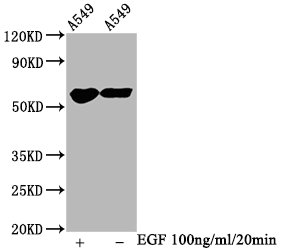
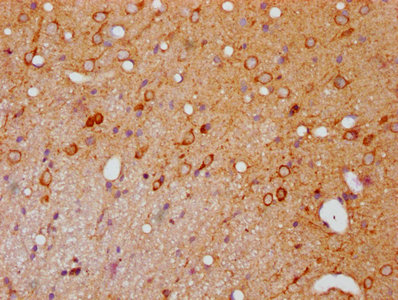
Validation studies demonstrate robust performance in western blot applications, where the antibody detects a band at the predicted 65 kDa molecular weight in A549 whole cell lysates. Notably, comparative analysis of EGF-treated versus untreated samples enables researchers to monitor stimulus-dependent PAK activation dynamics. For tissue-based investigations, immunohistochemistry validation in paraffin-embedded rat brain tissue confirms utility for examining PAK phosphorylation patterns in neural architecture, with optimized protocols using citrate-based antigen retrieval.
The antibody's flexibility across ELISA, western blot, and immunohistochemistry workflows accommodates diverse experimental designs, from high-throughput screening to detailed spatial analysis of kinase activation in tissue sections. This reagent supports investigations into growth factor signaling, neuronal development, and the mechanistic basis of cognitive disorders linked to PAK dysfunction.
There are currently no reviews for this product.





