
Call us
301-363-4651 (Available 9 a.m. to 5 p.m. CST from Monday to Friday)

| Code | CSB-RA901944A0HU |
| Size | US$210 |
| Order now | |
| Image |
|
| Have Questions? | Leave a Message or Start an on-line Chat |
| Application | Recommended Dilution |
|---|---|
| IHC | 1:50-1:200 |
| FC | 1:50-1:200 |
RAPGEF3, also known as EPAC1 (Exchange Protein directly Activated by cAMP), serves as a critical mediator of cAMP signaling independent of protein kinase A. This guanine nucleotide exchange factor directly activates Rap1 GTPases in response to elevated intracellular cAMP levels, positioning it at the intersection of multiple signaling cascades that regulate cell adhesion, junction formation, and integrin-mediated processes. Dysregulation of RAPGEF3 has been implicated in cardiovascular disease, inflammation, and cancer progression, making it a compelling target for researchers investigating cAMP-dependent cellular responses.
This recombinant rabbit monoclonal antibody, clone 7F12, offers the reproducibility and consistency that demanding experimental workflows require. Generated against a synthetic peptide derived from human RAPGEF3, the antibody is produced using recombinant technology, ensuring sequence-defined specificity and eliminating the lot-to-lot variability that can compromise longitudinal studies. Affinity chromatography purification delivers a reagent ready for immediate use in your experiments.
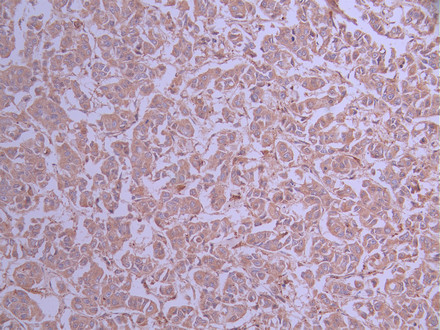
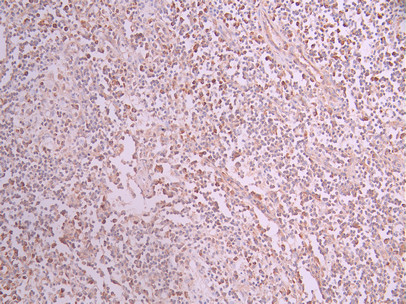
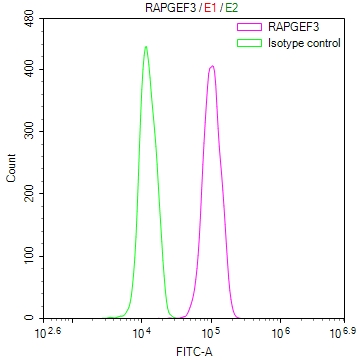
Validation data demonstrates robust performance across multiple applications. Immunohistochemistry studies in paraffin-embedded human breast cancer and lymph node tissues show clear staining patterns at 1:100 dilution using citrate buffer antigen retrieval, providing researchers with a reliable tool for examining RAPGEF3 expression in clinical specimens. Flow cytometry analysis using HeLa cells confirms intracellular detection capability, with distinct signal separation from isotype controls observed at 1:100 dilution following formaldehyde fixation and Triton X-100 permeabilization.
Whether investigating cAMP signaling mechanisms, characterizing RAPGEF3 expression in tumor microenvironments, or exploring its role in inflammatory responses, this antibody provides the technical foundation for meaningful experimental outcomes.
There are currently no reviews for this product.





