
Call us
301-363-4651 (Available 9 a.m. to 5 p.m. CST from Monday to Friday)

| Code | CSB-RA240912A0HU |
| Size | US$210 |
| Order now | |
| Image |
|
| Have Questions? | Leave a Message or Start an on-line Chat |
| Application | Recommended Dilution |
|---|---|
| IF | 1:50-1:200 |
| FC | 1:50-1:200 |
S100P is a calcium-binding protein belonging to the S100 family, playing significant roles in cell cycle regulation, differentiation, and notably in cancer progression where it promotes cell migration and invasion. Also known as migration-inducing gene 9 protein (MIG9), S100P has emerged as a valuable biomarker in oncology research, particularly in studies investigating tumor metastasis and therapeutic resistance mechanisms.
This recombinant monoclonal antibody, clone 1B12, offers researchers the reliability that comes with sequence-defined production. Unlike traditional hybridoma-derived antibodies, recombinant technology ensures consistent performance across lots, eliminating the variability that can compromise longitudinal studies or multi-site collaborations. The antibody is raised in rabbit against a synthetic peptide derived from human S100P and undergoes affinity chromatography purification to deliver high specificity for your target.
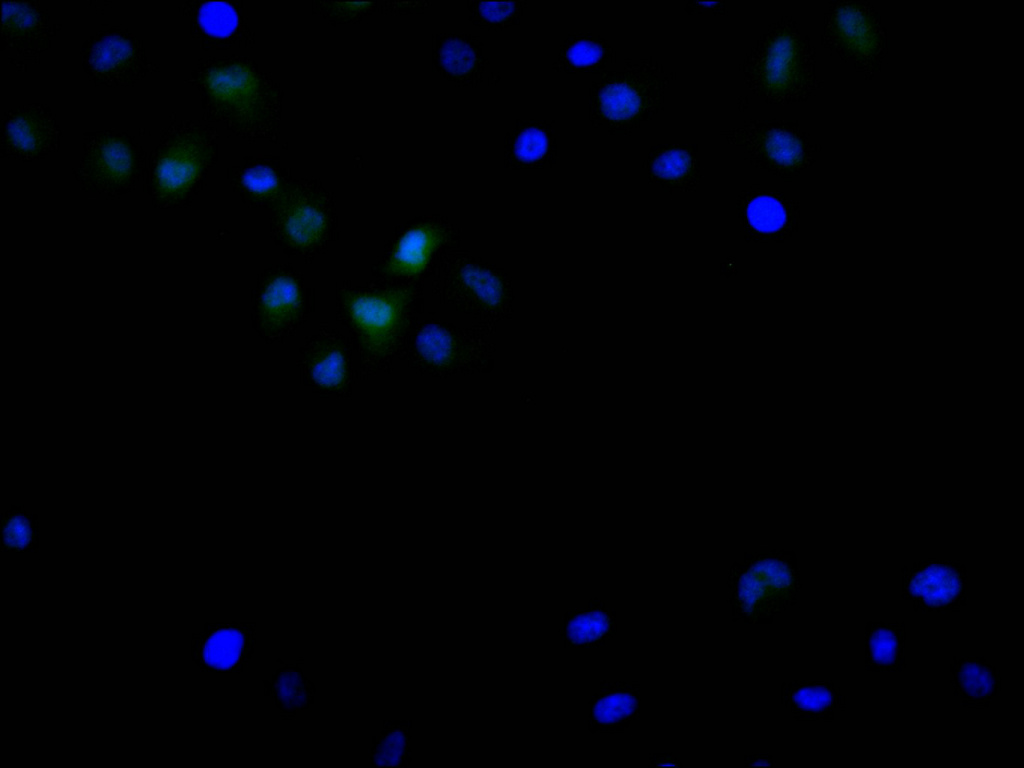
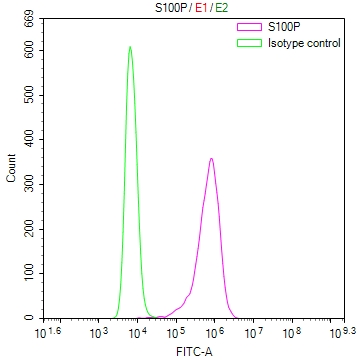
Validation studies demonstrate strong performance in both immunofluorescence and flow cytometry applications. In immunofluorescence experiments using HeLa cells, the antibody produces clear cytoplasmic and nuclear staining patterns at dilutions of 1:50 to 1:200, consistent with the known subcellular distribution of S100P. Flow cytometry analysis with HT29 colorectal adenocarcinoma cells shows excellent separation between specific signal and isotype control, confirming reliable detection in this cancer cell model. These validated human cell lines provide confidence when designing experiments in oncology-focused research.
The unconjugated format allows flexibility in secondary antibody selection, accommodating various detection systems and multiplexing strategies. For researchers investigating S100P's role in cancer biology, metastatic signaling pathways, or calcium-dependent cellular processes, this antibody provides a dependable tool backed by documented performance in relevant experimental systems.
There are currently no reviews for this product.





