
Call us
301-363-4651 (Available 9 a.m. to 5 p.m. CST from Monday to Friday)

| Code | CSB-RA903831A0HU |
| Size | US$210 |
| Order now | |
| Image |
|
| Have Questions? | Leave a Message or Start an on-line Chat |
| Application | Recommended Dilution |
|---|---|
| IHC | 1:50-1:200 |
Sphingosine 1-phosphate receptor 3 (S1PR3) is a G protein-coupled receptor that plays a central role in sphingolipid signaling, mediating diverse cellular responses including vascular development, immune cell trafficking, and cardiac function. As part of the endothelial differentiation gene family, S1PR3 has emerged as a significant research target in cardiovascular biology, inflammation, and oncology, where its expression patterns may influence tumor progression and therapeutic responses.
This recombinant monoclonal antibody, clone 19G2, offers researchers the consistency and reproducibility that recombinant technology provides. Generated against a synthesized peptide from human S1PR3 protein, this rabbit IgG antibody delivers sequence-defined specificity with lot-to-lot reliability, ensuring your longitudinal studies maintain experimental continuity without the variability often encountered with traditional hybridoma-derived antibodies.
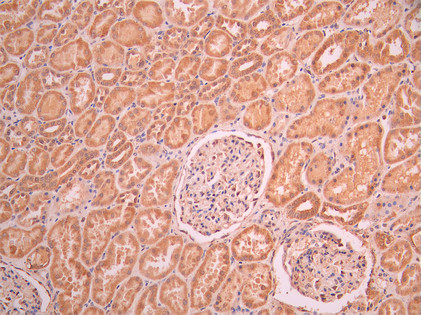
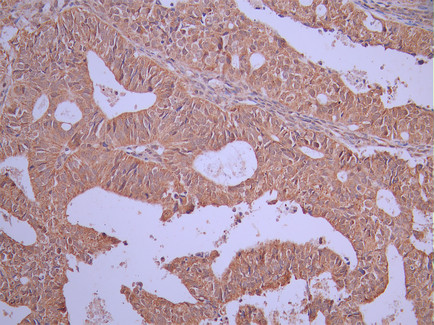
Validation studies demonstrate robust performance in immunohistochemistry applications, with successful staining confirmed in paraffin-embedded human kidney tissue and human ovarian cancer specimens. Using a Leica Bond system with citrate buffer antigen retrieval at pH 6.0, the antibody produces clear signal at 1:100 dilution, with a recommended working range of 1:50 to 1:200 for IHC optimization. The validation in both normal and malignant tissue types provides confidence for researchers investigating S1PR3 expression across physiological and pathological contexts.
Supplied in a stabilized liquid format with glycerol for long-term storage stability, this affinity-purified antibody is well-suited for signal transduction research, particularly studies examining sphingolipid receptor biology, vascular function, and cancer-associated signaling pathways where understanding S1PR3 distribution and expression levels is essential to advancing mechanistic insights.
There are currently no reviews for this product.





