
Call us
301-363-4651 (Available 9 a.m. to 5 p.m. CST from Monday to Friday)

| Code | CSB-RA184835A0HU |
| Size | US$210 |
| Order now | |
| Image |
|
| Have Questions? | Leave a Message or Start an on-line Chat |
| Application | Recommended Dilution |
|---|---|
| IF | 1:50-1:200 |
| FC | 1:50-1:200 |
Serum amyloid A-4 protein represents a distinctive member of the SAA family, characterized by its constitutive expression pattern rather than the acute-phase induction typical of other family members. This unique expression profile makes SAA4 particularly valuable for researchers investigating baseline apolipoprotein metabolism, HDL biology, and the nuanced roles of SAA proteins beyond inflammatory responses. Understanding SAA4's contribution to lipid transport and its potential involvement in chronic metabolic conditions continues to drive interest across cardiovascular and metabolic research fields.
This recombinant monoclonal antibody, clone 8C2, delivers the experimental consistency that demanding research protocols require. Produced through recombinant technology with a defined sequence, it eliminates the lot-to-lot variability inherent in traditional hybridoma-derived antibodies. Researchers can confidently build upon previous results knowing that antibody performance remains stable across extended studies and collaborative projects.
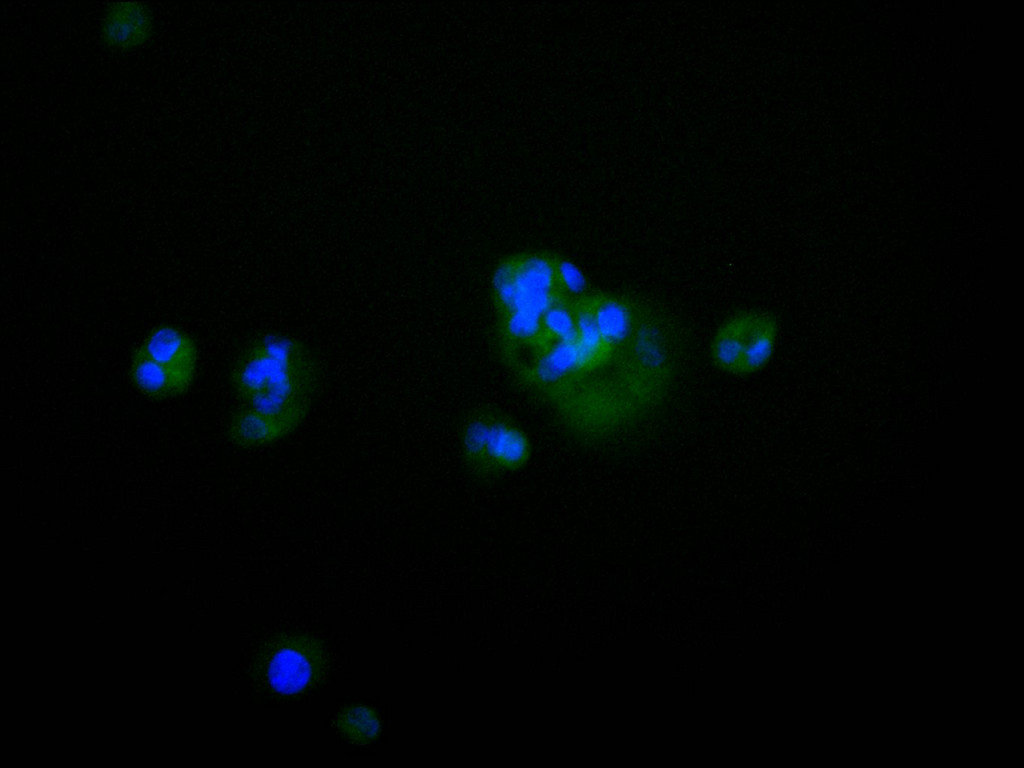
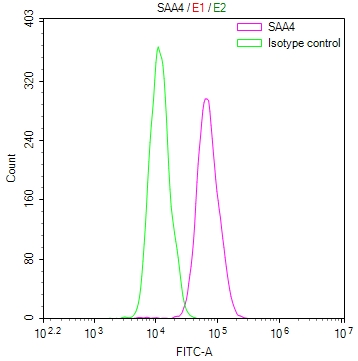
Validation in human HepG2 cells demonstrates reliable performance across multiple detection platforms. Immunofluorescence analysis reveals clear cytoplasmic staining patterns when used at dilutions between 1:50 and 1:200, with cells fixed in formaldehyde and permeabilized with Triton X-100. Flow cytometry validation in the same hepatocyte cell line shows distinct positive population shifts compared to isotype controls, confirming specific detection of intracellular SAA4. The antibody's compatibility with standard fixation and permeabilization protocols provides flexibility in experimental design.
Raised against a synthetic peptide derived from human SAA4 and validated for human reactivity, this antibody supports investigations into hepatic SAA4 expression, constitutive apolipoprotein biology, and comparative studies examining SAA family member regulation. Its proven performance in both imaging and quantitative flow applications makes it well-suited for researchers exploring SAA4's roles in lipid metabolism and cardiovascular disease mechanisms.
There are currently no reviews for this product.





