

Call us
301-363-4651 (Available 9 a.m. to 5 p.m. CST from Monday to Friday)

| Code | CSB-RA620235A0HU |
| Size | US$210 |
| Order now | |
| Image |
|
| Have Questions? | Leave a Message or Start an on-line Chat |
| Application | Recommended Dilution |
|---|---|
| WB | 1:500-1:2000 |
| IHC | 1:50-1:200 |
| FC | 1:50-1:200 |
Succinate dehydrogenase complex flavoprotein subunit A (SDHA) serves as the catalytic core of mitochondrial Complex II, uniquely participating in both the tricarboxylic acid cycle and the electron transport chain. This dual role positions SDHA as a critical node in cellular energy metabolism, making it an essential target for researchers investigating mitochondrial function, metabolic reprogramming in cancer, and hereditary paraganglioma-pheochromocytoma syndromes linked to SDHA mutations.
This recombinant monoclonal antibody, clone 4D8, offers the reproducibility and consistency that demanding experimental workflows require. Developed using recombinant technology with a sequence-defined rabbit IgG format, it eliminates the lot-to-lot variability that can compromise longitudinal studies or multi-site collaborations. The antibody is raised against a synthetic peptide derived from human SDHA and purified by affinity chromatography, ensuring high specificity for your target.
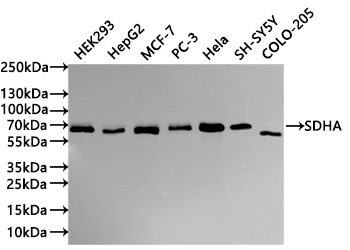
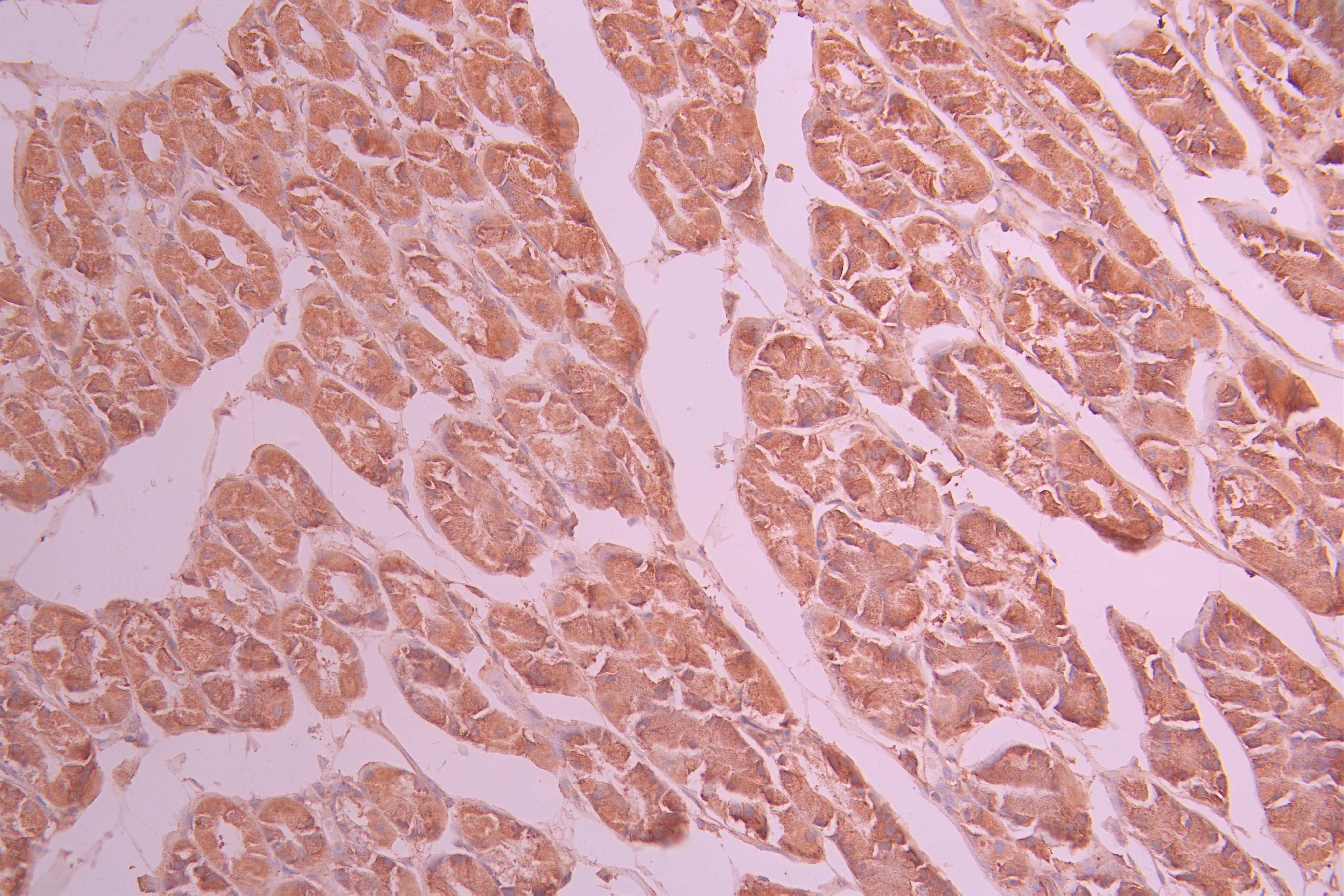
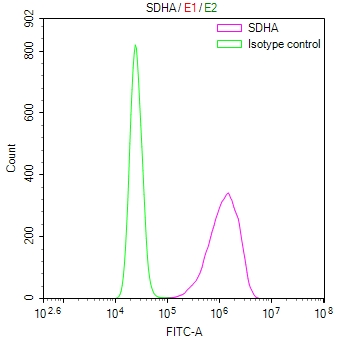
Validation data demonstrates robust performance across multiple platforms. In western blot applications, the antibody detects SDHA across a diverse panel of human cell lines including HEK293, HepG2, MCF-7, PC-3, HeLa, SH-SY5Y, and U-251MG at dilutions of 1:500 to 1:2000. The observed band at approximately 65 kDa runs slightly below the predicted 73 kDa molecular weight, a difference commonly attributed to proteolytic processing of the mitochondrial targeting sequence or anomalous gel migration. Immunohistochemistry validation in human breast cancer and stomach tissue sections confirms utility for tissue-based studies, while flow cytometry data from HeLa cells demonstrates clear positive signal separation for intracellular detection applications.
Whether investigating mitochondrial dysfunction, tumor metabolism, or Complex II assembly, this antibody provides the flexibility to move seamlessly between biochemical, histological, and cytometric approaches.
There are currently no reviews for this product.





