
Call us
301-363-4651 (Available 9 a.m. to 5 p.m. CST from Monday to Friday)

| Code | CSB-RA950918A0HU |
| Size | US$210 |
| Order now | |
| Image |
|
| Have Questions? | Leave a Message or Start an on-line Chat |
| Application | Recommended Dilution |
|---|---|
| IHC | 1:50-1:200 |
| IF | 1:50-1:200 |
| FC | 1:50-1:200 |
SENP2 (Sentrin-specific protease 2) plays a central role in the SUMOylation pathway, functioning as a cysteine protease that cleaves SUMO precursors and removes SUMO modifications from target proteins. This dynamic regulation of SUMOylation influences diverse cellular processes including transcriptional regulation, nuclear transport, and cell cycle progression, making SENP2 a compelling target for researchers investigating post-translational modification networks and their implications in disease states, particularly cancer biology.
This recombinant monoclonal antibody (clone 15B5) offers the reproducibility and consistency that demanding experimental workflows require. Generated through recombinant technology with a defined sequence, this antibody eliminates the lot-to-lot variability that can compromise longitudinal studies or multi-site collaborations. The rabbit host and monoclonal nature ensure high specificity for human SENP2, while affinity chromatography purification delivers a reagent ready for sensitive detection applications.
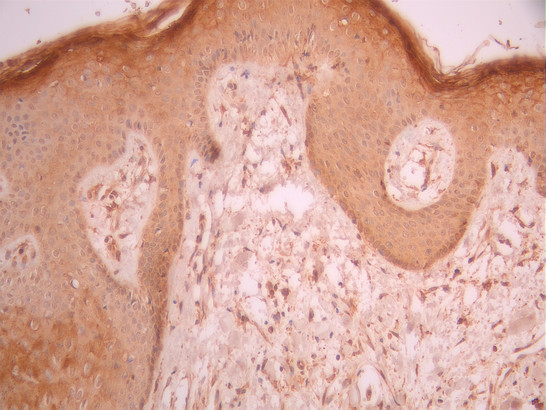
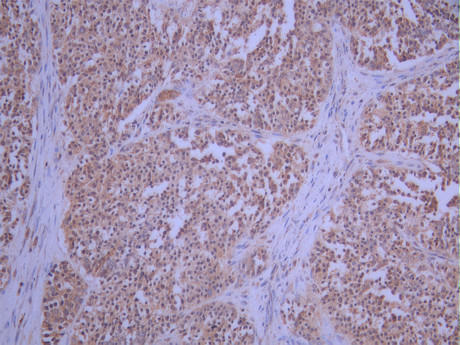
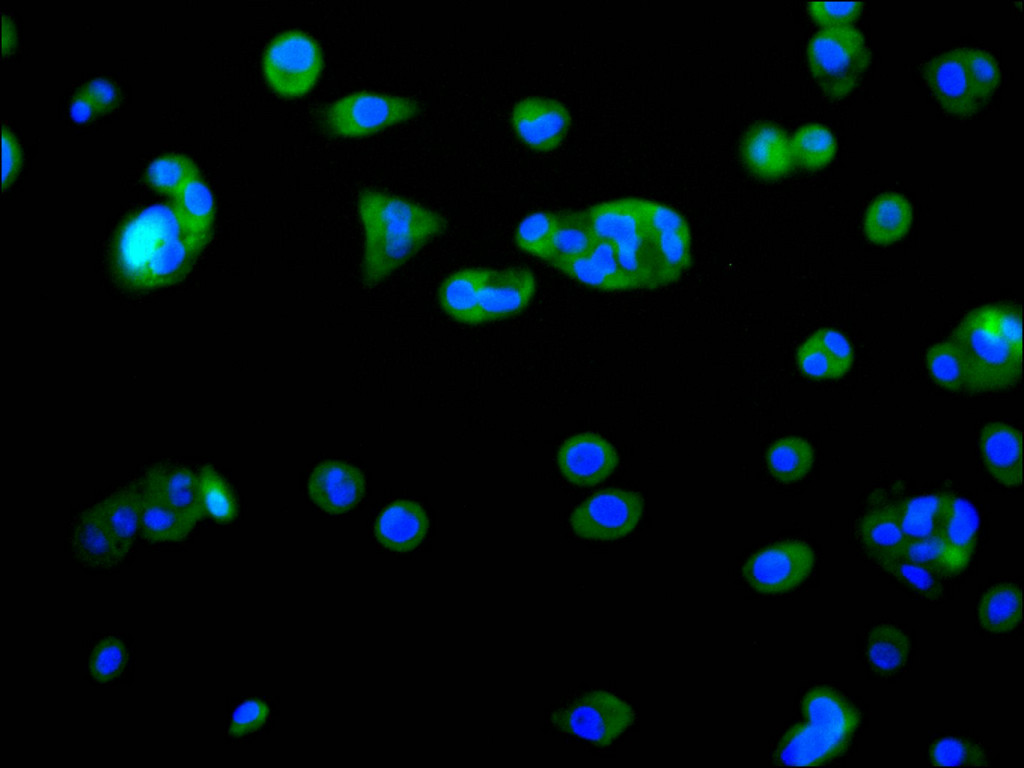
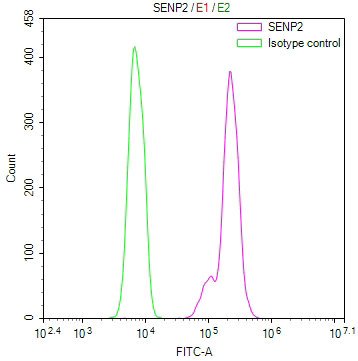
Validation studies demonstrate robust performance across multiple platforms, providing flexibility for researchers approaching SENP2 biology from different experimental angles. Immunohistochemistry staining has been successfully performed in paraffin-embedded human skin tissue and human liver cancer sections using citrate buffer antigen retrieval, revealing clear target localization with DAB visualization. Immunofluorescence analysis in HepG2 cells shows distinct staining patterns when counter-stained with DAPI, enabling subcellular localization studies. Flow cytometry validation in HeLa cells confirms the antibody's utility for quantitative single-cell analysis, with clear separation from isotype control.
Whether investigating SENP2's role in cancer progression, exploring SUMOylation dynamics in cellular stress responses, or characterizing expression patterns across tissue types, this antibody provides a reliable tool for advancing cell biology research.
There are currently no reviews for this product.





