
Call us
301-363-4651 (Available 9 a.m. to 5 p.m. CST from Monday to Friday)

| Code | CSB-RA124766A0HU |
| Size | US$210 |
| Order now | |
| Image |
|
| Have Questions? | Leave a Message or Start an on-line Chat |
| Application | Recommended Dilution |
|---|---|
| IHC | 1:50-1:200 |
| IF | 1:50-1:200 |
| FC | 1:50-1:200 |
SFPQ, also known as splicing factor proline and glutamine rich, serves as a multifunctional nuclear protein with essential roles in pre-mRNA splicing, transcriptional regulation, and DNA repair processes. This protein forms heterodimers with NONO and participates in numerous nuclear functions, making it a significant target for researchers investigating gene expression regulation, RNA processing mechanisms, and nuclear signaling pathways.
This recombinant monoclonal antibody against human SFPQ offers the reliability that demanding experimental workflows require. Developed using recombinant technology with clone 17H3, this antibody provides sequence-defined consistency between lots, eliminating the variability concerns that can complicate long-term studies or multi-site collaborations. The rabbit host and monoclonal nature ensure high specificity for your target, while affinity chromatography purification delivers a clean reagent ready for sensitive applications.
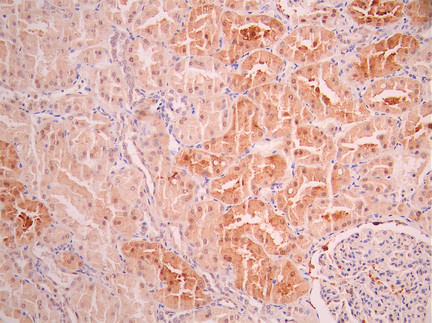
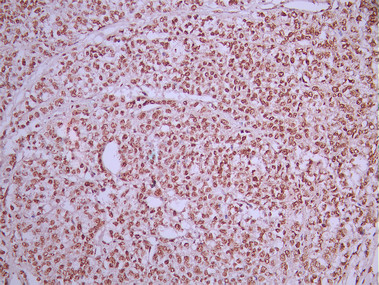
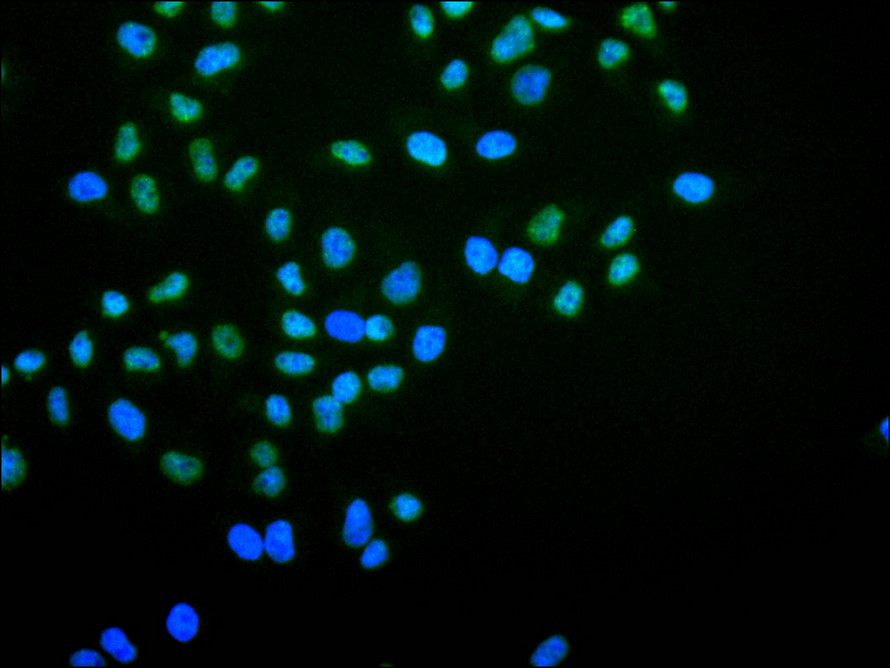
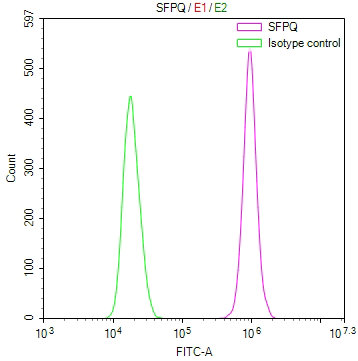
Validation studies demonstrate robust performance across multiple detection platforms. Immunohistochemistry experiments using human kidney tissue and human breast cancer samples at 1:100 dilution reveal clear nuclear localization patterns consistent with SFPQ's known biology. Immunofluorescence analysis in HeLa cells at 1:50 dilution, counterstained with DAPI, confirms the expected nuclear staining pattern. Flow cytometry validation in HeLa cells shows distinct positive population shifts compared to isotype controls, providing confidence for quantitative single-cell analyses.
The versatility across IHC, immunofluorescence, and flow cytometry applications gives researchers flexibility to investigate SFPQ biology through complementary approaches within the same study. Whether examining SFPQ expression patterns in clinical specimens, studying its subcellular localization, or quantifying expression levels across cell populations, this antibody supports diverse experimental strategies in epigenetics and nuclear signaling research.
There are currently no reviews for this product.





