
Call us
301-363-4651 (Available 9 a.m. to 5 p.m. CST from Monday to Friday)

| Code | CSB-RA242217A0HU |
| Size | US$210 |
| Order now | |
| Image |
|
| Have Questions? | Leave a Message or Start an on-line Chat |
| Application | Recommended Dilution |
|---|---|
| WB | 1:500-1:5000 |
| IHC | 1:50-1:200 |
| IF | 1:50-1:200 |
| FC | 1:50-1:200 |
SMARCE1, also known as BAF57, serves as an essential subunit of the SWI/SNF chromatin remodeling complex, where it plays a critical role in regulating gene expression through nucleosome repositioning. This protein participates in diverse cellular processes including transcriptional regulation, DNA repair, and cell cycle control, making it a valuable target for researchers investigating chromatin dynamics, epigenetic mechanisms, and cancer biology.
This recombinant monoclonal antibody, generated in rabbit using a synthesized peptide from human SMARCE1, offers the consistency and reliability that demanding experiments require. As a sequence-defined reagent produced through recombinant technology, it eliminates the lot-to-lot variability inherent in traditional hybridoma-derived antibodies, ensuring reproducible results across long-term studies and multi-site collaborations.
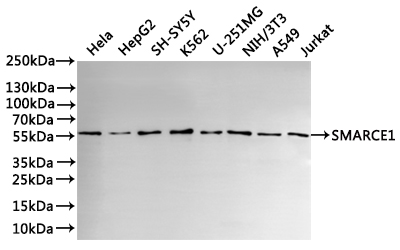
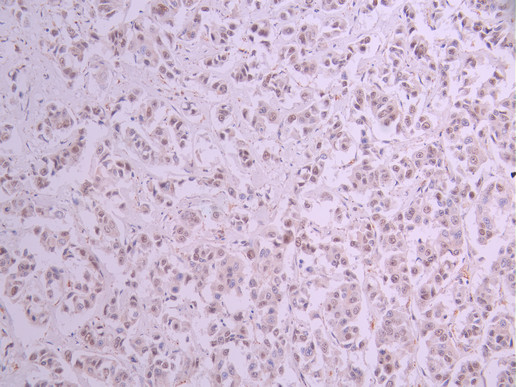
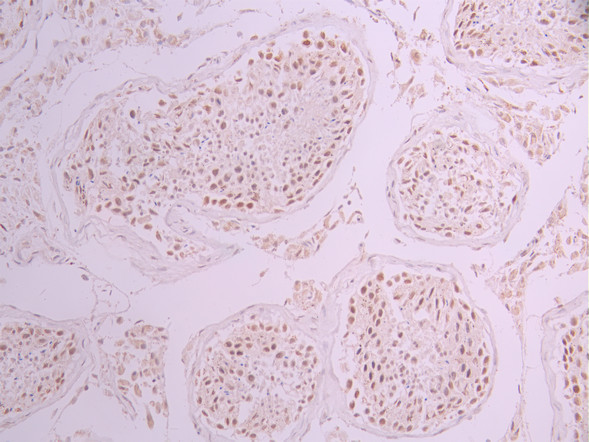
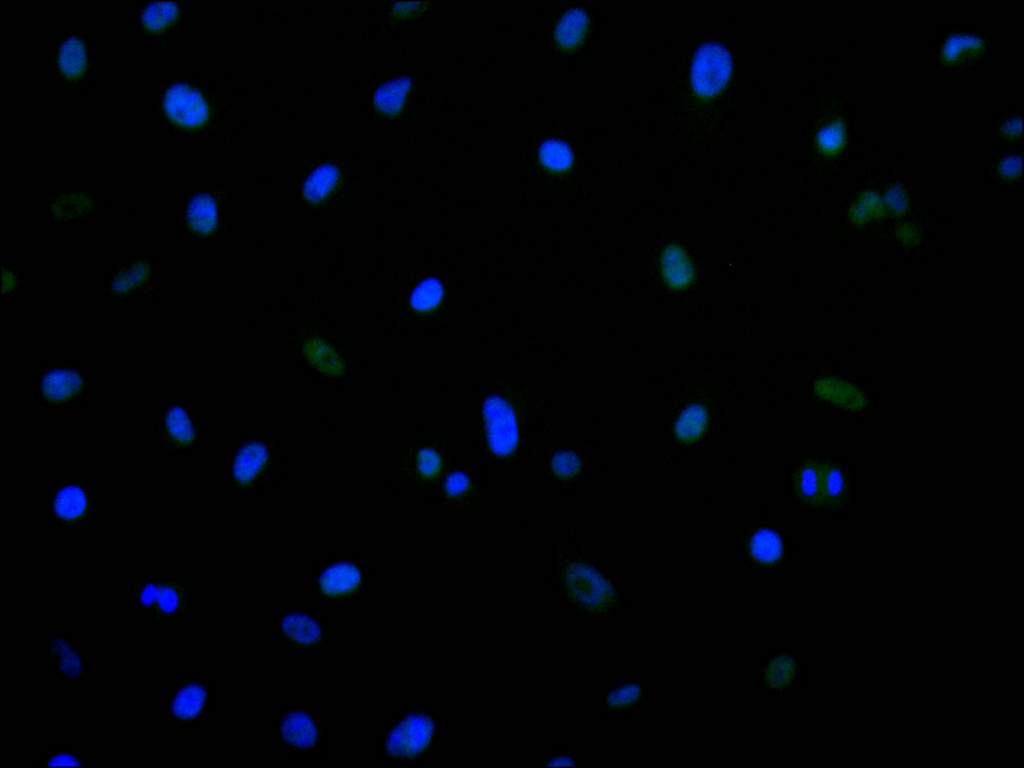
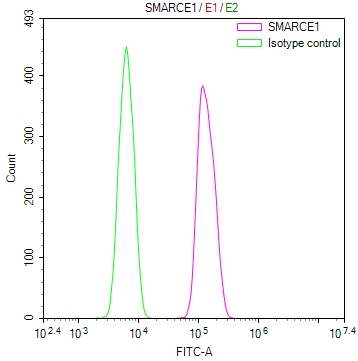
Validation studies demonstrate robust performance across multiple experimental platforms. Western blot analysis detects SMARCE1 in a broad panel of human cell lines including HeLa, HepG2, SH-SY5Y, K562, U-251MG, A549, and Jurkat cells, with the observed band appearing at approximately 57 kDa rather than the predicted 47 kDa—a difference likely attributable to post-translational modifications such as phosphorylation or glycosylation that are characteristic of chromatin-associated proteins. Immunohistochemistry applications have been validated in paraffin-embedded human breast cancer and testis tissues, while immunofluorescence studies in A549 cells reveal clear nuclear localization consistent with SMARCE1's chromatin-associated function. Flow cytometry validation in SH-SY5Y cells further expands the experimental flexibility this antibody provides.
Whether investigating SWI/SNF complex function in normal development or exploring its dysregulation in malignancies where SMARCE1 alterations have been implicated, this antibody delivers the specificity and versatility needed for meaningful discoveries.
There are currently no reviews for this product.





