
Call us
301-363-4651 (Available 9 a.m. to 5 p.m. CST from Monday to Friday)

| Code | CSB-RA022332MA1HU |
| Size | US$210 |
| Order now | |
| Image |
|
| Have Questions? | Leave a Message or Start an on-line Chat |
| Application | Recommended Dilution |
|---|---|
| IHC | 1:20-1:200 |
| IF | 1:20-1:200 |
| FC | 1:20-1:200 |
SNRPD1, also known as Small nuclear ribonucleoprotein Sm D1, serves as a core component of the spliceosomal small nuclear ribonucleoprotein complexes that orchestrate pre-mRNA splicing. This protein plays an essential role in the assembly and function of the spliceosome, making it a valuable target for researchers investigating RNA processing mechanisms, nuclear signaling pathways, and autoimmune conditions where anti-Sm antibodies serve as diagnostic markers.
This recombinant monoclonal antibody, clone 24E2, offers the reproducibility and consistency that demanding experimental workflows require. Generated using recombinant technology with a defined sequence, this antibody eliminates the lot-to-lot variability that can compromise longitudinal studies or multi-site collaborations. The mouse IgG2a isotype antibody was raised against recombinant human SNRPD1 protein and has been affinity-purified to ensure optimal specificity for your target.
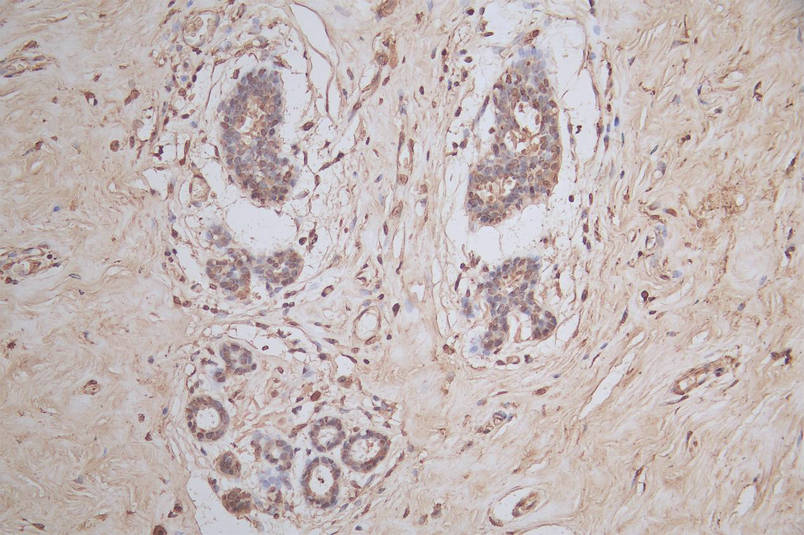
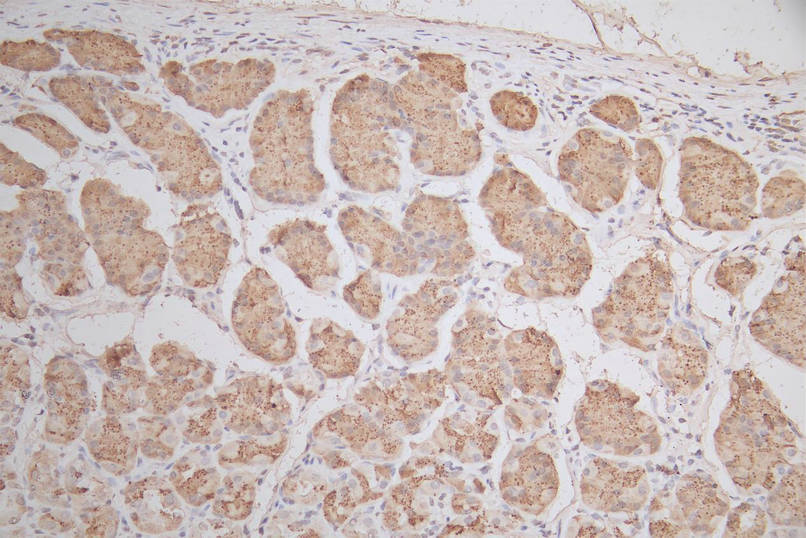
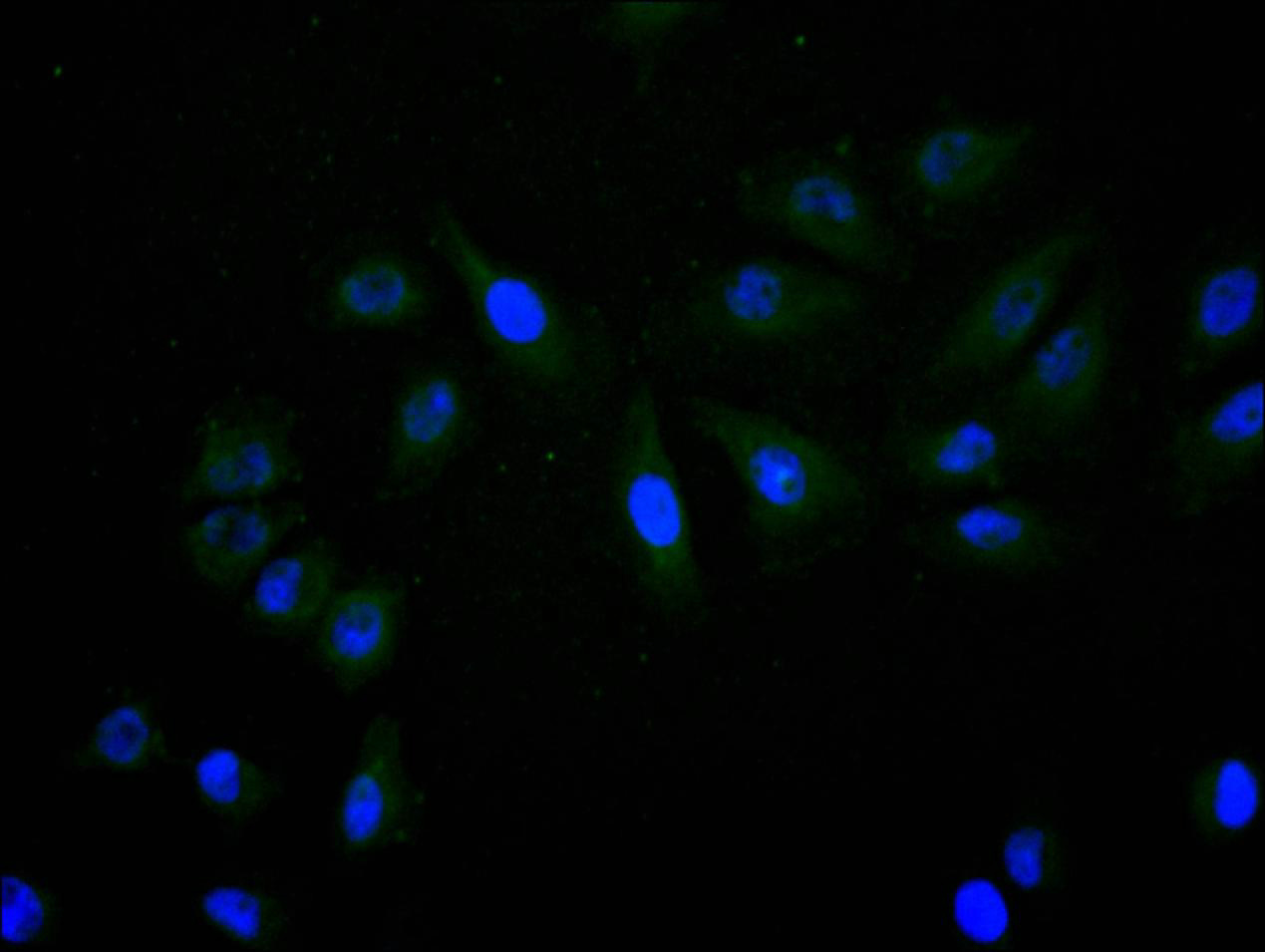
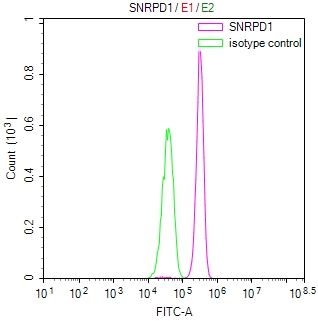
Validation across multiple platforms demonstrates this antibody's versatility in your research toolkit. Immunohistochemistry studies in paraffin-embedded human breast and stomach tissues show reliable detection at dilutions of 1:50, using citrate buffer antigen retrieval on automated Leica Bond systems. Immunofluorescence analysis in A549 cells reveals clear nuclear localization patterns when counterstained with DAPI, consistent with SNRPD1's known subcellular distribution. Flow cytometry applications have been validated in HeLa cells, with overlay histograms demonstrating distinct positive population shifts compared to isotype controls.
Whether you're exploring spliceosome biology, investigating epigenetic regulation, or studying the immunological significance of Sm antigens in autoimmune disease contexts, this antibody provides the technical foundation for generating reliable, publishable data across immunohistochemistry, immunofluorescence, flow cytometry, and ELISA applications.
There are currently no reviews for this product.





