
Call us
301-363-4651 (Available 9 a.m. to 5 p.m. CST from Monday to Friday)

| Code | CSB-RA092384A0HU |
| Size | US$210 |
| Order now | |
| Image |
|
| Have Questions? | Leave a Message or Start an on-line Chat |
| Application | Recommended Dilution |
|---|---|
| WB | 1:500-1:2000 |
| IHC | 1:50-1:200 |
| IF | 1:50-1:200 |
| FC | 1:50-1:200 |
TOMM20 serves as a critical component of the translocase of the outer mitochondrial membrane complex, functioning as the primary receptor for nuclear-encoded mitochondrial preproteins. This receptor plays an essential role in mitochondrial protein import, making it an invaluable marker for studying mitochondrial dynamics, biogenesis, and cellular metabolism. Researchers investigating mitochondrial dysfunction in neurodegenerative diseases, cancer metabolism, and cellular stress responses frequently rely on TOMM20 detection to assess mitochondrial content and distribution.
This recombinant monoclonal antibody, clone 15F9, offers the reproducibility and consistency that demanding research applications require. Produced using recombinant technology with a defined sequence, this antibody eliminates the lot-to-lot variability that can compromise longitudinal studies and multi-site collaborations. The rabbit host and monoclonal nature ensure high specificity for human TOMM20, with affinity chromatography purification delivering a clean reagent suitable for sensitive detection methods.
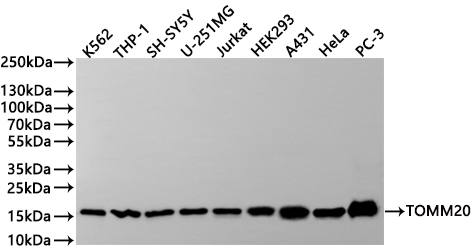
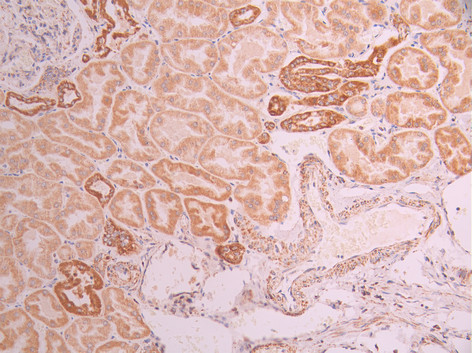
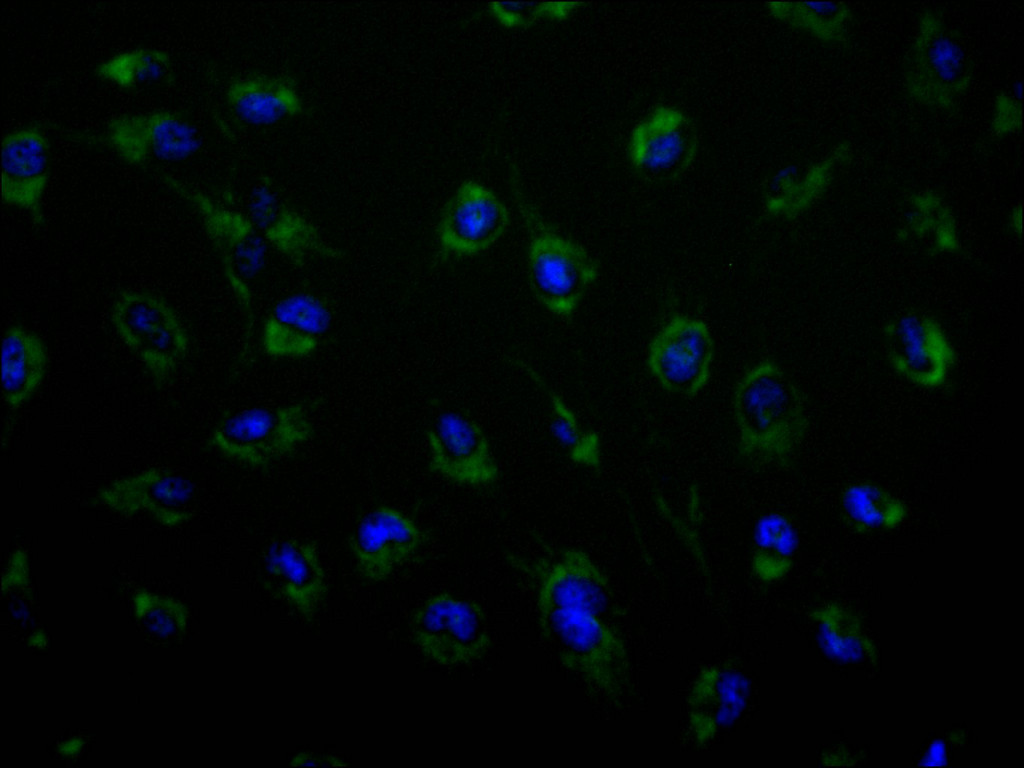
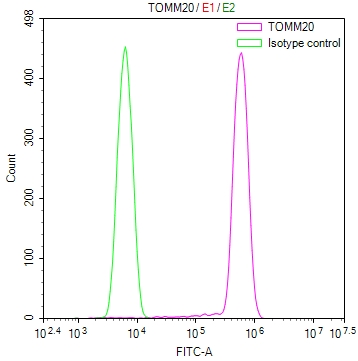
Validation across multiple platforms demonstrates exceptional versatility for your experimental workflows. Western blot analysis confirms specific detection at the expected 16 kDa molecular weight across an extensive panel of human cell lines, including K562, THP-1, SH-SY5Y, U-251MG, Jurkat, HEK293, A431, HeLa, and PC-3 cells. Immunohistochemistry staining in human kidney tissue reveals clear mitochondrial localization patterns, while immunofluorescence in U-251MG cells and flow cytometry analysis in SH-SY5Y cells further demonstrate reliable performance in cell-based applications.
Whether you are quantifying mitochondrial mass, examining organelle distribution during cellular differentiation, or investigating mitochondrial dynamics in disease models, this antibody provides the consistent, validated performance essential for generating publication-quality data in mitochondrial biology research.
There are currently no reviews for this product.





