
Call us
301-363-4651 (Available 9 a.m. to 5 p.m. CST from Monday to Friday)

| Code | CSB-RA021503A0HU |
| Size | US$210 |
| Order now | |
| Image |
|
| Have Questions? | Leave a Message or Start an on-line Chat |
| Application | Recommended Dilution |
|---|---|
| IHC | 1:50-1:200 |
| FC | 1:50-1:200 |
TP53BP1, commonly known as 53BP1, serves as a critical mediator of the DNA damage response, functioning as a key regulator of double-strand break repair pathway choice. This protein plays an essential role in determining whether cells utilize non-homologous end joining or homologous recombination for DNA repair, making it a central focus in cancer biology, genomic stability research, and studies of cellular responses to genotoxic stress. Its recruitment to damage sites and interaction with p53 position 53BP1 as a valuable marker for investigating DNA repair mechanisms and tumor suppressor pathways.
This recombinant monoclonal antibody, generated against a synthetic peptide from human TP53BP1, offers the consistency and reproducibility that demanding experimental workflows require. As a sequence-defined reagent produced through recombinant technology, it eliminates the lot-to-lot variability that can complicate longitudinal studies or multi-site collaborations. The rabbit IgG format, affinity-purified for optimal specificity, provides reliable performance across your experimental timeline.
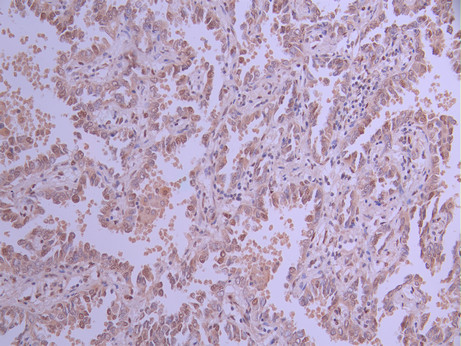
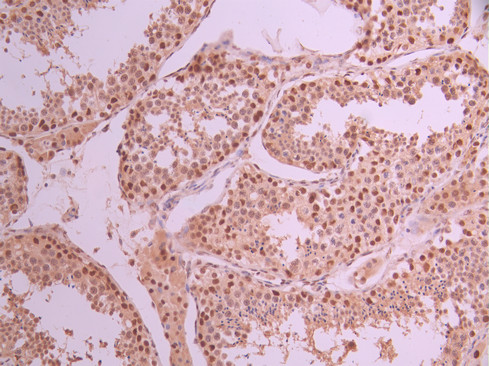
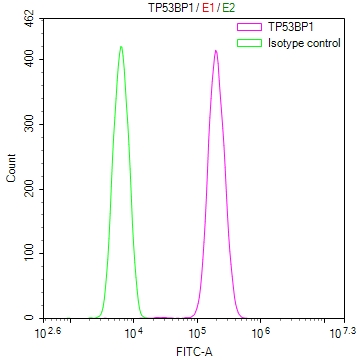
Validation studies demonstrate robust performance in immunohistochemistry, with successful staining confirmed in paraffin-embedded human lung cancer and testis tissues using citrate buffer antigen retrieval at 1:100 dilution. Flow cytometry applications have been validated using SH-SY5Y neuroblastoma cells under fixed and permeabilized conditions, showing clear positive signal separation from isotype controls. These validated applications offer flexibility for researchers working across tissue-based and cell-based experimental platforms.
Whether you are investigating DNA damage signaling in cancer models, characterizing repair pathway dynamics, or exploring 53BP1 as a biomarker in clinical specimens, this antibody provides a dependable tool for advancing your research into genomic integrity and cellular stress responses.
There are currently no reviews for this product.





